The Descent of Adam to the Earth and the Promise of Good for the Guided and Evil for the Transgressors
Allah says to Adam, Hawwa' and Iblis, "Get down from here, all of you." This means each of you should get out of Paradise. We expounded upon this in Surah Al-Baqarah.
بَعْضُكُمْ لِبَعْضٍ عَدُوٌّ
(Some of you as enemies to others.) 2:36 He (Allah) was saying this to Adam and his progeny and Iblis and his progeny. Concerning Allah's statement,
فَإِمَّا يَأْتِيَنَّكُم مِّنِّى هُدًى
(Then if there comes to you guidance from Me,) Abu Al-`Aliyyah said, "This (guidance) means the Prophets, the Messengers and the evidence."
(Then whoever follows My guidance he shall neither go astray nor shall be distressed.) Ibn `Abbas said, "He will not be misguided in this life and he will not be distressed in the Hereafter."
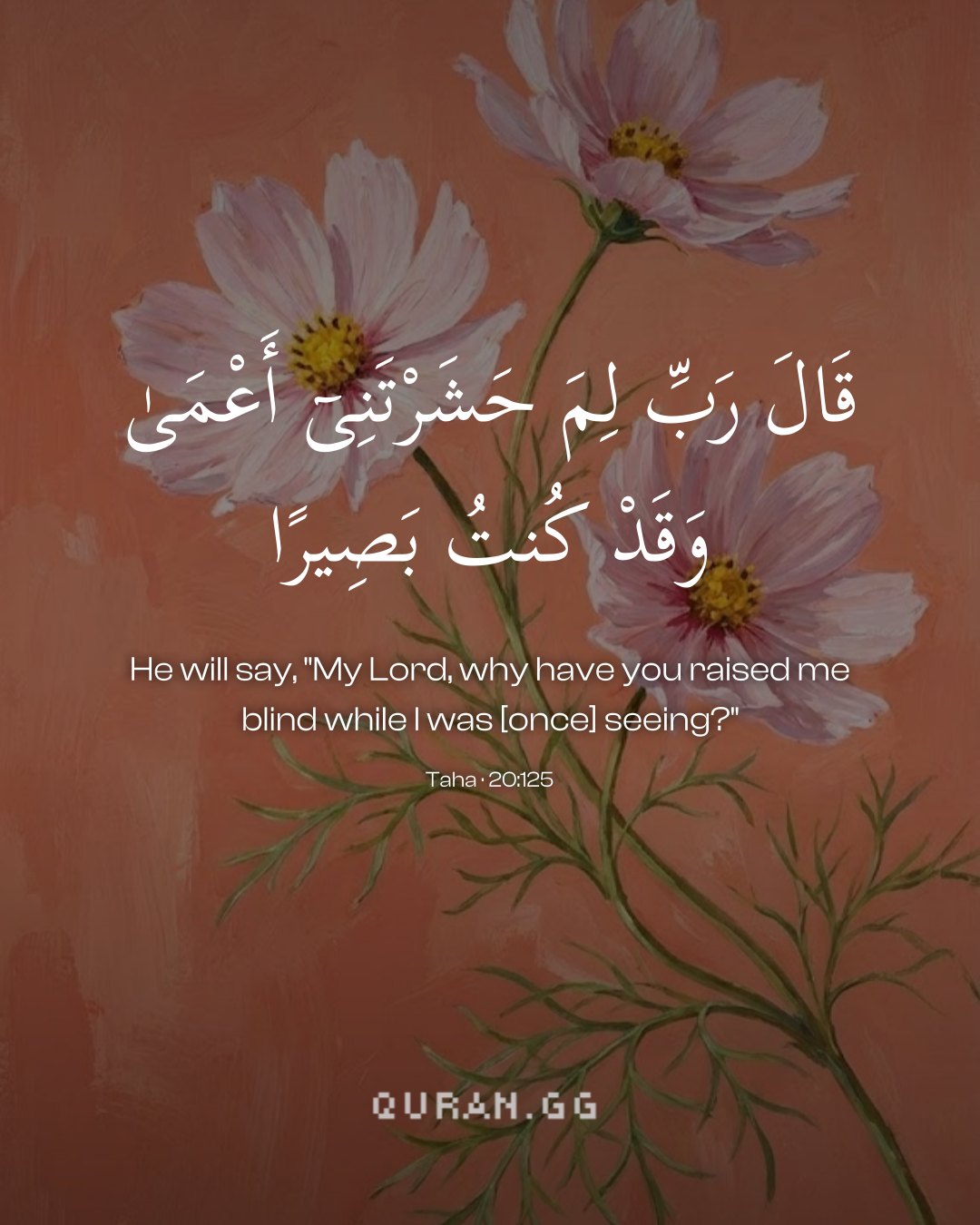
وَمَنْ أَعْرَضَ عَن ذِكْرِي (And whoever turns away from My message - 20:124.) Here the word can refer both to the Qur'an and the Holy Prophet ﷺ as has been mentioned in other verses ذِكْرًا ﴿10﴾ رَّسُولًا (65:10). In both cases the meaning would be that if anyone fails in his duty to recite the Qur’ an or to comply with its commands, or if he fails to submit to the authority of the Holy Prophet then as punishment he would be condemned to a harsh and rigorous life in this world and would be raised blind on the Day of Resurrection.
The truth about the life of infidels and evil-doers being harsh in this world
God kept Adam, with his spouse, in paradise, where he was freely and amply provided with all the necessities of life – food, clothing, water and shelter. Adam was not required to do anything in return for these blessings, unlike in the present world where man has to earn all these things by his own hard labour. In paradise, the fruit of a certain tree was prohibited for Adam. But Satan came and described to him the eternal advantages of this fruit. Adam, influenced by what he said, ate it, then immediately felt that he was naked. This was symbolic of the fact that God had instantly withdrawn the guarantee of providing him with sustenance without his having to earn it by his own labour. Thereafter, on his supplication and repentance, he was pardoned. However, he was removed from a world where God’s bounty had been freely given and sent to a world where he had to earn his living by the sweat of his brow. Such was the beginning of human existence on this earth.
Uthmani text of the Madinah mushaf (King Fahd Complex). Translation: Saheeh International. Tafsir via Quran.com.