Tafsir Ibn Kathir (abridged)
A Reminder for the Children of Israel of
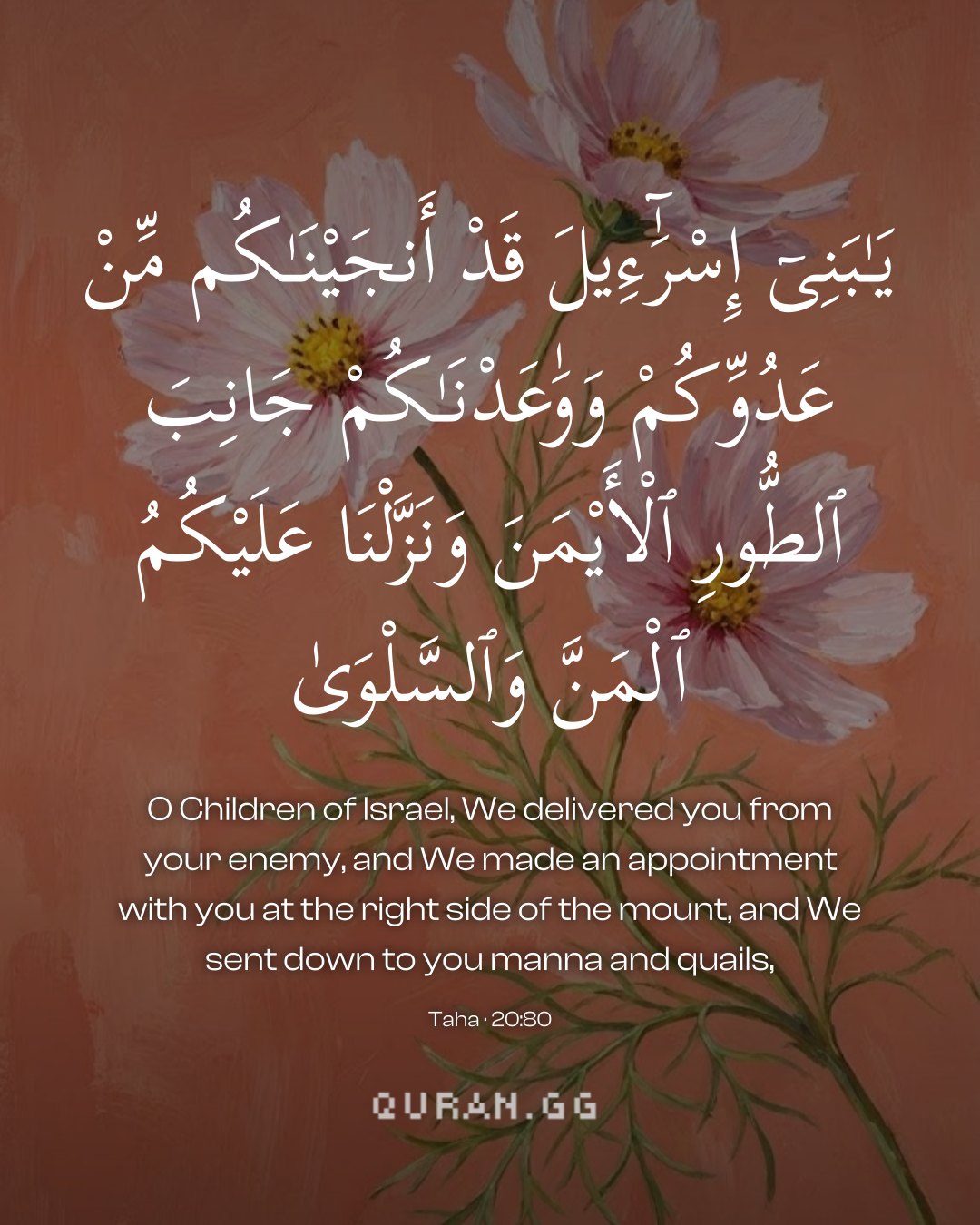
Allah's Favors upon Them Allah reminds of His tremendous favors upon the Children of Israel and His numerous blessings. He saved them from their enemy, Fir`awn, and He relieved their eyes by drowning him and his hosts all at one time while they watched. Allah said,
وَأَغْرَقْنَا ءَالَ فِرْعَوْنَ وَأَنتُمْ تَنظُرُونَ
(And We drowned Fir`awn people while you were looking.) 2:50 Al-Bukhari recorded that Ibn `Abbas said, "When the Messenger of Allah ﷺ came to Al-Madinah, he found the Jews fasting the day of `Ashura'. Therefore he asked them about it and they said, `This is the day that Allah gave Musa victory over Fir`awn.' Then, the Prophet said,
«نَحْنُ أَوْلَى بِمُوسَى فَصُومُوه»
(We have more right to Musa (than them), so fast it.) Muslim also recorded this narration in his Sahih. Then, Allah made a covenant with Musa and the Children of Israel on the right side of the Mountain, after the destruction of Fir`awn. This is the Mountain upon which Allah spoke to Musa and He told Musa's people to look at it when they requested to see Allah. It is also the same Mountain upon which Musa was given the Tawrah, while at the same time the Children of Israel began worshipping the (statue of a) calf, as Allah relates in the forth coming Ayat. The manna and quails have previously been discussed in Surah Al-Baqarah and other Surahs. Manna was a sweet substance that descended upon them from the sky and the quail Salwa was a type of bird that would fall down to them. They would fill every pot with them as ample provisions until the following day. This was a kindness and a mercy from Allah upon them. It was a manifestation of Allah's good treatment of them. For this reason Allah says,
كُلُواْ مِن طَيِّبَـتِ مَا رَزَقْنَـكُمْ وَلاَ تَطْغَوْاْ فِيهِ فَيَحِلَّ عَلَيْكُمْ غَضَبِى
(Eat of the Tayyibat wherewith We have provided you, and commit no transgression or oppression therein, lest My anger should justly descend on you.) This means, "Eat from this sustenance which I have provided for you, and do not transgress against My sustenance by taking it without necessity or you will be opposing what I have commanded you."
فَيَحِلَّ عَلَيْكُمْ غَضَبِى
(lest My anger should justly descend on you.) This means, "I will become angry with you."
وَمَن يَحْلِلْ عَلَيْهِ غَضَبِى فَقَدْ هَوَى
(And he on whom My anger descends, he is indeed perished.) `Ali bin Abi Talhah related that Ibn `Abbas said, "This means that he will indeed be made miserable." Concerning Allah's statement,
وَإِنِّى لَغَفَّارٌ لِّمَن تَابَ وَآمَنَ وَعَمِلَ صَـلِحَاً
(And verily, I am indeed forgiving to him who repents, believes and does righteous good deeds,) meaning, "Whoever turns to Me in repentance, then I will accept his repentance regardless of whatever sin he did." Allah, the Exalted, even accepts the repentance of the Children of Israel who worshipped the calf. Concerning Allah's statement,
تَابَ
(who repents,) This means to turn away from what one was involved in of disbelief, associating partners with Allah, disobedience of Allah or hypocrisy. Concerning Allah's statement,
وَآمَنَ
(and believes) This means the person's belief in his heart.
وَعَمِلَ صَـلِحَاً
(and does righteous deeds,) his action with his bodily limbs. Concerning Allah's statement,
ثُمَّ اهْتَدَى
(and then Ihtada.) `Ali bin Abi Talhah related that Ibn `Abbas said, "This means that he then does not doubt." Qatadah said,
ثُمَّ اهْتَدَى
(and then Ihtada.) "This means he adheres to Islam until he dies." We see here that there is a specific order in which these things are presented. This is similar to Allah's saying,
ثُمَّ كَانَ مِنَ الَّذِينَ ءَامَنُواْ وَتَوَاصَوْاْ بِالصَّبْرِ وَتَوَاصَوْاْ بِالْمَرْحَمَةِ
(Then he became one of those who believed and recommended one another to perseverance and patience and recommended one another to pity and compassion.) 90:17