Tafsir Ibn Kathir (abridged)
The Entire Qur'an is the Remembrance of Allah and mentioning thePunishment of Those Who turn away from It
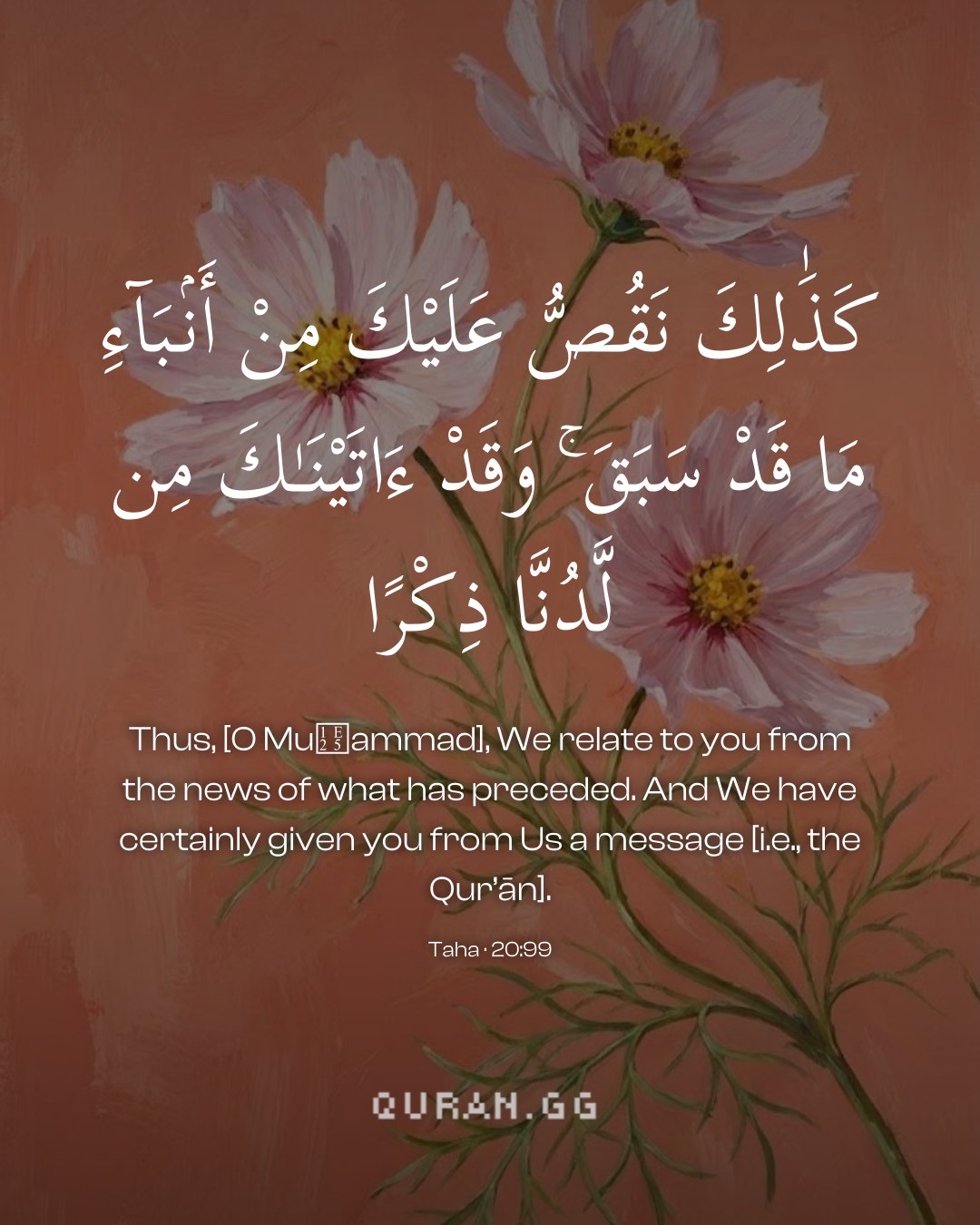
Allah, the Exalted, is saying to Prophet Muhammad ﷺ, `We have told you (O Muhammad) the story of Musa and what happened with him, Fir`awn and his armies, just as it actually happened. Likewise, We relate to you the information of the past just as it happened, without any increase or decrease. We also gave you a remembrance from Us, the Mighty Qur'an, no falsehood comes to it from before it or behind it.' It is a revelation from One Most Wise, Most Praiseworthy. No Prophet was given any Book like it or more complete than it, since the time of the previous Prophets who were sent, until their being sealed off with the coming of Muhammad ﷺ. No Prophet was given any Book containing as much information than the Qur'an about what has past and what would be. The judgement concerning the distinction between mankind is taken from it. Therefore, Allah says about it,
مَّنْ أَعْرَضَ عَنْهُ
(Whoever turns away from it,) This means whoever denies it and turns away from following its commands and instructions, while seeking guidance from other than it, then Allah will mislead him and send him on the path to Hell. This is why Allah says,
مَّنْ أَعْرَضَ عَنْهُ فَإِنَّهُ يَحْمِلُ يَوْمَ الْقِيَـمَةِ وِزْراً
(Whoever turns away from it, verily, they will bear a heavy burden on the Day of Resurrection.) .Burden here means sin. This is as Allah says,
وَمَن يَكْفُرْ بِهِ مِنَ الاٌّحْزَابِ فَالنَّارُ مَوْعِدُهُ
(But those of the sects that reject it , the Fire will be their promised meeting place.) 11:17 This applies generally to whoever the Qur'an reaches of the Arabs, the non-Arabs, the People of the Book and others. This is as Allah says,
لاٌّنذِرَكُمْ بِهِ وَمَن بَلَغَ
(That I may therewith warn you and whomsoever it may reach.) 6:19 The Qur'an is a final warning for everyone it reaches. Whoever follows it, then he is rightly guided and whoever opposes it and turns away from it, then he is misguided. He will be wretched in this life, and he is promised that on the Day of Resurrection his abode will be the Hellfire. For this reason Allah says,
مَّنْ أَعْرَضَ عَنْهُ فَإِنَّهُ يَحْمِلُ يَوْمَ الْقِيَـمَةِ وِزْراً خَـلِدِينَ فِيهِ
(Whoever turns away from it, verily, they will bear a heavy burden on the Day of Resurrection. They will abide in that.) 20:100-101 They will not be able to avoid this or escape it.
وَسَآءَ لَهُمْ يَوْمَ الْقِيَـمَةِ حِمْلاً
(And evil indeed will it be that load for them on the Day of Resurrection.)