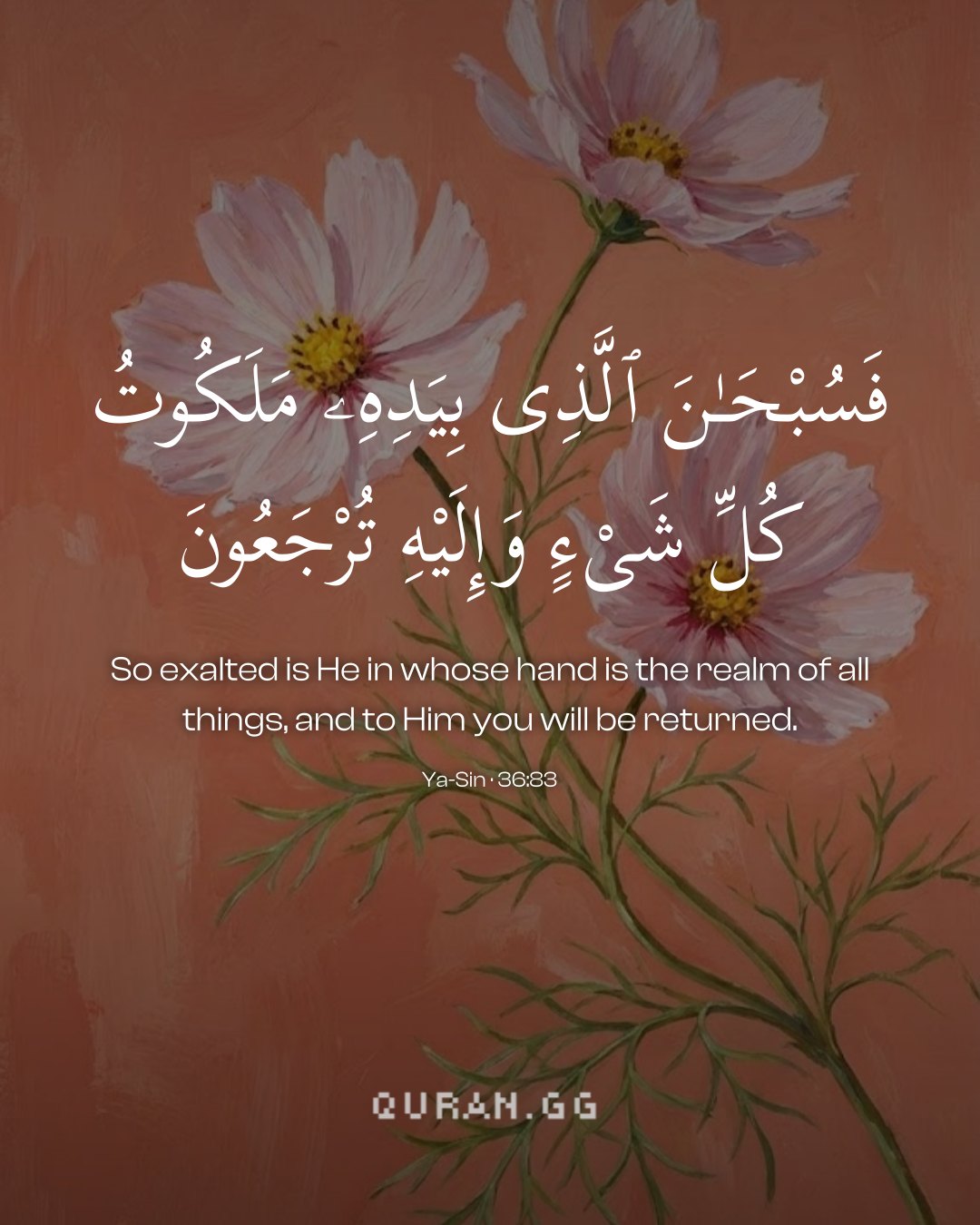
Allah points out His great might and power in that He created theseven heavens with all their stars and planets, and the seven earths with everything in them of mountains, sands, oceans and wildernesses, and everything in between
He tells us to find the proof that He will re-create our bodies in His creation of these mighty things. This is like the Ayah:
(Is not He Who created the heavens and the earth, able to create the like of them) meaning, the like of mankind. So, He will re-create them as He created them in the first place. Ibn Jarir said, "This Ayah is like the Ayah:
In verse 82, it was said: إِنَّمَا أَمْرُهُ إِذَا أَرَادَ شَيْئًا أَن يَقُولَ لَهُ كُن فَيَكُونُ (His practice, when He intends to do something, is no more than He says, "Be", and it comes to be.). In other words, the verse means that when Allah Ta’ ala intends to create something, He has no need to follow the way things are made by human beings who have to collect raw materials, assemble technicians and work for a certain period of time until the thing is ready. His way, to use an understatement, is different. Whenever, He intends to create something, for Him it is sufficient to give the command: "Be." Right then, the thing so commanded comes into existence. From this, it does not necessarily follow that the creation of everything should invariably be instant. Instead, when the creation of something instantly under the dictate of the wisdom of the Creator is expedient, it stands created on the beam without any gradual mode or respite. And when the creation of something is decreed to be appropriate only as gradual due to some wise consideration, it comes into existence gradually - whether it is destined to be created along with a particular gradual mode in the very first decree, or it is addressed with a separate command of کُن 'kun' or 'be' at each gradual stage. وَاللہ سبحانہ و تعالیٰ اَعلَم (And Allah, the Pure, the High knows best).
Alhamdu1i11ah
The Commentary on
Surah Y a Sin
Ends here
Tazkirul Quran
Maulana Wahiduddin Khan
Man has not created himself. This calls for man to possess the quality of humility or modesty. But, instead of being realistic, he indulges in discussions which are not in accordance with his humble position. The creation of man and the universe for the first time itself furnishes ample proof of the fact that such creation for the second time is also possible. But ignoring this, man argues about how a dead man can come back to life. The changing of the dead into the living, will no doubt occur on the Day of Judgement, but this possibility is seen in other things even today. One may take the example of a tree. The tree is apparently green and fresh, but when it is cut up and burnt as sticks, it takes on a completely different shape, that of fire. The metamorphosis of one thing into another is an established fact. God makes this possible today with regard to different things. As for man, however, He will make it possible on the Day of Judgement, but this will not be for the purpose of making the people admit this fact. It will be in order to punish them for their insubordination.
Uthmani text of the Madinah mushaf (King Fahd Complex). Translation: Saheeh International. Tafsir via Quran.com.