The Idolators recognize Allah's Tawhid in Lordship and the Evidence is established against Them through this Recognition
Allah argues that the idolators' recognition of Allah's Oneness in Lordship is an evidence against them, for which they should admit and recognize the Oneness in divinity and worship. So Allah said:
قُلْ مَن يَرْزُقُكُم مِّنَ السَّمَآءِ وَالاٌّرْضِ
(Say: "Who provides for you from the sky and the earth") meaning, who is He Who sends down water from the sky and splits the earth with His power and will and allows things to grow from it,
أَءِلـهٌ مَّعَ اللهِ
(Is there a god, besides Allah) 27:62 Who provides;
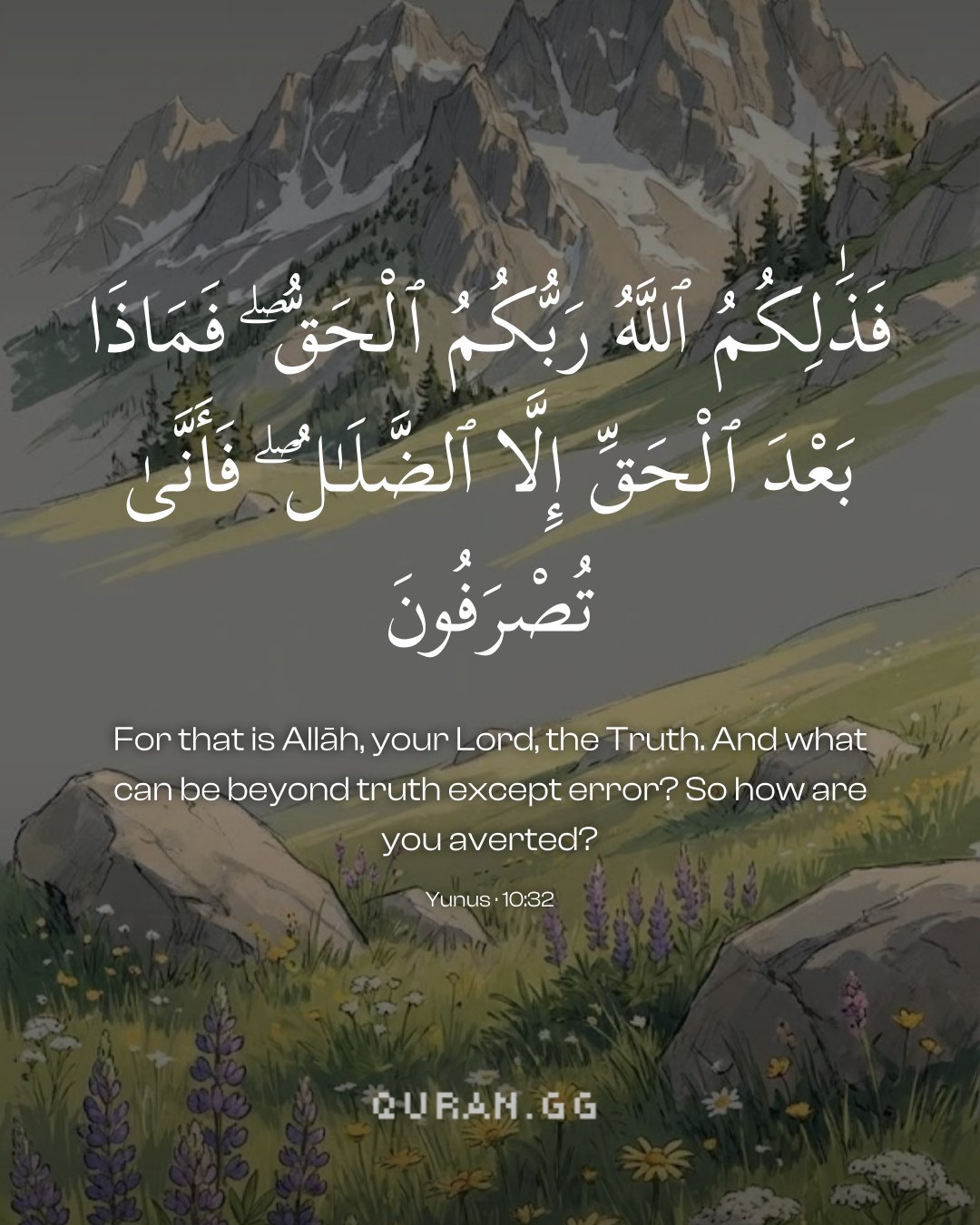
In the concluding verse (32), it was said: فَذَٰلِكُمُ اللَّـهُ رَبُّكُمُ الْحَقُّ ۖ فَمَاذَا بَعْدَ الْحَقِّ إِلَّا الضَّلَالُ (So, that is Allah, your Lord in truth. And what is there, after truth, but error?), that is, ` this is the Sacred Being whose attributes of perfection have just been mentioned. Once you have found the Truth, there remains nothing else to find except error and straying. In other words, once it stands proved that Allah Ta` ala is the only true and rightful object of worship, it is terribly senseless to abandon this truth and allow yourself to be diverted elsewhere.
important note
In relation to issues of religious beliefs embedded in this verse, it must be borne in mind that the statement: مَاذَا بَعْدَ الْحَقِّ إِلَّا الضَّلَالُ (What is there, after truth, but error?) proves that there is no intermediary link between truth and error. What is not the truth will be included in error and straying. There can be no such thing that is neither truth nor error. And it is also not possible that two opposite things could be the truth. This is an established rule in the sight of the majority of scholars in the Muslim Ummah. However, difference exists among ` Ulama' regarding minor and subsidiary juristic issues. In the view of some of them, both sides would be considered as on truth in Ijtihad-based issues and, according to the majority of them, there is consensus on the view that the taking of contra-position in Ijtihad-based problems cannot be termed as error and straying.
Tazkirul Quran
Maulana Wahiduddin KhanOn ayahs 30–32
All of the observances of shirk (attributing partners to God) are based on false hopes. Events which occur by God’s will are attributed by man to false gods, which in his self-delusion he makes the centre of his obeisance and worship. He depends so much on these false gods of his that he thinks that even in the Hereafter they will come to his help against God and save him from God’s scourge. These are but false hopes, but in the world their falsehood does not become clear, because due to the conditions of man’s trial here, a veil of secrecy covers every reality. Here man has the opportunity to attribute the various events to his imaginary gods and thus be satisfied with their ‘godliness.’ But in the Hereafter all realities will be laid bare. There, it will become clear that in this universe nobody has power except the one and only God. In the present world, man is living under the misunderstanding that, with the help of his leaders and false gods, he will be successful in the stages of the Hereafter, but in the Hereafter it will suddenly be clear to him that this confidence of his was absolutely false. Here, everybody will be requited according to what he himself has done and all imaginary supports will disappear as if they had never existed.
Uthmani text of the Madinah mushaf (King Fahd Complex). Translation: Saheeh International. Tafsir via Quran.com.