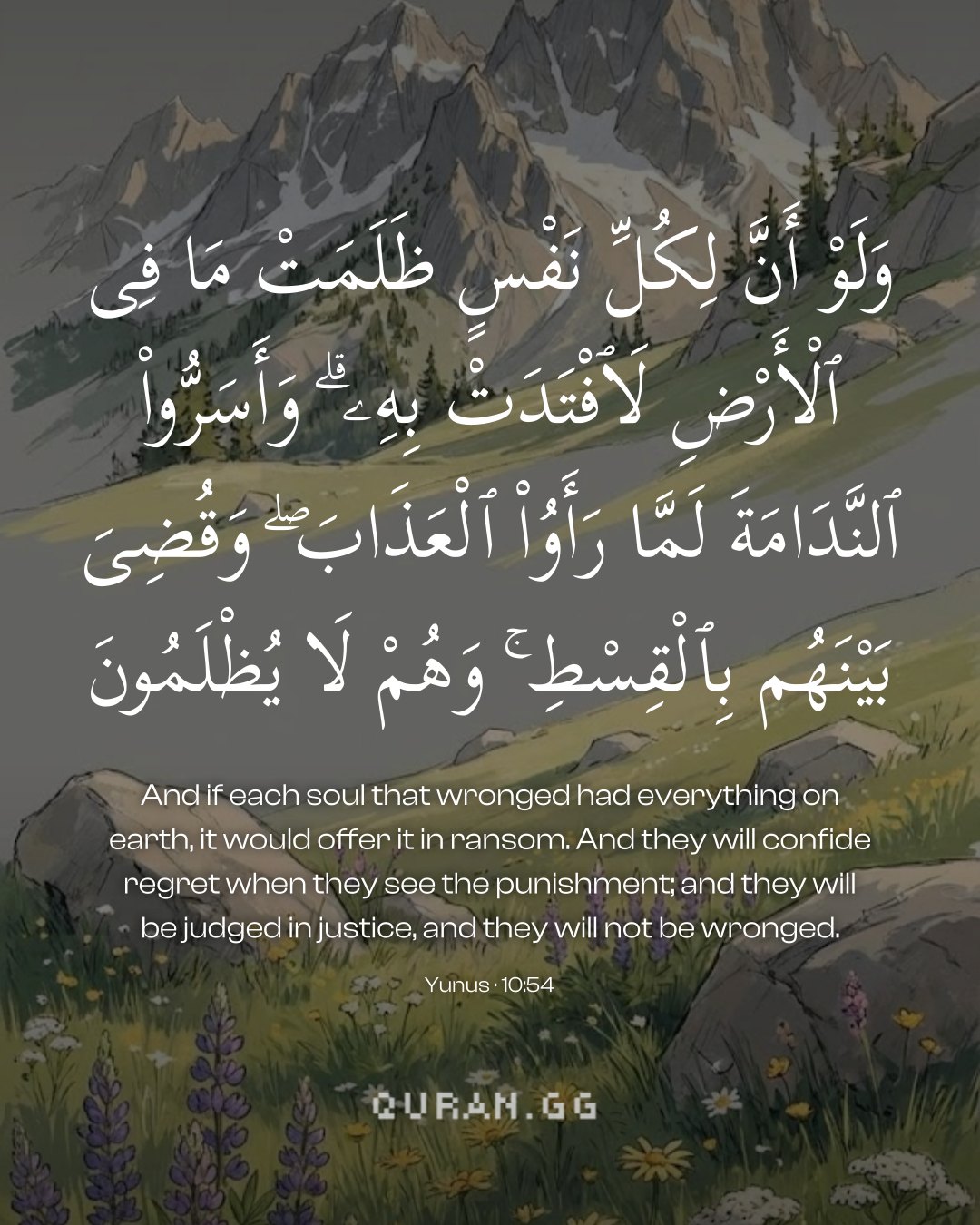
And if each soul that wronged had everything on earth, it would offer it in ransom. And they will confide regret when they see the punishment; and they will be judged in justice, and they will not be wronged.
(Say: "Yes! By my Lord! It is the very truth! And you cannot escape it!") meaning that becoming sand does not make Allah incapable of bringing you back, since He originated you from nothing.
(Verily, His command, when He intends a thing, is only that He says to it, `Be!' - and it is!)36:82 There are only two other Ayat in the Qur'an similar to this. Allah commands His Messenger to give an oath by Him to answer those who deny the return. He said in Surah Saba',
It was said in verse أَثُمَّ إِذَا مَا وَقَعَ آمَنتُم بِهِ ۚ آلْآنَ. It means: ` Would you believe when Divine punishment actually descends down upon you - whether at the time of death, or even before it? But, at that time, the response to your believing will be: آلْآنَ ('al'an: now?) meaning: Is it now that you have come to believe while the time of believing has already passed? This is similar to what the Pharaoh said while drowning: آمَنتُ أَنَّهُ لَا إِلَـٰهَ إِلَّا الَّذِي آمَنَتْ بِهِ بَنُو إِسْرَائِيلَ وَأَنَا مِنَ الْمُسْلِمِينَ ﴿90﴾ ("I believe that there is no god except the One in whom the Children of Isra'il believe - 10:90). In answer, it was said: آلْآنَ ('al'an: now?) and this believing by him was not accepted. In Hadith, the Holy Prophet ﷺ has said, ` Allah Ta` ala keeps accepting the repentance of His servant until he is seized by the agony of death.' It means that believing and repenting at the time of the agony of death is not credible in the sight of Allah. Similarly, in the mortal world, Taubah (repentance) could be accepted if done before the actual falling of the Divine punishment. Once the punishment strikes, Taubah is not accepted. The event related to the people of Sayyidna Yunus going to appear towards the end of the Surah in which their Taubah was accepted falls under this very rule. They had seen the punishment coming from a distance. Moved earnestly, weeping and wailing, they made their Taubah in all sincerity. Therefore, the punishment was withdrawn. Had it struck them, their Taubah would have remained unaccepted.
Tazkirul Quran
Maulana Wahiduddin KhanOn ayahs 53–55
The Prophet Muhammad told the Arab people that if they did not reform themselves, they would be set upon by the punishment of the Hereafter. In answer to that they started ridiculing his warning. This does not mean that they were not believers in the Hereafter. In fact, they were not disregarding the fact of the Hereafter itself, but rather dismissing the Prophet Muhammad’s warning as valueless. At that time the greatness of the Prophet Muhammad had not yet come to be recognised. In the eyes of his addressees, he appeared to be in the shape of an ‘ordinary’ human being. They failed to understand how they would be liable for God’s punishment on rejecting this ‘ordinary’ man’s words. They were doubtful of his being the representative of God and the Hereafter. This comparison was not between acceptance of the Hereafter and denial of the Hereafter but between the religion of a celebrated personality and the religion of an insignificant personality. They allied themselves with the established great ones of the past. They considered themselves to be following the religion of the recognised personalities. As against the recognised personalities of the past, when they saw their contemporary Prophet, he appeared to be an ordinary human being. They were not able to understand that their association with those great personalities would not be sufficient for their salvation and that it would be necessary for them to associate themselves with that person who was not apparently vested with greatness. This was the psychology which emboldened them to ridicule the Prophet Muhammad.
Uthmani text of the Madinah mushaf (King Fahd Complex). Translation: Saheeh International. Tafsir via Quran.com.