Musa encouraged His People to put Their Trust in Allah
Allah told us that Musa said to the Children of Israel:
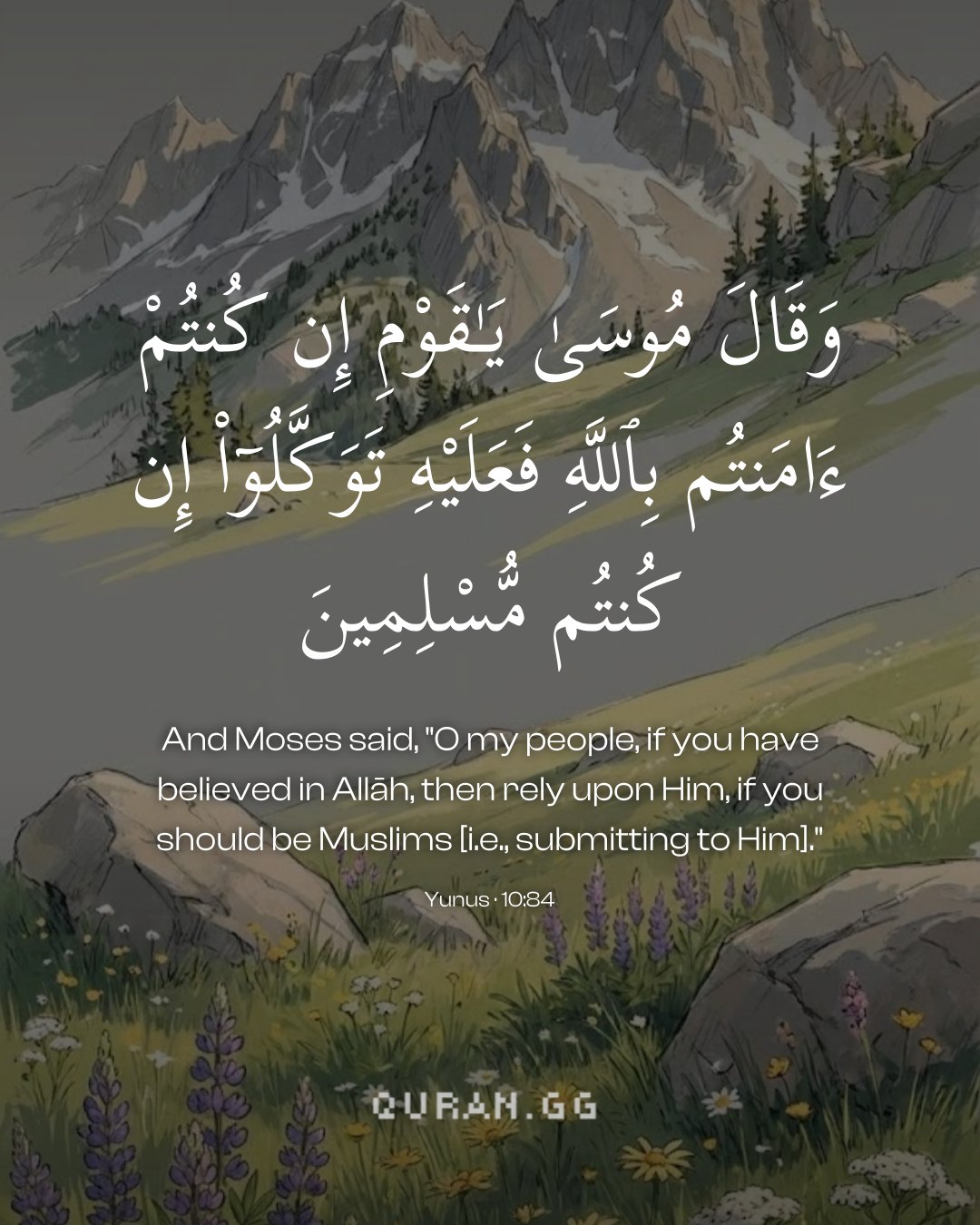
يقَوْمِ إِن كُنتُمْ ءامَنْتُمْ بِاللَّهِ فَعَلَيْهِ تَوَكَّلُواْ إِن كُنْتُم مُّسْلِمِينَ
(O my people! If you have believed in Allah, then put your trust in Him if you are Muslims.) Allah is sufficient for those who put their trust in Him.
أَلَيْسَ اللَّهُ بِكَافٍ عَبْدَهُ
(Is not Allah sufficient for His servant)(39:36)
وَمَن يَتَوَكَّلْ عَلَى اللَّهِ فَهُوَ حَسْبُهُ
(And whosoever puts his trust in Allah, then He will suffice him.)(65:3) Allah combines worship and reliance in many places. He said:
فَاعْبُدْهُ وَتَوَكَّلْ عَلَيْهِ
(So worship Him and put your trust in Him.)(11:123)
قُلْ هُوَ الرَّحْمَـنُ ءَامَنَّا بِهِ وَعَلَيْهِ تَوَكَّلْنَا
(Say: "He is the Most Gracious (Allah), in Him we believe, and in Him we put our trust..)(67:29) and
رَّبُّ الْمَشْرِقِ وَالْمَغْرِبِ لاَ إِلَـهَ إِلاَّ هُوَ فَاتَّخِذْهُ وَكِيلاً
((He alone is) the Lord of the east and the west; none has the right to be worshipped but He. So take Him (alone) as a protector.)(73:9) And Allah commanded the believers to say many times in their Salah:
إِيَّاكَ نَعْبُدُ وَإِيَّاكَ نَسْتَعِينُ
(You (Alone) we worship, and You (Alone) we ask for help (for each and everything).)(1:5) The Children of Israel complied with this command and said:
عَلَى اللَّهِ تَوَكَّلْنَا رَبَّنَا لاَ تَجْعَلْنَا فِتْنَةً لِّلْقَوْمِ الظَّـلِمِينَ
(In Allah we put our trust. Our Lord! Make us not a trial for the folk who are wrongdoers.) This means don't give them victory over us so that they rule us. So they might not think that they have authority over us because they were following the truth and we were falsehood. This might be a deceiving trial for them. This meaning was reported from Abu Mijliz and Abu Ad-Duha, `Abdur-Razzaq, in a narration from Mujahid, said,
رَبَّنَا لاَ تَجْعَلْنَا فِتْنَةً لِّلْقَوْمِ الظَّـلِمِينَ
(Our Lord! Make us not a trial for the folk who are wrongdoers) meaning, "Do not give them authority over us so they might make us fall into Fitnah." Allah's statement:
وَنَجِّنَا بِرَحْمَتِكَ
(And save us by Your mercy) means save us through Your mercy and beneficence
مِنَ الْقَوْمِ الْكَـفِرِينَ
(from the disbelieving folk. ) meaning, from those who denied the truth and covered it. We truly have believed in You and put our trust in You.
It was said in the last verse (64) that, for the friends of Allah, there is the good news in the worldly life and in the Hereafter. As for the good news of the Hereafter, it will come at the time of death when the spirit of the deceased will be taken to Allah. At that time, he will hear the good news of Paradise being for him. Then, on the day of Qiyamah, when he rises from his grave, he will receive the good news of being welcome to Paradise. This is similar to what al-Tabarani has reported from Sayyidna Ibn ` Umar ؓ narrates that the Holy Prophet ﷺ said: ` People who recite: لا إلہ إلا اللہ (la ilaha illallah: There is no god but Allah) will not experience any fright at the time of death, nor inside the grave, nor at the time they rise from it. This is as if my eyes are seeing the scenario of that time when these people will, shaking the dust off, rise from their graves, saying: الْحَمْدُ لِلَّـهِ الَّذِي أَذْهَبَ عَنَّا الْحَزَنَ (Praised is Allah who has removed from us [ all ] grief - 35:34) '
Continue reading the tafsir of ayahs 64–86 When Pharaoh called upon expert magicians to perform, it was not because he thought that he would actually subdue Moses with their help. His action, rather than being a rational course to follow, was more the result of his over-anxiety to reject Moses. The plan to prove God’s Prophet wrong with the help of magicians was one whose failure could be foreseen. But when a man does not want to accept the truth and is bent upon rejecting it, this desire takes him to such extremes that he takes ill-advised steps to do so: he constructs a dam of tiny splinters to hold back a rising flood, though he knows full well that tiny splinters will be absolutely useless in this instance. So things happened as they were bound to happen. The magicians threw down on the ground ropes and sticks, which crept towards the people like snakes. Then Moses threw down his stick. This turned into a huge snake which started running along the ground. This ‘snake’ was not merely a snake; it was, in fact, a force of God which had appeared to establish truth as Truth and falsehood as falsehood. So, as soon as it appeared, the magicians’ ropes reverted to their original form. Thus Pharaoh was defeated in an arena he himself had chosen. But even then, Pharaoh did not accept defeat. He found words to contradict Moses as he had earlier done.
Uthmani text of the Madinah mushaf (King Fahd Complex). Translation: Saheeh International. Tafsir via Quran.com.