Tafsir Ibn Kathir (abridged)
Ismail ibn Kathir
All of the Prophets are Humans and Men
Allah states that He only sent Prophets and Messengers from among men and not from among women, as this Ayah clearly states. Allah did not reveal religious and legislative laws to any woman from among the daughters of Adam. This is the belief of Ahlus-Sunnah wal-Jama`ah. Shaykh Abu Al-Hasan, `Ali bin Isma`il Al-Ash`ari mentioned that it is the view of Ahlus-Sunnah wal-Jama`ah, that there were no female Prophets, but there were truthful believers from among women. Allah mentions the most honorable of the truthful female believers, Maryam, the daughter of `Imran, when He said,
مَّا الْمَسِيحُ ابْنُ مَرْيَمَ إِلاَّ رَسُولٌ قَدْ خَلَتْ مِن قَبْلِهِ الرُّسُلُ وَأُمُّهُ صِدِّيقَةٌ كَانَا يَأْكُلاَنِ الطَّعَامَ
(The Messiah 'Isa, son of Maryam (Mary), was no more than a Messenger; many were the Messengers that passed away before him. His mother was a Siddiqah truthful believer. They both used to eat food.) 5:75 Therefore, the best description Allah gave her is Siddiqah. Had she been a Prophet, Allah would have mentioned this fact when He was praising her qualities and honor. Therefore, Mary was a truthful believer according to the words of the Qur'an.
All Prophets were Humans not Angels
Ad-Dahhak reported that Ibn `Abbas commented on Allah's statement,
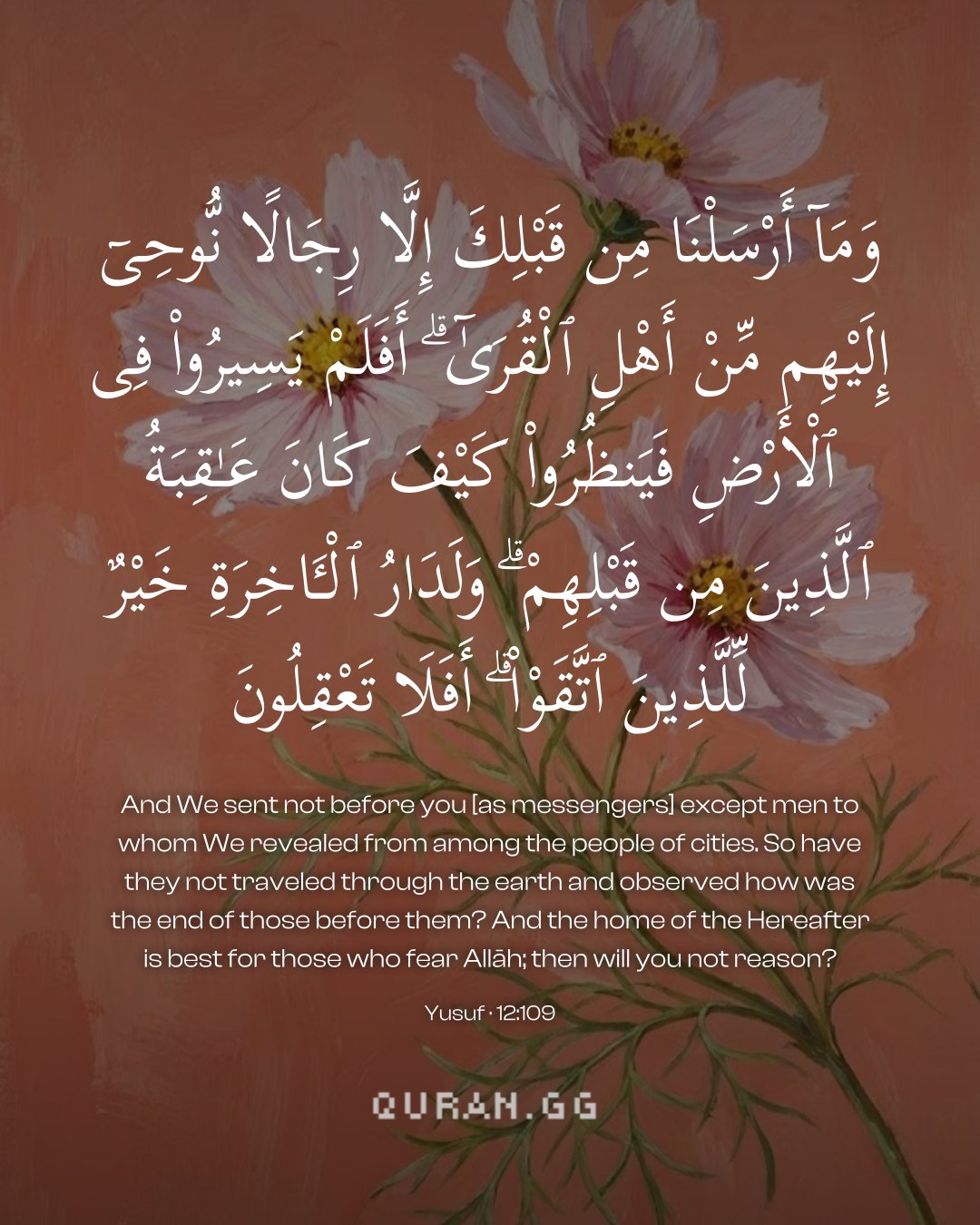
وَمَآ أَرْسَلْنَا مِن قَبْلِكَ إِلاَّ رِجَالاً
(And We sent not before you (as Messengers) any but men) "They were not from among the residents of the heaven (angels), as you claimed." This statement of Ibn `Abbas is supported by Allah's statements,
وَمَآ أَرْسَلْنَا قَبْلَكَ مِنَ الْمُرْسَلِينَ إِلاَّ إِنَّهُمْ لَيَأْكُلُونَ الطَّعَامَ وَيَمْشُونَ فِى الاٌّسْوَاقِ
(And We never sent before you any of the Messengers, but verily, they ate food and walked in the markets), 25:20
وَمَا جَعَلْنَاهمْ جَسَداً لاَّ يَأْكُلُونَ الطَّعَامَ وَمَا كَانُواْ خَـلِدِينَ - ثُمَّ صَدَقْنَاهُمُ الْوَعْدَ فَأَنجَيْنَاهُمْ وَمَن نَّشَآءُ وَأَهْلَكْنَا الْمُسْرفِينَ
(And We did not create them with bodies that ate not food, nor were they immortals. Then We fulfilled to them the promise. So We saved them and those whom We willed, but We destroyed extravagants), 21:8-9 and,
قُلْ مَا كُنتُ بِدْعاً مِّنَ الرُّسُلِ
(Say: "I am not a new thing among the Messengers.") 46:9 Allah said next,
مِّنْ أَهْلِ الْقُرَى
(from among the people of townships), meaning, from among the people of cities, not that they were sent among the bedouins who are some of the harshest and roughest of all people.
Drawing Lessons from the Incidents of the Past
Allah said next,
أَفَلَمْ يَسِيرُواْ فِى الاٌّرْضِ
(Have they not traveled in the land), meaning, `Have not these people who rejected you, O Muhammad, traveled in the land,'
فَيَنظُرُواْ كَيْفَ كَانَ عَـقِبَةُ الَّذِينَ مِن قَبْلِهِمْ
(and seen what was the end of those who were before them) that is, the earlier nations that rejected the Messengers, and how Allah destroyed them. A similar end is awaiting all disbelievers. Allah said in another Ayah,
أَفَلَمْ يَسِيرُواْ فِى الاٌّرْضِ فَتَكُونَ لَهُمْ قُلُوبٌ يَعْقِلُونَ بِهَآ
(Have they not traveled through the land, and have they hearts wherewith to understand) 22:46 When they hear this statement, they should realize that Allah destroyed the disbelievers and saved the believers, and this is His way with His creation. This is why Allah said,
وَلَدَارُ الاٌّخِرَةِ خَيْرٌ لِّلَّذِينَ اتَّقَواْ
(And verily, the home of the Hereafter is the best for those who have Taqwa.) Allah says, `Just as We saved the faithful in this life, We also wrote safety for them in the Hereafter, which is far better for them than the life of the present world.' Allah said in another Ayah,
إِنَّا لَنَنصُرُ رُسُلَنَا وَالَّذِينَ ءَامَنُواْ فِى الْحَيَوةِ الدُّنْيَا وَيَوْمَ يَقُومُ الاٌّشْهَـدُ - يَوْمَ لاَ يَنفَعُ الظَّـلِمِينَ مَعْذِرَتُهُمْ وَلَهُمُ الْلَّعْنَةُ وَلَهُمْ سُوءُ الدَّارِ
(Verily, We will indeed make victorious Our Messengers and those who believe in this world's life and on the Day when the witnesses will stand forth (i.e. Day of Resurrection). The Day when their excuses will be of no profit to the wrongdoers. Theirs will be the curse, and theirs will be the evil abode (in Hellfire).) 40:51-52)
Ma'arif al-Qur'an
Mufti Muhammad Shafi
where it was said: وَمَا أَرْسَلْنَا مِن قَبْلِكَ إِلَّا رِجَالًا نُّوحِي إِلَيْهِم مِّنْ أَهْلِ الْقُرَىٰ : It means that their thinking that it is an angel who should be the messenger and prophet of Allah and that a human being cannot occupy this station is baseless and ineffectual. Quite contrary to this, the case is just the reverse - that is, for human beings, a prophet of Allah has always been a human being. Nevertheless, he is distinct from human beings in general in that the Wahy and message of Allah Ta’ ala comes to him directly. It is never the outcome of an individual effort or act by anyone. It is always Allah Ta` ala Himself who would choose from among his ser-vants the one who, in His knowledge and judgment, is the fittest for this mission. And this selection is based on particular attributes of personal excellence which are not found among human beings at large.
Onwards from here, there is an admonition to those who contravene the instructions given by the maker of the call on behalf of Allah (da` i), and invite the wrath and punishment of Allah upon them. It was said:
أَفَلَمْ يَسِيرُوا فِي الْأَرْضِ فَيَنظُرُوا كَيْفَ كَانَ عَاقِبَةُ الَّذِينَ مِن قَبْلِهِمْ ۗ وَلَدَارُ الْآخِرَةِ خَيْرٌ لِّلَّذِينَ اتَّقَوْا ۗ أَفَلَا تَعْقِلُونَ
Have they not travelled in the land where they would have seen how was the fate of those before them? And surely the abode of the Hereafter is better for those who fear Allah. Would you, then, still not understand? - 109
And continue to prefer the short-lived comfort of the present world over the everlasting and perfect blessings and comforts of the 'Akhirah.
Messengers are from Men
2. From the word: رِجَالِاً (rijalan : men) in verse 109:
وَمَا أَرْسَلْنَا مِن قَبْلِكَ إِلَّا رِجَالًا نُّوحِي إِلَيْهِم مِّنْ أَهْلِ الْقُرَىٰ
And We did not send before you [ messengers ] other than men from the people of the towns - 109,
We learn that messengers are always men. A woman cannot become a nabiyy (prophet) and rasul (messenger).
Imam Ibn Kathir (رح) has reported the consensus of ` Ulama' that Allah Ta` ala has not made any woman a nabiyy or rasul. Some ` Ulama' have identified some women as being a nabiyy or prophet, for example, Sayyidah Sarah, the wife of Sayyidna Ibrahim (علیہ السلام) ، the mother of Sayyidna Musa (علیہ السلام) and Sayyidah Maryam, the mother of Sayyidna ` Isa (علیہ السلام) . The reason is that there are particular words in the Holy Qur’ an about these three respected women which give the impression that angels talked to them as Divinely commanded, gave them good news, or they themselves came to know something through the medium of Divine revelation. But the majority of ` Ulama, though they do accept that the words of such verses prove that these respected women had a high spiritual rank in the sight of Allah Ta` ala, but, according to them, these words are not sufficient as proofs of their being prophets and messengers.
Messengers are from Towns
3. The expression: أَهْلِ الْقُرَىٰ (men from the people of the towns) appearing in the verse quoted immediately above tells us that Allah Ta` la sends his messengers generally from among those who live in cities and towns. Messengers are not from among those who reside in the country-side and forest lands - because the dwellers of these habitations are generally rustic, hard and less perfect in comprehension and understanding. (Ibn Kathir, Qurtubi others)
After the Truth, has been made plain, those who do not accept it, say that the requisite sound arguments in its favour were not forthcoming and had such reasoning been put forward, they would have accepted it. In other words, according to them, the reason for their denial lay outside them and not within them. That is to say, that they had failed to accept the truth, not because of any lack of receptivity on their part, but because of a lack of arguments in support of the truth. But just the opposite is true. The Truth is so clear that when it appears, all the signs of the earth and the heavens corroborate it. It becomes the most established and proven fact in the universe. But, in order to find the Truth, an observant eye and a receptive mind are vital and these are the very virtues which are non-existent in those who deny the truth. When a man shows arrogance with regard to the Truth, the reason for it is mostly polytheism (shirk). The position taken by most people is that while accepting God, they also love some living or dead beings in whom they have placed their trust and to whom they give a position of greatness. In this way, everyone has appointed for himself some ‘great ones’ other than God. They lead their lives relying on these ‘great ones’, though before God all of them are small. Ultimately, the only things which will save one, will be one’s personal deeds and not the exaltedness of the ‘great ones’. A prophet’s mission is to exhort his hearers to turn to the one and only God. He sets out on this mission because of his realization of the truth. In other words, the prophetic call is that which links a man with the one and only God. The veracity of this call is so abundantly evident to him that it bespeaks a deep realization of godhood and acts as an inspiration to him. Man takes his temporary satisfaction to be permanent in nature, though nobody has any guarantee of how long he will live. Nobody knows when death will come and prove all his claims false; and when the upheaval of Doomsday will upset his well-made world. Man thinks that a sure and certain fate is in store for him, though in fact at every moment of his life, he is standing on the shore of an uncertain future.
Continue reading the tafsir of ayahs 108–109 Uthmani text of the Madinah mushaf (King Fahd Complex). Translation: Saheeh International. Tafsir via Quran.com.