Tafsir Ibn Kathir (abridged)
Yusuf's Brothers try to deceive Their Father
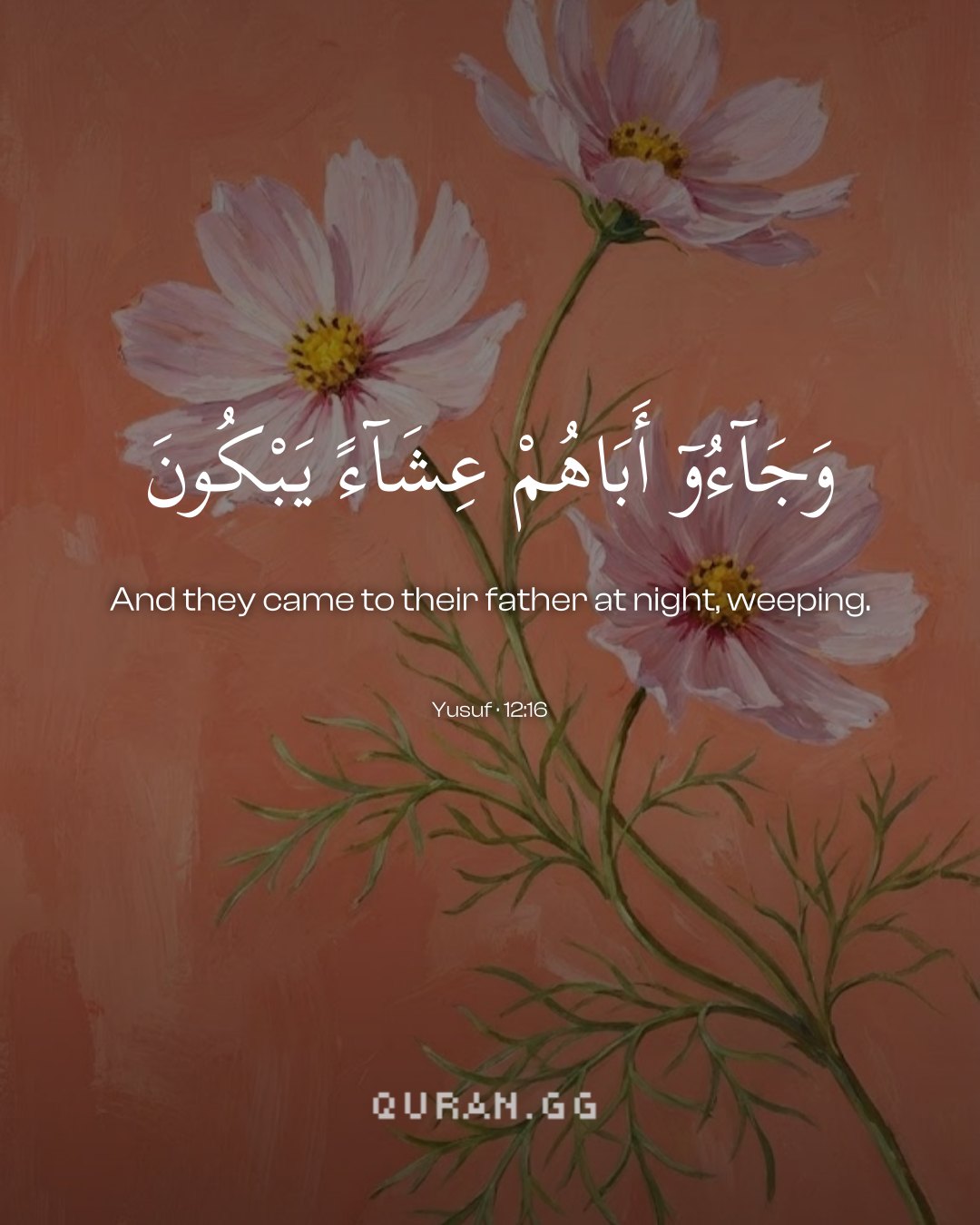
Allah narrates to us the deceit that Yusuf's brothers resorted to, after they threw him to the bottom of the well. They went back to their father, during the darkness of the night, crying and showing sorrow and grief for losing Yusuf. They started giving excuses to their father for what happened to Yusuf, falsely claiming that,
إِنَّا ذَهَبْنَا نَسْتَبِقُ
(We went racing with one another), or had a shooting competition,
وَتَرَكْنَا يُوسُفَ عِندَ مَتَـعِنَا
(and left Yusuf by our belongings), guarding our clothes and luggage,
فَأَكَلَهُ الذِّئْبُ
(and a wolf devoured him), which is exactly what their father told them he feared for Yusuf and warned against. They said next,
وَمَآ أَنتَ بِمُؤْمِنٍ لَّنَا وَلَوْ كُنَّا صَـدِقِينَ
(but you will never believe us even when we speak the truth.) They tried to lessen the impact of the grave news they were delivering. They said, `We know that you will not believe this news, even if you consider us truthful. So what about when you suspect that we are not truthful, especially since you feared that the wolf might devour Yusuf and that is what happened' Therefore, they said, `You have reason not to believe us because of the strange coincidence and the amazing occurrence that happened to us. '
وَجَآءُوا عَلَى قَمِيصِهِ بِدَمٍ كَذِبٍ
(And they brought his shirt stained with false blood.) on it, to help prove plot that they all agreed on. They slaughtered a sheep, according to Mujahid, As-Suddi and several other scholars, and stained Yusuf's shirt with its blood. They claimed that this was the shirt Yusuf was wearing when the wolf devoured him, being stained with his blood. But, they forgot to tear the shirt, and this is why Allah's Prophet Ya`qub did not believe them. Rather, he told them what he felt about what they said to him, thus refusing their false claim,
بَلْ سَوَّلَتْ لَكُمْ أَنفُسُكُمْ أَمْرًا فَصَبْرٌ جَمِيلٌ
(Nay, but your ownselves have made up a tale. So (for me) patience is most fitting.) Ya`qub said, `I will firmly observe patience for this plot on which you agreed, until Allah relieves the distress with His aid and compassion,
وَاللَّهُ الْمُسْتَعَانُ عَلَى مَا تَصِفُونَ
(And it is Allah (alone) Whose help can be sought against that which you describe.), against the lies and unbelievable incident that you said had occurred.'