Surah Al-An'am Ayah 106 (6:106) — Meaning & Tafsir | Quran.GG

Surah Al-An'am, Ayah 106

6:106 · Meaning and tafsir

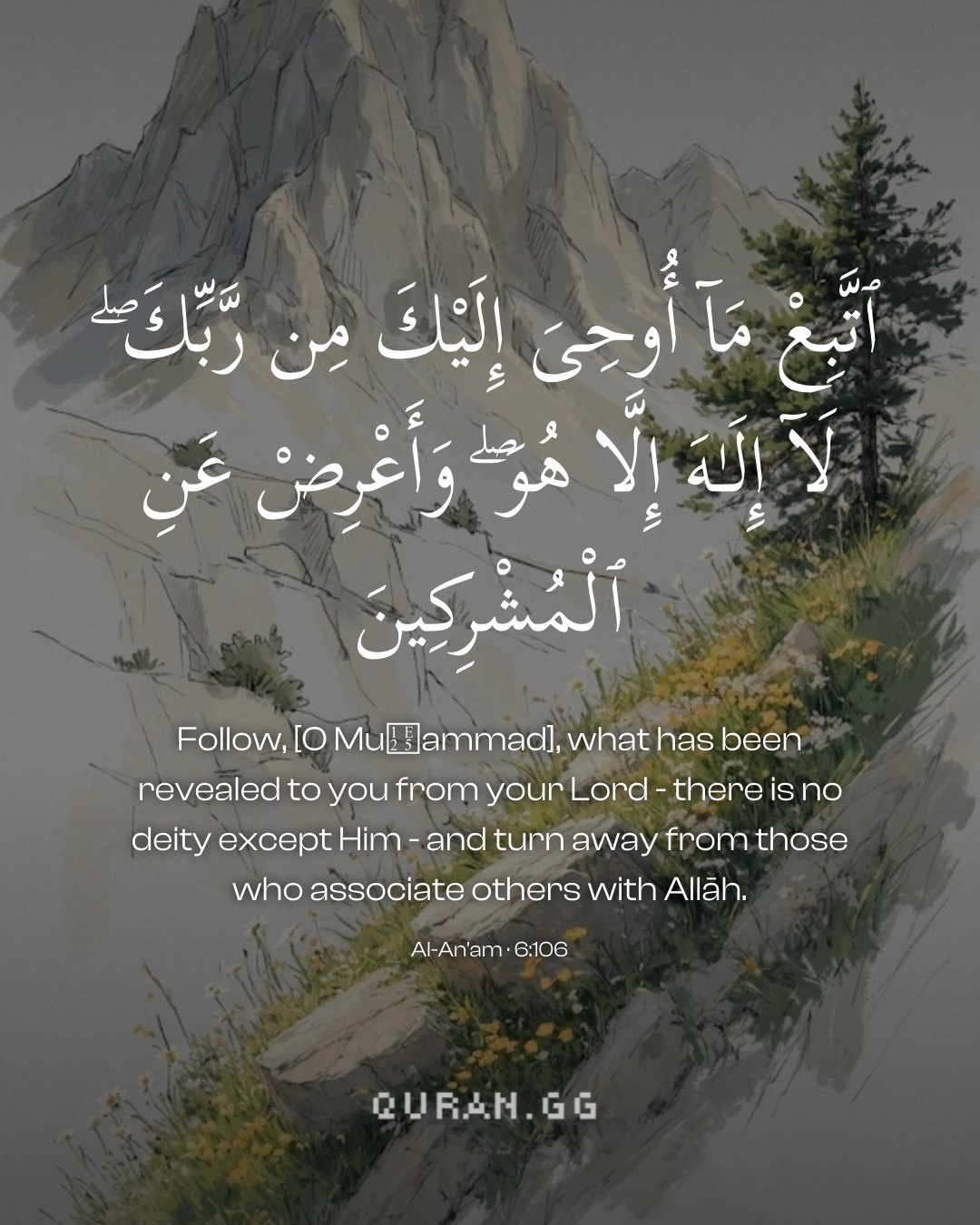
ٱتَّبِعْ مَآ أُوحِىَ إِلَيْكَ مِن رَّبِّكَ ۖ لَآ إِلَـٰهَ إِلَّا هُوَ ۖ وَأَعْرِضْ عَنِ ٱلْمُشْرِكِينَ ١٠٦

Follow, [O Muḥammad], what has been revealed to you from your Lord - there is no deity except Him - and turn away from those who associate others with Allāh.

Surah Al-An'am 6:106 in Arabic with its translation: “Follow, [O Muḥammad], what has been revealed to you from your Lord - there is no deity except Him - and turn…”

Make something with this ayah

Turn it into a video for Stories, Reels or TikTok, recited by the reciter you pick, or an image on a background you choose. Free, in your browser.

Download this image

Tafsir Ibn Kathir (abridged)

The Command to Follow the Revelation

Allah commands His Messenger and those who followed his path,

اتَّبِعْ مَآ أُوحِىَ إِلَيْكَ مِن رَّبِّكَ

(Follow what has been inspired to you from your Lord,) meaning, follow it, obey it and act according to it. What has been revealed to you from your Lord is the Truth, no doubt, and there is no deity worthy of worship except Him,

وَأَعْرِضْ عَنِ الْمُشْرِكِينَ

(and turn aside from the idolators) meaning, forgive them, be forbearing and endure their harm until Allah brings relief to you, supports you and makes you triumphant over them. Know -- O Muhammad -- that there is a wisdom behind misleading the idolators, and that had Allah willed, He would have directed all people to guidance,

وَلَوْ شَآءَ اللَّهُ مَآ أَشْرَكُواْ

(Had Allah willed, they would not have taken others besides Him in worship.) Allah's is the perfect will and wisdom in all decrees and decisions, and He is never questioned about what He does, while they all will be questioned. Allah's statement,

وَمَا جَعَلْنَـكَ عَلَيْهِمْ حَفِيظاً

(And We have not made you Hafiz over them.) means, a watcher who observes their statements and deeds,

وَمَآ أَنتَ عَلَيْهِم بِوَكِيلٍ

(Nor are you set over them to dispose of their affairs. ) or to control their provision. Rather, your only job is to convey, just as Allah said,

فَذَكِّرْ إِنَّمَآ أَنتَ مُذَكِّرٌ - لَّسْتَ عَلَيْهِم بِمُسَيْطِرٍ

(So remind them, you are only one who reminds. You are not a dictator over them.) 88:21-22 and,

فَإِنَّمَا عَلَيْكَ الْبَلَـغُ وَعَلَيْنَا الْحِسَابُ

(Your duty is only to convey and on Us is the reckoning.) 13:40

Ma'arif al-Qur'an

In the fourth verse (106), the Holy Prophet ﷺ at has been guided to a specific course of action. He has been asked not to worry about the acceptance or non-acceptance of the call. For him, the best course was to keep following the way revealed to him through Wahy from his Rabb, the major element of which is the belief that no one is worthy of worship but Allah. That he should continue preaching with his message of truth is part of what has been revealed. So, believing in Allah and remaining steadfast on the way ordained for him, he should avoid feeling concerned about disbelievers and their unfortunate non-acceptance of the call.

Tazkirul Quran

There are some who have the urge to acquire knowledge and learn; who are in search of Truth. There are others who have acquired wealth and power and consider themselves successful to the point of feeling that there is nothing lacking in them which needs to be compensated for. When the call of Truth is given, it is mostly the former kind of people who accept it, unlike the latter who do not attach any significance to it. They never give it any serious thought, and therefore its importance does not become clear to them. The call of Truth provides answers for those who earnestly go in quest of the truth, and gives those who are not so inclined, a logical conclusion to their arguments. With regard to the former, the aim is to enable them to accept the truth; as for the others, it is meant to make them concede that at least the divine message had been conveyed to them in full.

Uthmani text of the Madinah mushaf (King Fahd Complex). Translation: Saheeh International. Tafsir via Quran.com.