Wishes and Hopes Do Not Help One When He Sees the Torment
Allah mentions the condition of the disbelievers when they are made to stand before the Fire on the Day of Resurrection and witness its chains and restraints, along with seeing the horrible, momentous conditions in the Fire with their own eyes. This is when the disbelievers will say,
يلَيْتَنَا نُرَدُّ وَلاَ نُكَذِّبَ بِـَايَـتِ رَبِّنَا وَنَكُونَ مِنَ الْمُؤْمِنِينَ
("Would that we were but sent back (to the world)! Then we would not deny the Ayat of our Lord, and we would be of the believers!") They wish that they would be sent back to the life of the world so that they could perform righteous deeds, refrain from disbelieving in the Ayat of their Lord and be among the believers. Allah said,
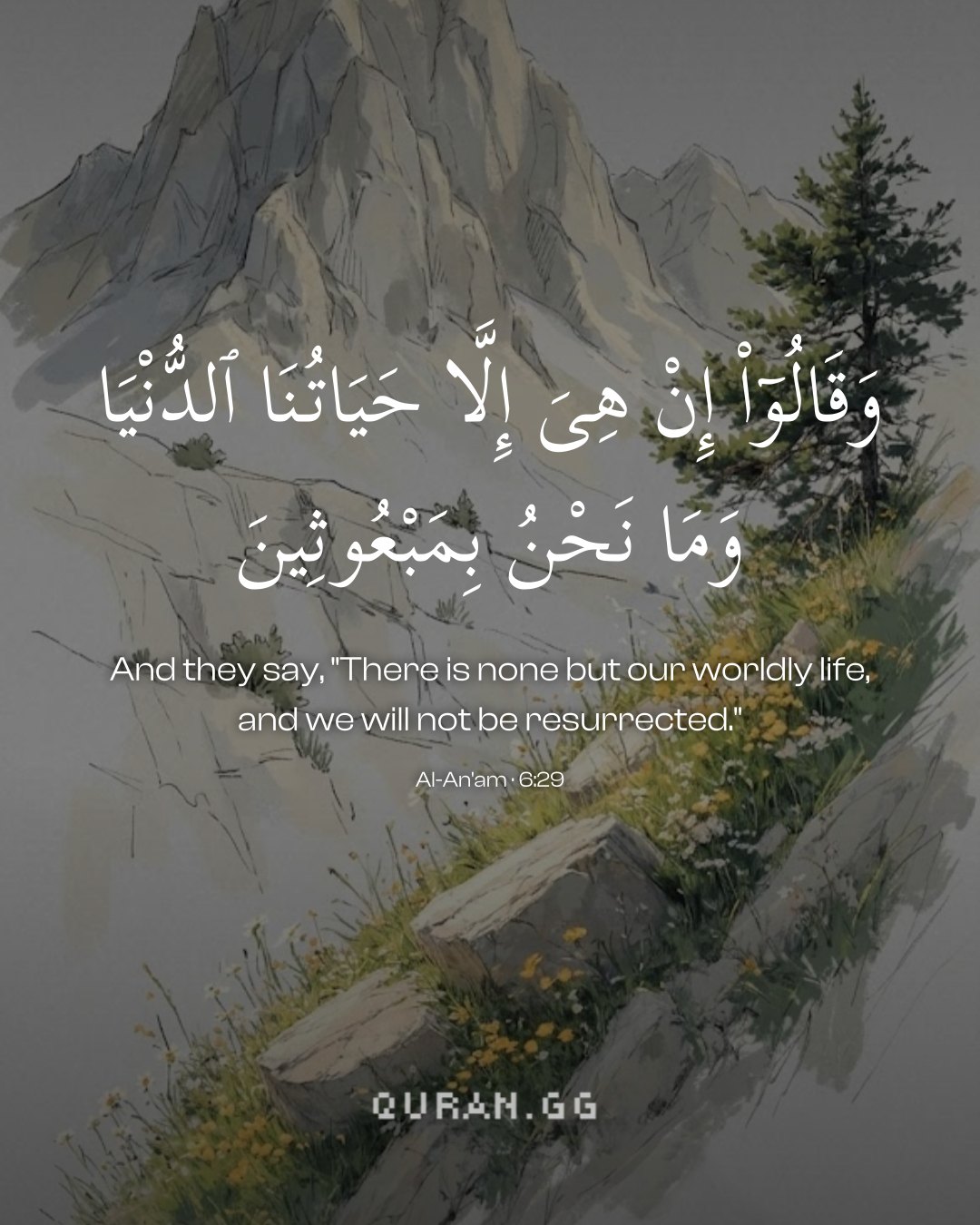
Continue reading the tafsir of ayahs 27–30 As for the statement in the third verse (29): وَقَالُوا إِنْ هِيَ إِلَّا حَيَاتُنَا الدُّنْيَا (And they say, "There is nothing real but this worldly life of ours" ), it reverts back to the word, عَادُوا (` adu: would again go for) in verse 28. Thus, it means that should they be returned to the world, then, once they reach there, they will still say that they do not accept any life other than the life of this world. Life here is the life and they were not going to be raised again.
A question arises here: When they have seen their return to life on the day of Qiyamah - and reckoning and accounting and reward and punishment - how can it be possible that they would deny it once they have been sent back into the world?
The answer is that denial does not make it necessary that, in reality, they remain uncertain about these events and facts. Instead, it would be very much like our contemporary disbelievers and wrong-doers who, despite their knowledge of Islamic realities, keep sticking to their denial and falsification simply because of their hostility, that these people, once they are returned to the world, and despite having personal certainty of the realities of the day of Qiyamah, of rising to life back again, and of what would happen in the Hereafter, they would still resort to their old habit of belying and falsification simply because of their wickedness or hostility. This is what the Qur'an has said about some disbelievers within this present life:
وَجَحَدُوا بِهَا وَاسْتَيْقَنَتْهَا أَنفُسُهُمْ ظُلْمًا وَعُلُوًّا
They are striving hard to deny Our signs - while in them-selves being certain of their truth - (only) unjustly, and out of pride - 27:14.
This is also similar to what was said about the Jews that they recognized the Last Prophet ﷺ as they would recognize their sons, yet they remained all bent on opposing him.
To sum up, it can be said that the Creator knows, in His eternal knowledge, that the claim of these people that once they have been sent back to the world, they would become ideal Muslims, is a lie and a deception. If they were, as they wished, to be released into the world put together after its destruction, then, once again, they would do exactly the same things they used to do in their earlier lives.
The Holy Prophet ﷺ is reported to have said: At the time of reckoning, Allah Ta` ala will ask Sayyidna Adam (علیہ السلام) to stand near the Scale of Justice and will ask him that he should look at the deeds of his progeny and allow anyone whose good deeds outweigh his sins to go to Paradise. And then He would say: The one I shall admit to the punishment of Hell will be the one about whom I know that he, i f sent to the world again, would do the same thing he had been doing earlier.
For people who have this temperament, all moralizing is in vain, because in this world of trial there is no such rule as prevents them from fabricating counter arguments. Even if they do not manage to concoct such arguments, they will contemptuously ignore the truth, saying, ‘What is new in this? This is the same old story which we have been hearing for such a long time.’ In this way, even after being convinced of the veracity of moral precepts, they will find some excuse to reject them. Before God such people are doubly guilty, because not only do they themselves refrain from admitting the Truth, but they also make the Divine argument seem dubious to people in general by distorting its true meaning; they have so little understanding themselves that they are unable to make any profound analysis of the subject. In the life of this world, such people make very tall claims, and because they lose nothing by denying the Truth, they mislead themselves and others. But on the Day of Judgement, when they are called to account and threatened with Hellfire, the Truth will overwhelm them. Suddenly they will start accepting those very principles which they had denied in this life.
Uthmani text of the Madinah mushaf (King Fahd Complex). Translation: Saheeh International. Tafsir via Quran.com.