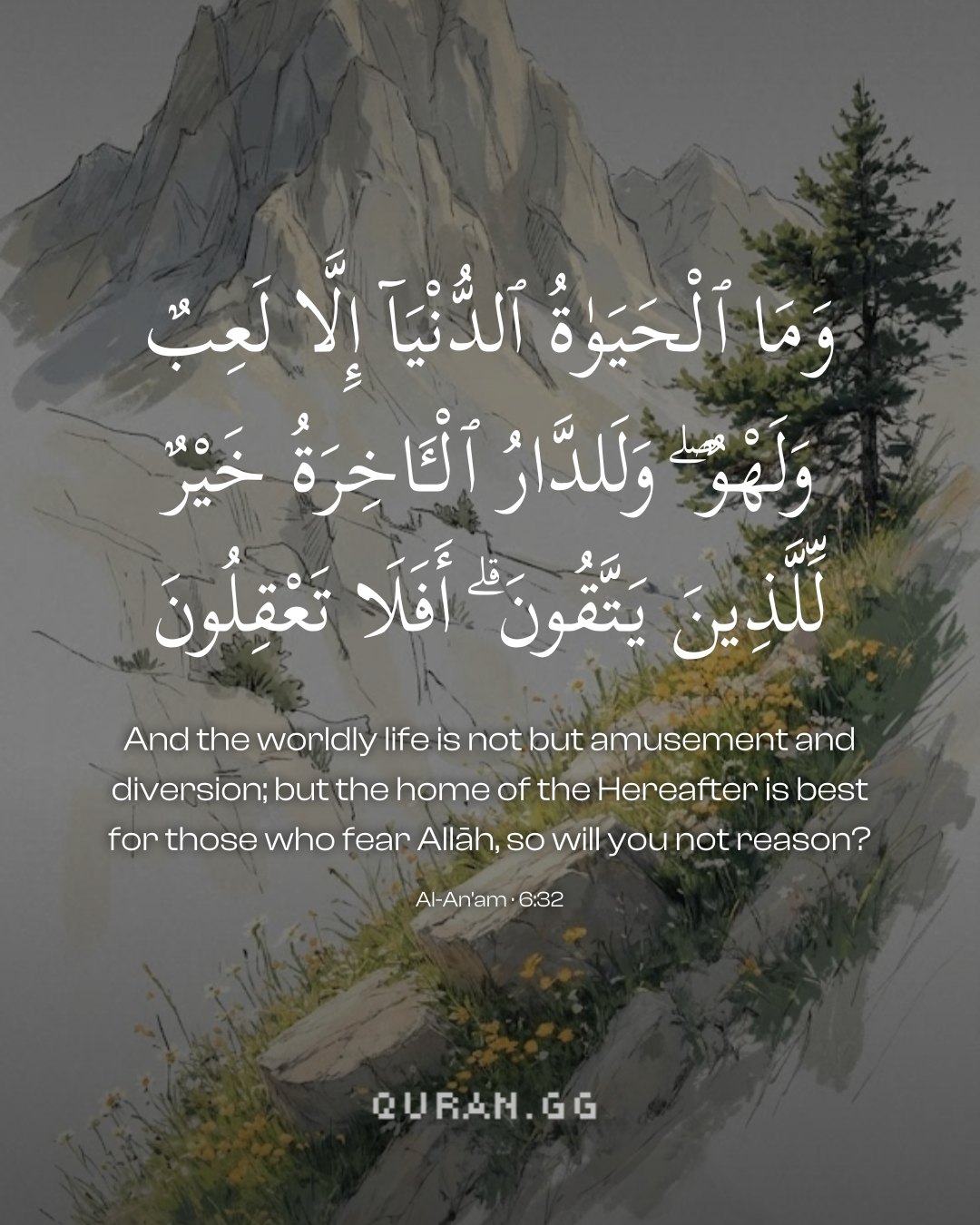
Allah describes the regret of the disbelievers when facing Him, and their disappointment at the commencement, along with theirsorrow for not performing good deeds and for their evil deeds
(until all of a sudden, the Hour (signs of death) is upon them, and they say: "Alas for us that we gave no thought to it.") `It' here refers to either the life of this world, or the affairs of the Hereafter. Allah's statement,
(while they will bear their burdens on their backs; and evil indeed are the burdens that they will bear!) Asbat said that As-Suddi said, "Upon entering his grave, every unjust person will meet a man with an ugly face, dark skin, awful odor, wearing dirty clothes, who will enter his grave with him. When the unjust person sees him, he will say, `How ugly is your face!' He will reply, `So was your work, it was ugly.' The unjust person will say, `How foul is the odor coming from you!' He will reply, `Such was the case with your work, it stunk.' The unjust person will say, `How dirty are your clothes!' He will reply, `And your work too was dirty.' The unjust person will ask, `Who are you' He will reply, `I am your deeds.' So he will remain with the unjust person in his grave, and when he is resurrected on the Day of Resurrection, his companion will say to him, `In the life of the world, I used to carry you because you followed desire and lust. Today, you carry me.' So he will ride on the unjust person's back and lead him until he enters the Fire. So Allah said,
About the sentence: وَهُمْ يَحْمِلُونَ أَوْزَارَهُمْ (And they shall be carrying their burdens) in verse 31, it appears in Hadith narrations that, on the day of Qiyamah, the deeds of good people will become their ride while the evil deeds of evil people will be placed like a burden on their heads.
Noteworthy here is that disbelievers and sinners will do everything possible to save their skins on the fateful day of Resurrection. They will be nervous and confused. Sometimes they would hide behind false swearing. At others, they would wish to be returned to the world of their earlier experience. But, none of them will say: Now, we have believed and now we shall be doing nothing but what is good - because they would have seen reality and seen it very clearly - that the phase of Akhirah, the Hereafter, is not the Venue of Deeds (Dar al-Amal), and that the soundness of 'Iman (faith) depends on its being ` bil-ghayb,' that is, without having the need to see what is Unseen. Confirming what has been seen is simply acting in line with what has been personally seen. It is not what the attestation to the truth of Allah and His Messenger is. So, let us be very clear that working for the pleasure of Allah Ta` ala, earning its fruits in the form of the promised state of everlasting bliss, hoping to be blessed with Paradise in the Hereafter, and having a good life of peace and tranquility right here are things which can be achieved only (repeat, only) through the life of the present world, neither before, nor after - for it is not possible to achieve these in the universe of spirits (arwah) before it, nor is it possible to achieve it in the domain of the Hereafter, after the world of our experience is no more there.
A life lived on the assumption that the world belongs to God is a truly God-fearing life, i.e. a life of taqwa, whereas a life in which no such assumption is made is one of sinfulness, being entirely given over to worldly pleasures and trivialities. The latter pleasure-seeking life will last—in terms of eternity—for only a matter of days and, with death, will come to an end, whereas the God-fearing life, regulated by God’s eternal principles, will continue to stand man in good stead both in this world and the next. In the present world man denies these realities but, as soon as the freedom given to him under test conditions ends, he will be compelled to accept them, though acceptance at that time will be of no avail.
Uthmani text of the Madinah mushaf (King Fahd Complex). Translation: Saheeh International. Tafsir via Quran.com.