Tafsir Ibn Kathir (abridged)
The Invitation to the Truth is Guidance Without Coercion
Allah said,
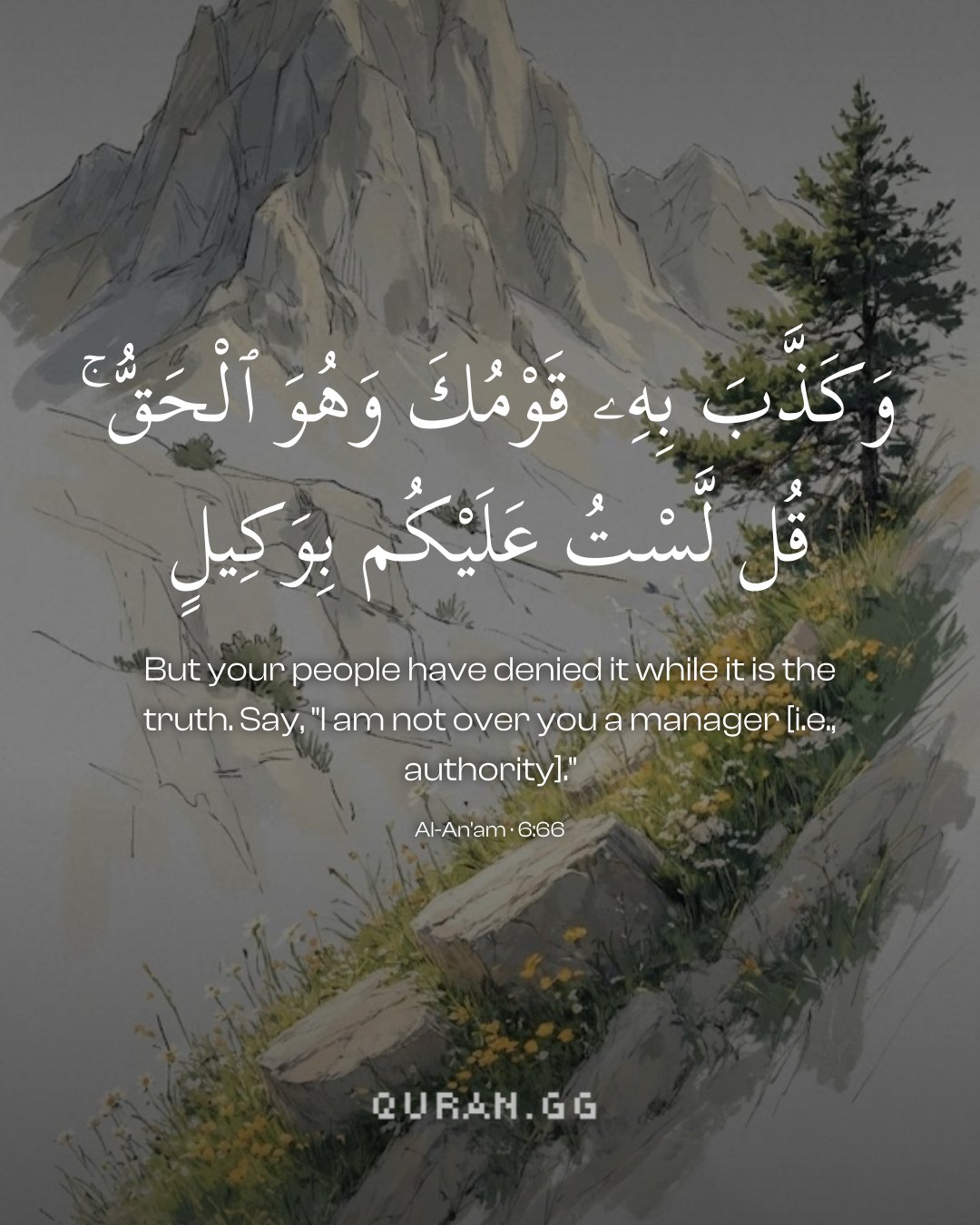
وَكَذَّبَ بِهِ
(But have denied it) denied the Qur'an, guidance and clear explanation that you (O Muhammad ) have brought them,
قَوْمُكَ
(your people) meaning, Quraysh,
وَهُوَ الْحَقُّ
(though it is the truth.) beyond which there is no other truth.
قُل لَّسْتُ عَلَيْكُمْ بِوَكِيلٍ
(Say: "I am not responsible for your affairs.") meaning, I have not been appointed a guardian or watcher over you. Allah also said;
وَقُلِ الْحَقُّ مِن رَّبِّكُمْ فَمَن شَآءَ فَلْيُؤْمِن وَمَن شَآءَ فَلْيَكْفُرْ
(And say: "The truth is from your Lord." Then whosoever wills, let him believe, and whosoever wills, let him disbelieve.) 18:29, This means, my duty is to convey the Message and your duty is to hear and obey. Those who follow me, will acquire happiness in this life and the Hereafter. Those who defy me will become miserable in this life and the Hereafter. So Allah said;
لِّكُلِّ نَبَإٍ مُّسْتَقَرٌّ
(For every news there is a reality...) meaning, for every news, there is a reality, in that, this news will occur, perhaps after a while, according to Ibn `Abbas and others. Allah said in other Ayat,
وَلَتَعْلَمُنَّ نَبَأَهُ بَعْدَ حِينِ
(And you shall certainly know the truth of it after a while.) 38:88 and,
لِكُلِّ أَجَلٍ كِتَابٌ
((For) each and every matter there is a decree (from Allah).) 13:38. This, indeed, is a warning and a promise that will surely occur,
وَسَوْفَ تَعْلَمُونَ
(and you will come to know.) Allah's statement,
وَإِذَا رَأَيْتَ الَّذِينَ يَخُوضُونَ فِى ءَايَـتِنَا
(And when you see those who engage in false conversation about Our verses (of the Qur'an)), by denying and mocking them.
The Prohibition of Sitting with Those Who Deny and Mock Allah's Ayat
فَأَعْرِضْ عَنْهُمْ حَتَّى يَخُوضُواْ فِى حَدِيثٍ غَيْرِهِ
(stay away from them till they turn to another topic.) until they talk about a subject other than the denial they were engaged in.
وَإِمَّا يُنسِيَنَّكَ الشَّيْطَـنُ
(And if Shaytan causes you to forget...) This command includes every member of this Ummah. No one is to sit with those who deny and distort Allah's Ayat and explain them incorrectly. If one forgets and sits with such people,
فَلاَ تَقْعُدْ بَعْدَ الذِّكْرَى
(then after the remembrance sit not you) after you remember,
مَعَ الْقَوْمِ الظَّـلِمِينَ
(in the company of those people who are the wrongdoers.). A Hadith states,
«رُفِعَ عَنْ أُمَّتِي الْخَطَأُ وَالنِّسْيَانُ وَمَا اسْتُكْرِهُوا عَلَيْه»
(My Ummah was forgiven unintentional errors, forgetfulness and what they are coerced to do.) The Ayah above 6:68 is the Ayah mentioned in Allah's statement,
وَقَدْ نَزَّلَ عَلَيْكُمْ فِى الْكِتَـبِ أَنْ إِذَا سَمِعْتُمْ ءَايَـتِ اللَّهِ يُكَفَرُ بِهَا وَيُسْتَهْزَأُ بِهَا فَلاَ تَقْعُدُواْ مَعَهُمْ حَتَّى يَخُوضُواْ فِى حَدِيثٍ غَيْرِهِ إِنَّكُمْ إِذاً مِّثْلُهُمْ
(And it has already been revealed to you in the Book that when you hear the Verses of Allah being denied and mocked at, then sit not with them, until they engage in a talk other than that; (but if you stayed with them) certainly in that case you would be like them.) 4:140, for, if you still sit with them, agreeing to what they say, you will be just like them. Allah's statement,
وَمَا عَلَى الَّذِينَ يَتَّقُونَ مِنْ حِسَابِهِم مِّن شَىْءٍ
(There is no responsibility for them upon those who have Taqwa,) means, when the believers avoid sitting with wrongdoers in this case, they will be innocent of them and they will have saved themselves from their sin. Allah's statement,
وَلَـكِن ذِكْرَى لَعَلَّهُمْ يَتَّقُونَ
(but (their duty) is to remind them, that they may avoid that.), means, We commanded you to ignore and avoid them, so that they become aware of the error they are indulging in, that they may avoid this behavior and never repeat it again.