The Invitation to the Truth is Guidance Without Coercion
Allah said,
وَكَذَّبَ بِهِ
(But have denied it) denied the Qur'an, guidance and clear explanation that you (O Muhammad ) have brought them,
قَوْمُكَ
(your people) meaning, Quraysh,
وَهُوَ الْحَقُّ
(though it is the truth.) beyond which there is no other truth.
قُل لَّسْتُ عَلَيْكُمْ بِوَكِيلٍ
(Say: "I am not responsible for your affairs.") meaning, I have not been appointed a guardian or watcher over you. Allah also said;
وَقُلِ الْحَقُّ مِن رَّبِّكُمْ فَمَن شَآءَ فَلْيُؤْمِن وَمَن شَآءَ فَلْيَكْفُرْ
(And say: "The truth is from your Lord." Then whosoever wills, let him believe, and whosoever wills, let him disbelieve.) 18:29, This means, my duty is to convey the Message and your duty is to hear and obey. Those who follow me, will acquire happiness in this life and the Hereafter. Those who defy me will become miserable in this life and the Hereafter. So Allah said;
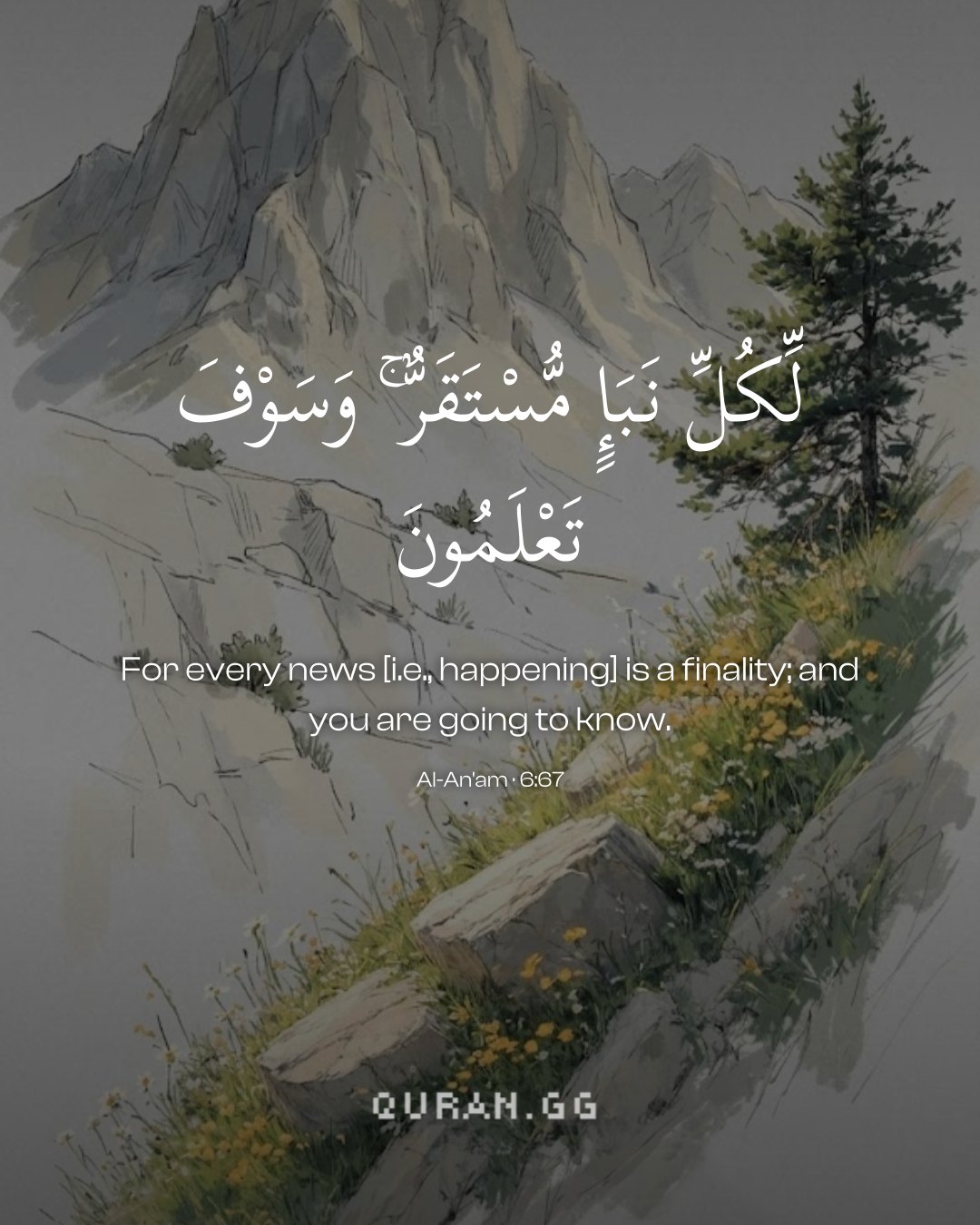
Continue reading the tafsir of ayahs 66–69 In the second verse (66), after mentioning the anti-truth stand taken by the Quraysh of Makkah, the Holy Prophet ﷺ also from the same tribe, has been instructed that he should tell those people asking about the precise time when the promised punishment will come that he has not been appointed to do that for them. The truth is that for everything there is a point of time as determined in Divine knowledge. It will come at its own time, and they will see for themselves what happens when it does.
Basically, polytheism (shirk) is the reposing of one’s faith in some entity other than God, while monotheism is directing of man’s entire faith solely towards God. One form of polytheism is that which involves worship of deities and of other phenomena. But exhibiting ingratitude instead of gratitude is also ‘shirk’. The more common form of shirk is that whereby a man makes a deity of himself; he starts having faith only in himself. When a man proves to be vain, it is as if he has faith in his efforts alone. When a man considers his earnings as actually having been generated by him, he in fact has faith only in his own talents. When a man overlooks another’s right, he thinks that nobody can inflict any punishment on him for doing so. When a man dares to oppress another, he thinks that he has full powers over the wronged person and there is nobody to prevent him from doing whatever he likes to him. All these are forms of vanity and pride. And pride is—before God—the worst type of shirk, because indulging in this amounts to placing oneself in the position of God.
Uthmani text of the Madinah mushaf (King Fahd Complex). Translation: Saheeh International. Tafsir via Quran.com.