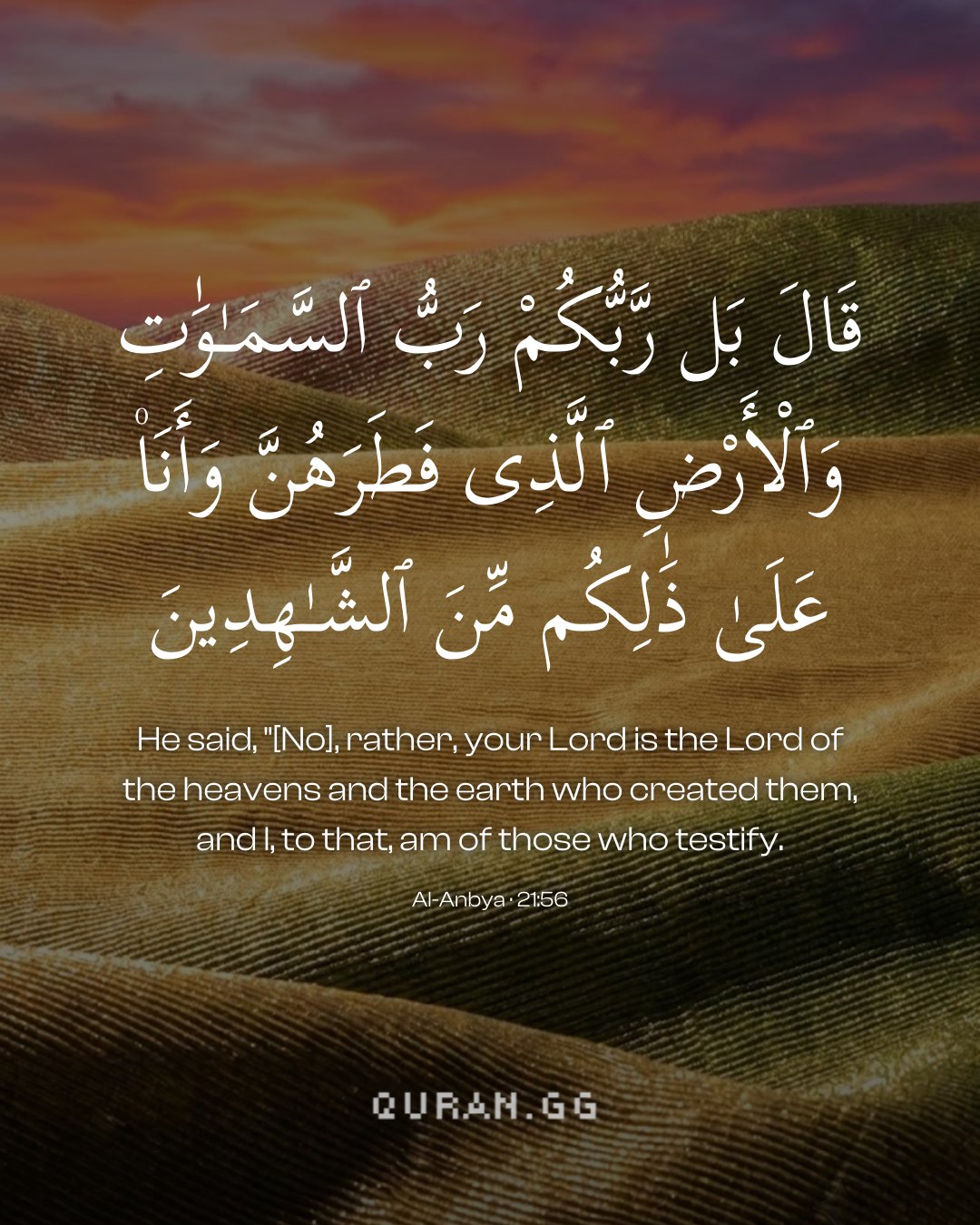
Allah tells us about His close Friend Ibrahim, peace be upon him, and how He bestowed upon him guidance aforetime, i.e., from an early age He inspired him with truth and evidence against his people, as Allah says elsewhere:
(And that was Our proof which We gave Ibrahim against his people) 6:83. The point here is that Allah is telling us that He gave guidance to Ibrahim aforetime, i.e., He had already guided him at an early age.
وَكُنَّا بِهِ عَـلِمِينَ
(and We were Well-Acquainted with him.) means, and he was worthy of that. Then Allah says:
الْفُرْقَانَ وَضِيَاءً وَذِكْرًا لِّلْمُتَّقِينَ (Criterion and light and an advice for the God-fearing - 21:48) The three attributes which belong to Torah are فُرْقَانَ (criterion) which differentiates between right and wrong second is 4 ' (light) which provides light and manifestation of truth to hearts, and the third is ذِکر (advice) which is a source of guidance for the people. Some explain فُرْقَانَ as help from God which was available to Sayyidna Musa (علیہ السلام) all times. It was manifest when he was raised in the Pharaoh's house, then at the time of his contest with the Egyptian magicians which resulted in the Pharaoh's discomfiture, and again when he was pursued by the Pharaoh and his army and Allah saved him by causing dry passageways to appear in the river and, after the Bani Isra'il had crossed over to the other side, by drowning the Pharaoh and his army. Even after this incident Allah's help was available to him at all times. Qurtubi has pointed out that whereas (ضِيَاءً light) and ذِکر (advice) are the attributes of Torah, o4 (criterion) is something else and not an attribute of Torah, because of the use of the conjunctive letter Wa.'o (و) after the word فُرْقَانَ (Allah knows best).
Tazkirul Quran
Maulana Wahiduddin KhanOn ayahs 54–57
It is God’s principle to give according to the capability of the receiver. Abraham passed through different trials and tests and proved his mettle: God accordingly gave him guidance and divine knowledge. This is how God deals with His subjects. Abraham was born in Iraq in the ancient city of Ur. At that time polytheism was all-pervasive. In spite of being brought up in this polytheistic atmosphere, Abraham was not influenced by it. He examined things rationally, rising completely above his immediate environment, he was able to discover the truth. He was living in a world where every worldly honour and progress were linked with polytheism. But he did not care for all this. Unmindful of all worldly considerations, he criticised the behaviour of his community and became ready to declare the Truth before it—these are the attributes which make an individual capable of receiving God’s guidance.
Uthmani text of the Madinah mushaf (King Fahd Complex). Translation: Saheeh International. Tafsir via Quran.com.