Tafsir Ibn Kathir (abridged)
The Messengers are no more than Human Beings
Here Allah refutes those who denied that human Messengers could be sent:
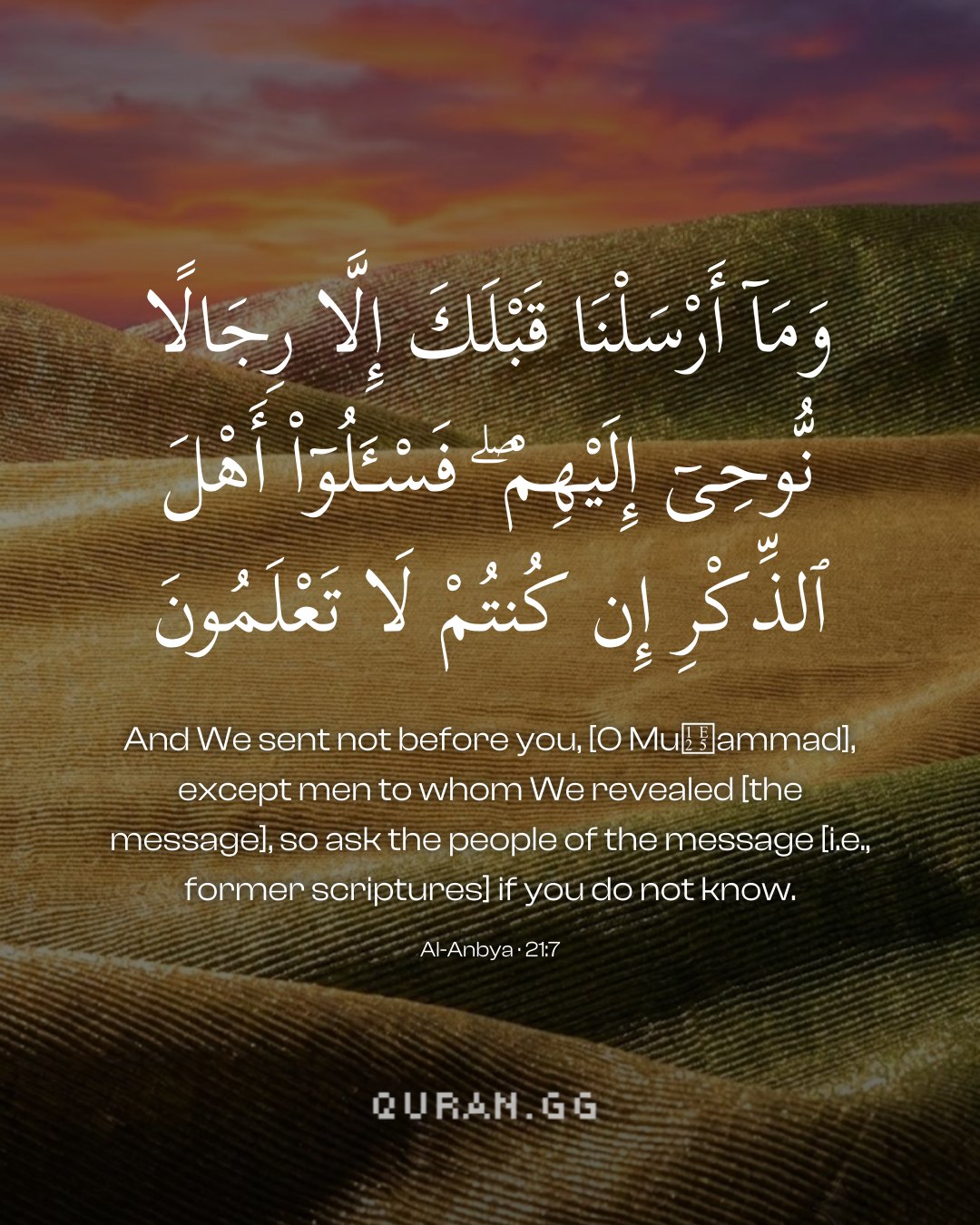
وَمَآ أَرْسَلْنَا قَبْلَكَ إِلاَّ رِجَالاً نُّوحِى إِلَيْهِمْ
(And We sent not before you but men to whom We revealed.) meaning, all the Messengers who came before you were men, human beings. There were no angels among them. This is like the Ayat:
وَمَآ أَرْسَلْنَا مِن قَبْلِكَ إِلاَّ رِجَالاً نُّوحِى إِلَيْهِمْ مِّنْ أَهْلِ الْقُرَى
(And We sent not before you any but men unto whom We revealed, from among the people of townships) 12:109
قُلْ مَا كُنتُ بِدْعاً مِّنَ الرُّسُلِ
(Say: "I am not a new thing among the Messengers...) 46:9 Allah tells us that the previous nations denied that and said:
أَبَشَرٌ يَهْدُونَنَا
("Shall mere men guide us") 64:6. So Allah says here:
فَاسْأَلُواْ أَهْلَ الذِّكْرِ إِن كُنْتُم لاَ تَعْلَمُونَ
(So ask the people of the Reminder if you do not know.) meaning, ask the people of knowledge among the nations such as the Jews and Christians and other groups: `were the Messengers who came to you human beings or angels' Indeed they were human beings. This is a part of the perfect blessing of Allah towards His creation: He sent to them Messengers from among themselves so that they could receive the Message from them and learn from them.
وَمَا جَعَلْنَـهُمْ جَسَداً لاَّ يَأْكُلُونَ الطَّعَامَ
(And We did not place them in bodies that did not eat food...) meaning, rather they had bodies that ate food, as Allah says:
وَمَآ أَرْسَلْنَا قَبْلَكَ مِنَ الْمُرْسَلِينَ إِلاَّ إِنَّهُمْ لَيَأْكُلُونَ الطَّعَامَ وَيَمْشُونَ فِى الاٌّسْوَاقِ
(And We never sent before you any of the Messengers but verily, they ate food and walked in the markets) 25:20 meaning, they were human beings who ate and drank like all other people, and they went to the marketplaces to earn a living and engage in business; that did not affect them adversely or reduce their status in any way, as the idolators imagined.
مَا لِهَـذَا الرَّسُولِ يَأْكُلُ الطَّعَامَ وَيَمْشِى فِى الاٌّسْوَاقِ لَوْلا أُنزِلَ إِلَيْهِ مَلَكٌ فَيَكُونَ مَعَهُ نَذِيراًأَوْ يُلْقَى إِلَيْهِ كَنْزٌ أَوْ تَكُونُ لَهُ جَنَّةٌ يَأْكُلُ مِنْهَا
(And they say: "Why does this Messenger eat food, and walk about in the markets. Why is not an angel sent down to him to be a warner with him Or (why) has not a treasure been granted to him, or why has he not a garden whereof he may eat") 25:7-8
وَمَا كَانُواْ خَـلِدِينَ
(nor were they immortals) meaning, in this world; on the contrary, they lived, then they died.
وَمَا جَعَلْنَا لِبَشَرٍ مِّن قَبْلِكَ الْخُلْدَ
(And We granted not to any human being immortality before you) 21:34 But what distinguished them from others was that they received revelation from Allah, and the angels brought down to them from Allah His rulings concerning His creation, what He commanded and what He prohibited.
ثُمَّ صَدَقْنَـهُمُ الْوَعْدَ
Then We fulfilled to them the promise. the promise that their Lord made to destroy the evildoers. Allah fulfilled His promise and did that. He says:
فَأَنجَيْنَـهُمْ وَمَن نَّشَآءُ
(So We saved them and those whom We willed,) meaning, their followers among the believers,
وَأَهْلَكْنَا الْمُسْرفِينَ
(but We destroyed Al-Musrifin.) meaning, those who disbelieved the Message brought by the Messengers.