Tafsir Ibn Kathir (abridged)
The Meaning of `Ummi
Allah said,
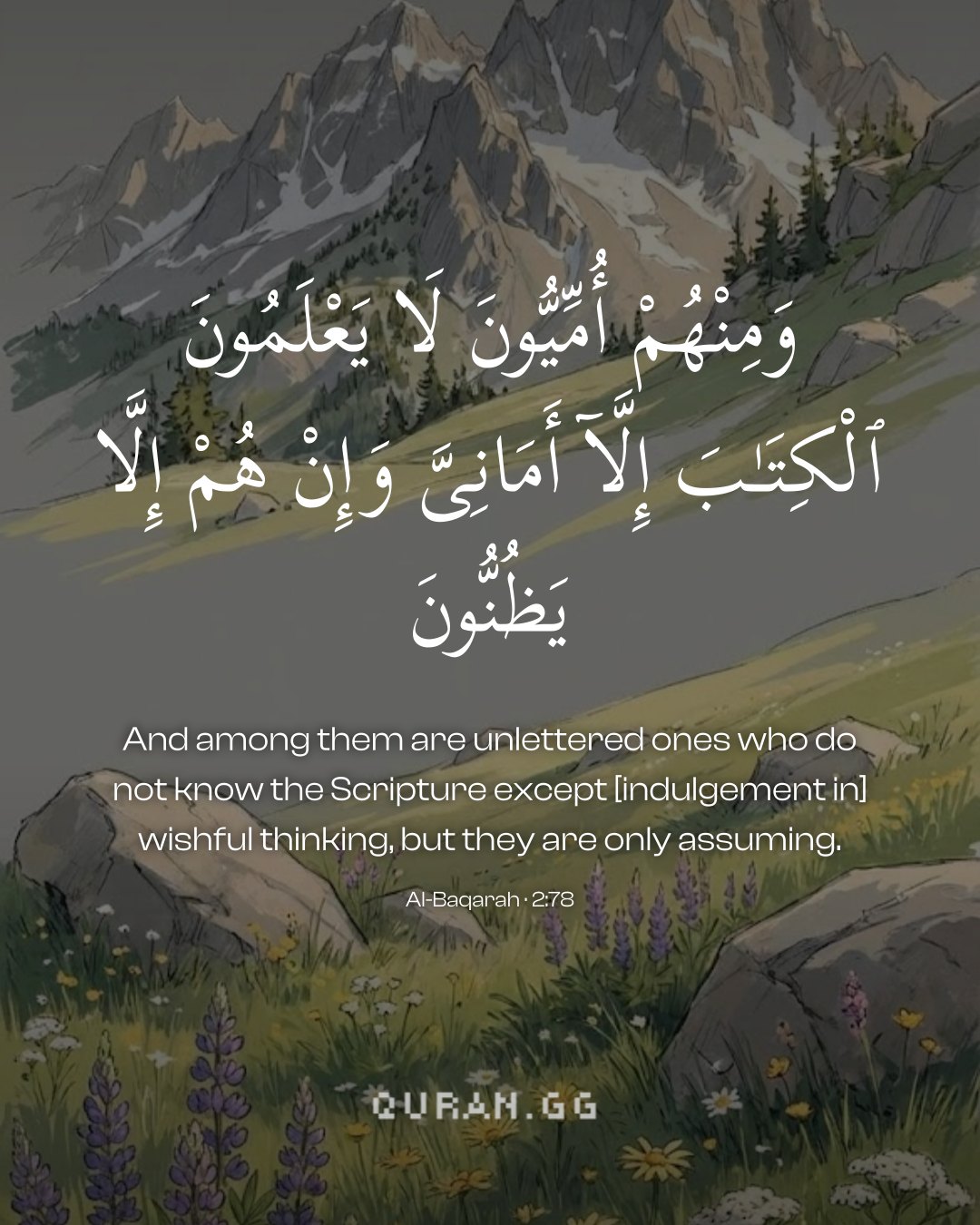
وَمِنْهُمْ أُمِّيُّونَ
(And there are among them Ummyyun people) meaning, among the People of the Book, as Mujahid stated. Ummyyun, is plural for Ummi, that is, a person who does not write, as Abu Al-`Aliyah, Ar-Rabi`, Qatadah, Ibrahim An-Nakha`i and others said. This meaning is clarified by Allah's statement,
لاَ يَعْلَمُونَ الْكِتَـبَ
(Who know not the Book) meaning, are they not aware of what is in it.
Ummi was one of the descriptions of the Prophet because he was unlettered. For instance, Allah said,
وَمَا كُنتَ تَتْلُو مِن قَبْلِهِ مِن كِتَـبٍ وَلاَ تَخُطُّهُ بِيَمِينِكَ إِذاً لاَّرْتَـبَ الْمُبْطِلُونَ
(Neither did you (O Muhammad ) read any book before it (this Qur'an) nor did you write any book (whatsoever) with your right hand. In that case, indeed, the followers of falsehood might have doubted) (29:48).
Also, the Prophet said,
«إِنَّا أُمَّةٌ أُمِّيَّةٌ لَا نَكْتُبُ وَلَا نَحْسِبُ، الشَّهْرُ هكَذَا وَهكَذَا وَهكَذَا»
(We are an Ummi nation, neither writing nor calculating. The (lunar) month is like this, this and this (i.e. thirty or twenty-nine days.)
This Hadith stated that Muslims do not need to rely on books, or calculations to decide the timings of their acts of worship. Allah also said,
هُوَ الَّذِى بَعَثَ فِى الأُمِّيِّينَ رَسُولاً مِّنْهُمْ
(He it is Who sent among the Ummiyyin ones a Messenger (Muhammad ) from among themselves) (62:2).
The Explanation of Amani
Ad-Dahhak said that Ibn `Abbas said that Allah's statement,
إِلاَّ أَمَانِىَّ
(But they trust upon Amani) means, "It is just a false statement that they utter with their tongues." It was also said that Amani means `wishes and hopes'. Mujahid commented, "Allah described the Ummiyyin as not understanding any of the Book that Allah sent down to Musa, yet they create lies and falsehood." Therefore, the word Amani mentioned here refers to lying and falsehood. Mujahid said that Allah's statement,
وَإِنْ هُمْ إِلاَّ يَظُنُّونَ
(And they but guess) means, "They lie." Qatadah, Abu Al-`Aliyah and Ar-Rabi` said that it means, "They have evil false ideas about Allah."
Woe unto Those Criminals among the Jews
Allah said,
فَوَيْلٌ لِّلَّذِينَ يَكْتُبُونَ الْكِتَـبَ بِأَيْدِيهِمْ ثُمَّ يَقُولُونَ هَـذَا مِنْ عِندِ اللَّهِ لِيَشْتَرُواْ بِهِ ثَمَنًا قَلِيلاً
(Then Waylun (woe) to those who write the book with their own hands and then say, "This is from Allah," to purchase with it a little price!).
This is another category of people among the Jews who called to misguidance with falsehood and lies about Allah, thriving on unjustly amassing people's property. `Waylun (woe)' carries meanings of destruction and perishing, and it is a well-known word in the Arabic language. Az-Zuhri said that `Ubadydullah bin `Abdullah narrated that Ibn `Abbas said, "O Muslims! How could you ask the People of the Book about anything, while the Book of Allah (Qur'an) that He revealed to His Prophet is the most recent Book from Him and you still read it fresh and young Allah told you that the People of the Book altered the Book of Allah, changed it and wrote another book with their own hands. They then said, `This book is from Allah,' so that they acquired a small profit by it. Hasn't the knowledge that came to you prohibited you from asking them By Allah! We have not seen any of them asking you about what was revealed to you." This Hadith was also collected by Al-Bukhari. Al-Hasan Al-Basri said, "The little amount here means this life and all that it contains."
Allah's statement,
فَوَيْلٌ لَّهُمْ مِّمَّا كَتَبَتْ أَيْدِيهِمْ وَوَيْلٌ لَّهُمْ مِّمَّا يَكْسِبُونَ
(Woe to them for what their hands have written and woe to them for that they earn thereby) means, "Woe to them because of what they have written with their own hands, the lies, falsehood and alterations. Woe to them because of the property that they unjustly acquired." Ad-Dahhak said that Ibn `Abbas commented,
فَوَيْلٌ لَّهُمْ
(Woe to them), "Means the torment will be theirs because of the lies that they wrote with their own hands,
وَوَيْلٌ لَّهُمْ مِّمَّا يَكْسِبُونَ
(And woe to them for that they earn thereby), which they unjustly acquired from people, be they commoners or otherwise."