(And when the disbelievers see you, they take you not except for mockery) (21:36), which means that they tried to find faults and shortcomings in him. Here Allah says:
(And when they see you, they treat you only in mockery (saying): "Is this the one whom Allah has sent as a Messenger") i.e., they said this by way of belittling and trying to undermine him, so Allah put them in their place, and said:
أَرَأَيْتَ مَنِ اتَّخَذَ إِلَـٰهَهُ هَوَاهُ (Tell me about the one who has taken his desire as his god - 25:43). The one who practises forbidden things which are against the tenets of Islam to satisfy his personal desires is described in this verse as the worshiper of his own lust. Sayyidna Ibn ` Abbas ؓ said that the selfish desires are like an idol which is worshipped (by the infidels) and then he recited this verse to prove his point. (Qurtubi)
Tazkirul Quran
Maulana Wahiduddin KhanOn ayahs 44–48
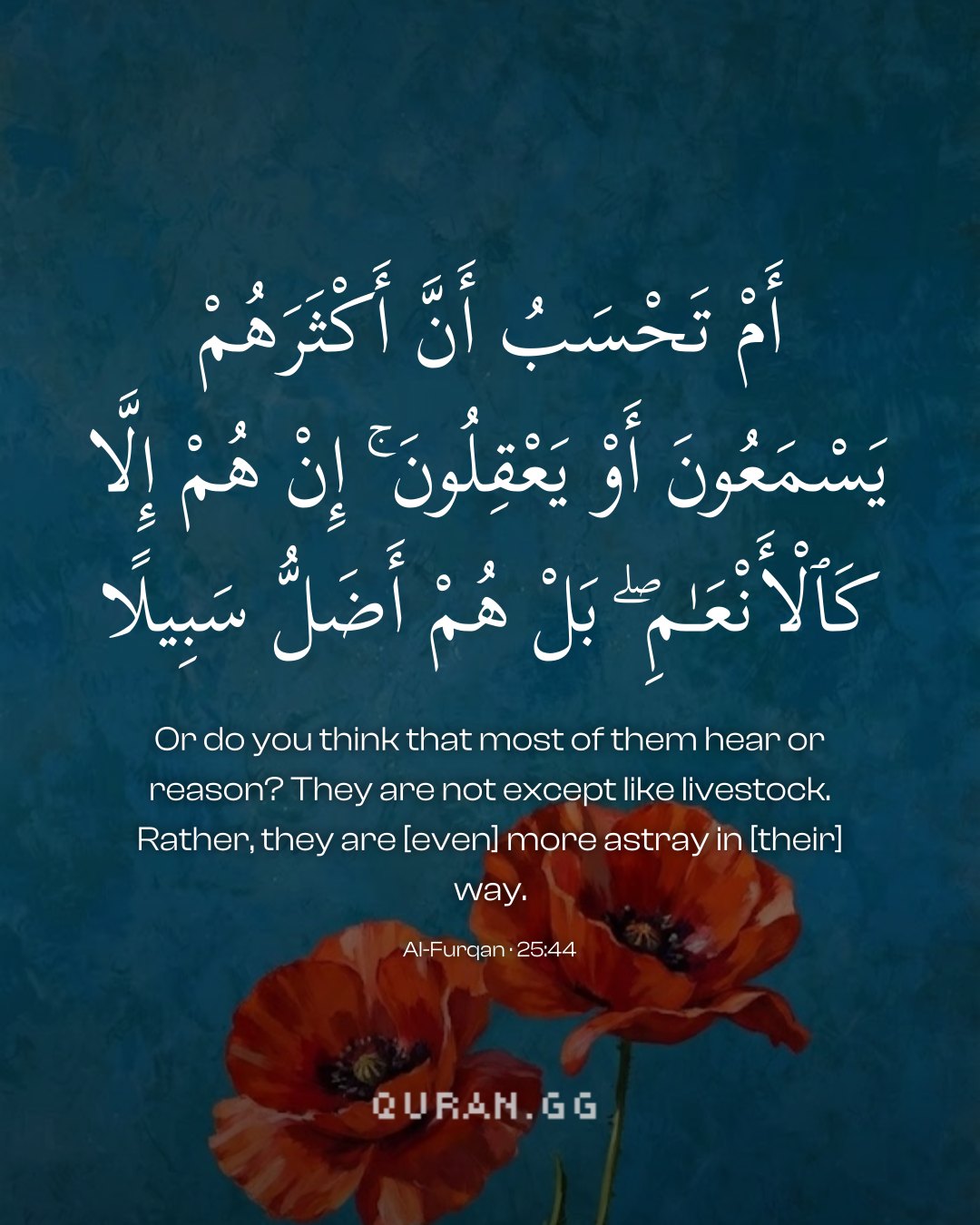
Responding to the lure of desire, a man descends to the level of an animal. Animals do not act as a result of thinking, but simply submit to the pressure of their natural instincts. Now, if a man does not utilise his thinking capacity and simply follows the dictates of his base desires, what is the difference between him and an animal?
Uthmani text of the Madinah mushaf (King Fahd Complex). Translation: Saheeh International. Tafsir via Quran.com.