More Attributes of the Servants of the Most Gracious
These are further attributes of the servants of the Most Gracious. They do not bear witness to falsehood, including lies, immorality, disbelief, foul speech and false words. `Amr bin Qays said, this refers to gatherings of sexual immorality. It was said that the Ayah,
لاَ يَشْهَدُونَ الزُّورَ
(And those who do not bear witness to falsehood,) refers to giving false testimony, which means lying deliberately to someone else. It was recorded in the Two Sahihs that Abu Bakrah said, "The Messenger of Allah ﷺ said three times:
«أَلَا أُنَبِّئُكُمْ بِأَكْبَرِ الْكَبَائِرِ؟»
(Shall I not tell you of the greatest of major sins) We said, "Of course, O Messenger of Allah." The Messenger of Allah ﷺ said:
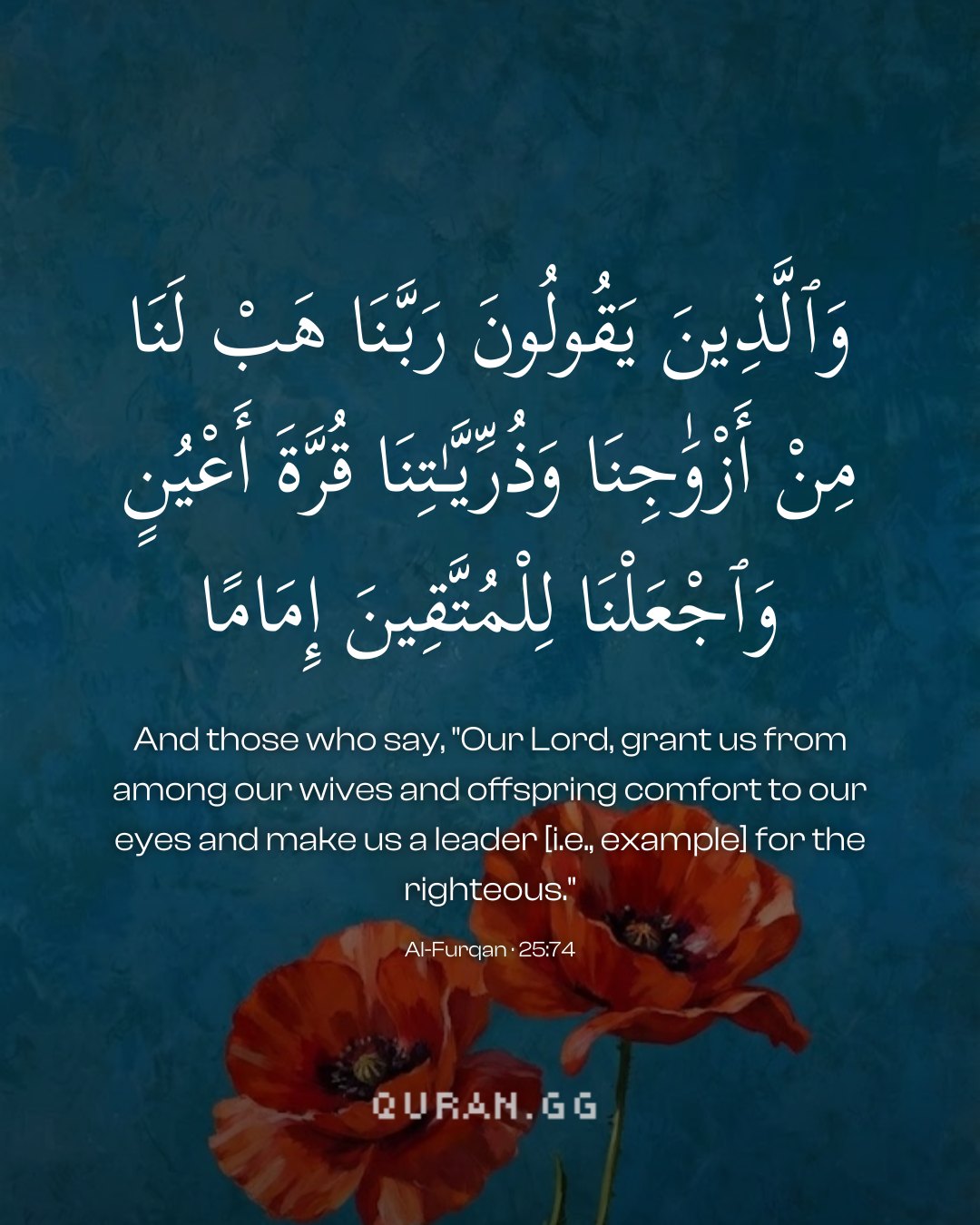
And those who say, "Our Lord, Give us, from our spouses and our children, coolness of eyes and make us heads of the God-fearing. (25:74)
This verse contains a prayer for one's spouses and children. According to the explanation put forward by Hasan al-Basri (رح) one can draw solace from his dear ones (wife and children) if they submit to the way of Allah. That is the true bliss for a man, and if the good health and well being of the wife and children is also added to this, it is also in order.
What is alluded here is that the righteous servants of God do not care about correcting themselves only, but also take care of the virtuous actions of their children and spouse, and keep trying for their improvement, and it is a part of their efforts that they pray Allah to make them take the right path. The second sentence of this verse says وَاجْعَلْنَا لِلْمُتَّقِينَ إِمَامًا (and make us heads of the God-fearing - 25:74) Apparently this is a prayer for getting a high status and a source of pride, which is forbidden by other injunctions of the Holy Qur'an. The Qur’ an says at another place" تِلْكَ الدَّارُ الْآخِرَةُ نَجْعَلُهَا لِلَّذِينَ لَا يُرِيدُونَ عُلُوًّا فِي الْأَرْضِ وَلَا فَسَادًا that is "As for that ultimate Abode (the Hereafter), We assign it to those who intend neither haughtiness on earth nor mischief (28:83). And the (best) end is for the God-fearing - 28:83". Hence, some scholars have commented about this sentence of the verse that everyone is the head or Imam of his family. Thus, if his family members become God fearing, he will automatically be their head or Imam. Therefore, the final outcome is that prayer was not meant for personal aggrandizement, but for the family members to follow the right path. Ibrahim Nakha` i (رح) has also explained about this verse that the prayer contained in it is not meant for a high position or authority for oneself but to request the grant of such a disposition that people try to emulate it in religious deeds and actions, and that it be of benefit to others and thus might fetch the praying people some of its reward. And Sayyidna Makhul Shami (رح) has elucidated that the purpose of the prayer is to implore an exalted status of God consciousness that even the God fearing people may also draw inspiration to follow that. Qurtubi has narrated both these explanations and then commented that the net outcome of both is the same, that the desire for an elated position or high office in religious affairs for attaining reward in the Hereafter is not improper; rather it is allowed. On the other hand in verse لَا يُرِيدُونَ عُلُوًّا (who intend neither haughtiness - 28:83) the desire and search for worldly exaltation and authority has been condemned. Here the description about the main traits of ` Ibad-ur-Rahman or the perfect believers has been completed. Now their rewards and degrees of exaltation in the Hereafter are related.
Tazkirul Quran
Maulana Wahiduddin KhanOn ayahs 74–76
Every man with a family is the leader (imam) of his family. If his family members are God-fearing, he is the imam of God-fearing people. But if his family members are forgetful of God, he is at the head of those who are oblivious of God.
Uthmani text of the Madinah mushaf (King Fahd Complex). Translation: Saheeh International. Tafsir via Quran.com.