Surah Al-Hajj Ayah 61 (22:61) — Meaning & Tafsir | Quran.GG

Surah Al-Hajj, Ayah 61

22:61 · Meaning and tafsir

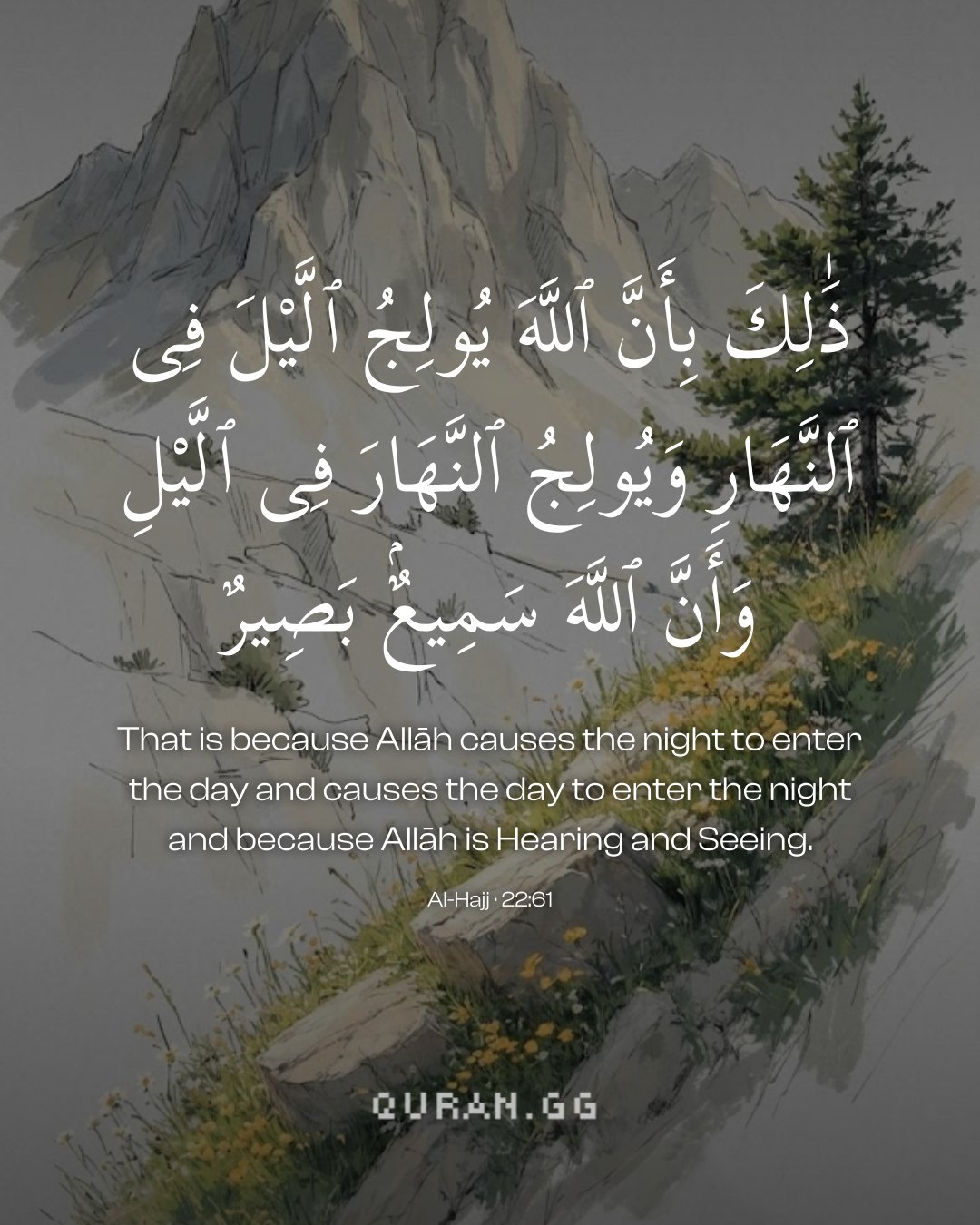
ذَٰلِكَ بِأَنَّ ٱللَّهَ يُولِجُ ٱلَّيْلَ فِى ٱلنَّهَارِ وَيُولِجُ ٱلنَّهَارَ فِى ٱلَّيْلِ وَأَنَّ ٱللَّهَ سَمِيعٌۢ بَصِيرٌ ٦١

That is because Allāh causes the night to enter the day and causes the day to enter the night and because Allāh is Hearing and Seeing.

Surah Al-Hajj 22:61 in Arabic with its translation: “That is because Allāh causes the night to enter the day and causes the day to enter the night and because…”

Make something with this ayah

Turn it into a video for Stories, Reels or TikTok, recited by the reciter you pick, or an image on a background you choose. Free, in your browser.

Download this image

Tafsir Ibn Kathir (abridged)

The Creator and Controller of this World is Allah

Allah tells us that He is the Creator Who directs the affairs of His creation as He wills. He tells us:

قُلِ اللَّهُمَّ مَـلِكَ الْمُلْكِ تُؤْتِى الْمُلْكَ مَن تَشَآءُ وَتَنزِعُ الْمُلْكَ مِمَّن تَشَآءُ وَتُعِزُّ مَن تَشَآءُ وَتُذِلُّ مَن تَشَآءُ بِيَدِكَ الْخَيْرُ إِنَّكَ عَلَى كُلِّ شَىْءٍ قَدِيرٌ - تُولِجُ الَّيْلَ فِى الْنَّهَارِ وَتُولِجُ النَّهَارَ فِى الَّيْلِ وَتُخْرِجُ الْحَىَّ مِنَ الْمَيِّتِ وَتُخْرِجُ الَمَيِّتَ مِنَ الْحَىِّ وَتَرْزُقُ مَن تَشَآءُ بِغَيْرِ حِسَابٍ

(Say: "O Allah! Possessor of the power, You give power to whom You will, and You take power from whom You will, and You endue with honor whom You will, and You humiliate whom You will. In Your Hand is the good. Verily, You are able to do all things. You make the night to enter into the day, and You make the day to enter into the night, You bring the living out of the dead, and You bring the dead out of the living. And You give wealth and sustenance to whom You will, without limit.) 3:26-27 The meaning of "merging" the night into the day and the day into the night is that the one encroaches upon the other, and vice versa. Sometimes the night is long and the day is short, as in winter, and sometimes the day is long and the night is short, as in summer.

وَأَنَّ اللَّهَ سَمِيعٌ بَصِيرٌ

(And verily, Allah is All-Hearer, All-Seer.) He hears what His servants say, and He sees them, nothing about them or their movement is hidden from Him whatsoever. When Allah tells us that He is controlling the affairs of all that exists, and that He judges, and there is none to reverse His judgement, He says:

ذلِكَ بِأَنَّ اللَّهَ هُوَ الْحَقُّ

(That is because Allah -- He is the Truth,) meaning, the true God, besides Whom no one deserves worship. He is the Possessor of the greatest sovereignty; whatever He wills happens and whatever He does not will does not happen. Everything is in need of Him and submits to Him.

وَأَنَّ مَا يَدْعُونَ مِن دُونِهِ هُوَ الْبَـطِلُ

(and what they invoke besides Him, it is false.) meaning, the idols and false gods. Everything that is worshipped instead of Him -- may He be exalted -- is false, because it can neither bring benefit nor cause harm.

وَأَنَّ اللَّهَ هُوَ الْعَلِىُّ الْكَبِيرُ

(And verily, Allah -- He is the Most High, the Most Great.) This is like the Ayat:

وَهُوَ الْعَلِىُّ الْعَظِيمُ

(and He is the Most High, the Most Great) 42:4

الْكَبِيرُ الْمُتَعَالِ

(the Most Great, the Most High) 13:9. Everything is subject to His might and power; there is no God except Him and no Lord besides Him, because He is the Almighty and there is none mightier than He, the Most High and there is none higher than He, the Most Great and there is none greater than He. Exalted, sanctified, and glorified be He far above all that the evildoers say.

Ma'arif al-Qur'an

Commentary

In an earlier verse it has been mentioned that Allah Ta’ ala helps those who are wronged unjustly وَإِنَّ اللَّـهَ عَلَىٰ نَصْرِ‌هِمْ لَقَدِيرٌ‌ (Allah is powerful to give them victory - 22:39) Some people bear their sufferings patiently and do not seek vengeance from their oppressors, but there are others who retaliate and serve a full measure of retribution on their oppressors which should, therefore, place them both on even terms as being quits. But if the oppressor, incensed at the retaliation, attacks him again, then this person once again becomes the victim of oppression. This verse promises Allah's help for such a person also. On the other hand there are several verses which promise Allah's goodwill to those Muslims who bear their sufferings with patience and equanimity and do not seek vengeance from their oppressors. Some of these verses are:

Continue reading the tafsir of ayahs 60–64

Tazkirul Quran

The people of faith were enjoined to adopt the ways of God who is forgiving and merciful, in that He repeatedly overlooks the excesses of the people and forgives them. Therefore, the respected companions (of the Prophet) were adherents of this divine code of ethics. They were subjected to atrocities, but they tolerated them. Provocative language was used against them, but they overlooked it. Yet, it happened that when some excess was committed against some Muslims, they gave way to a sudden emotional outburst, and retaliated. Harm was inflicted on them, so they inflicted harm in return. Their opponents, taking advantage of this, started vigorous propaganda against the Muslims. Forgetting their own persecution and, treating trivial actions on the part of the Muslims as an atrocity, they started defaming them. Such action shows the worst type of meanness. Those who indulge in such meanness are in reality challenging the honour of God. Apparently they are trying to prove a Muslim to be an oppressor: in reality they are themselves the worst oppressors and can bring no harm to the people of faith by their false propaganda. In consequence, they will meet with the severest punishment for their transgression.

Uthmani text of the Madinah mushaf (King Fahd Complex). Translation: Saheeh International. Tafsir via Quran.com.