Which was revealed in Makkah
The Prostration of Recitation in Surat Al-Inshiqaq
It is reported from Abu Salamah that while leading them in prayer, Abu Hurayrah recited,
إِذَا السَّمَآءُ انشَقَّتْ
(When the heaven is split asunder.) and he prostrated during its recitation. Then when he completed the prayer, he informed them that the Messenger of Allah ﷺ prostrated during its recitation. This was recorded by Muslim and An-Nasa'i on the authority of Malik. Al-Bukhari recorded from Abu Rafi` that he prayed the Night prayer with Abu Hurayrah) recited,
إِذَا السَّمَآءُ انشَقَّتْ
(When the heaven is split asunder.) then he prostrated. So Abu Rafi` said something to him about it (questioning it). Abu Hurayrah replied, "I prostrated behind Abul-Qasim (the Prophet ), and I will never cease prostrating during its recitation until I meet him."
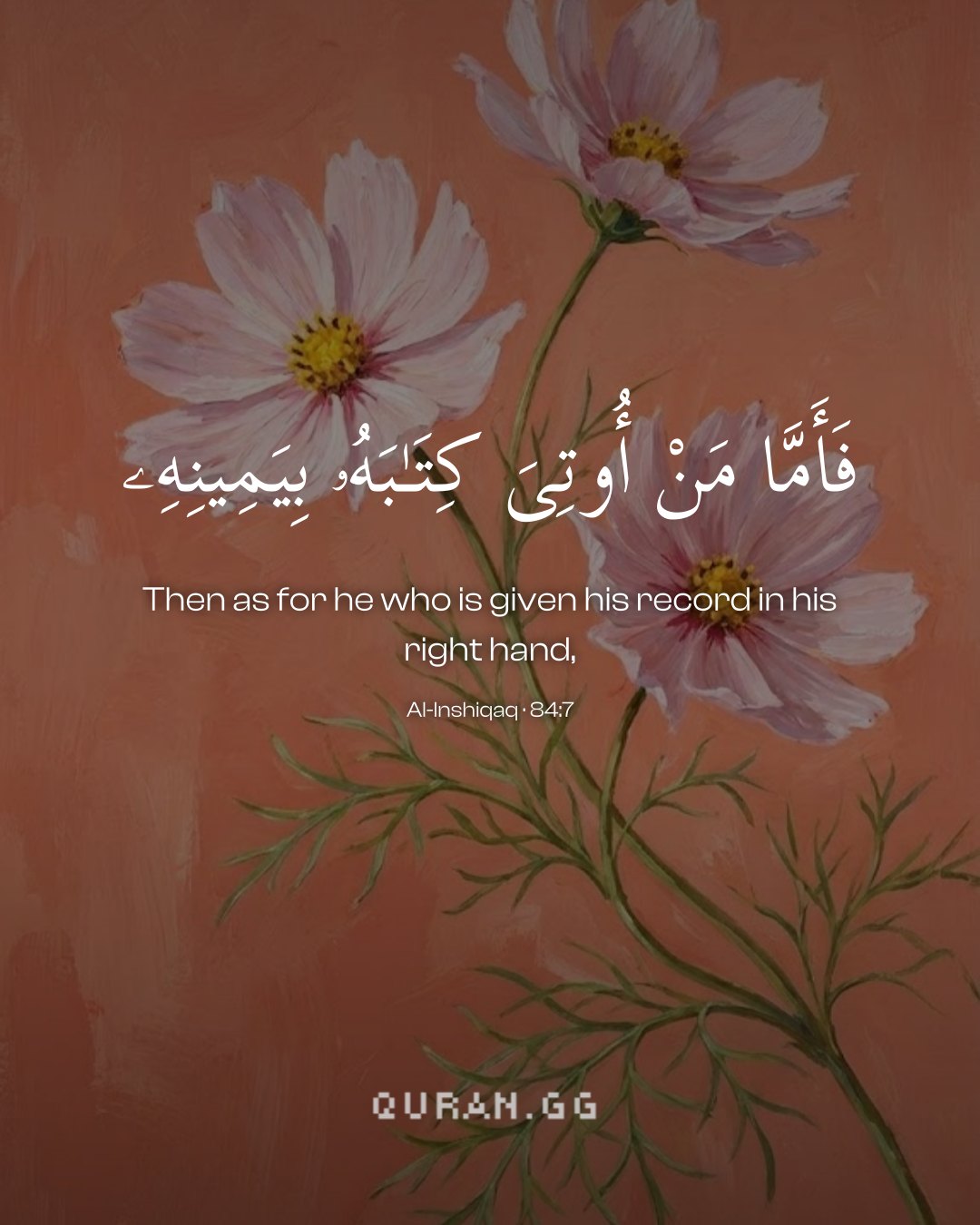
Continue reading the tafsir of ayahs 1–15 فَأَمَّا مَنْ أُوتِيَ كِتَابَهُ بِيَمِينِهِ ﴿7﴾ فَسَوْفَ يُحَاسَبُ حِسَابًا يَسِيرًا ﴿8﴾ وَيَنقَلِبُ إِلَىٰ أَهْلِهِ مَسْرُورًا ﴿9﴾
(So, as for him whose book [ of deeds ] will be given to him in his right hand, he will be called to account in an easy manner, and he will go back to his people joyfully....7-9)
This verse describes the condition of the believers. Their books of deeds will be given to them in their right hands. An easy reckoning will be taken from them and the welcome news of Paradise will be given to them. They will return to their families joyfully.
It is reported in the Sahih of Bukhari from Sayyidah ` A'shah ؓ that the Holy Prophet has said:
من حوسب یوم القیامۃ عزّب
"He who is required to account for [ or questioned about ] his deeds will have to be punished."
At this Sayyidah ` A'ishah ؓ asked, "What is the meaning of the [ following ] verse?” يُحَاسَبُ حِسَابًا يَسِيرًا (he will be called to account in an easy manner,..84:8). The Holy Prophet explained that the verse signifies 'the deeds will merely be presented before Allah without being questioned. As for the person whose deeds are scrutinised, he will never be able to escape torment'.
This explanation of the Holy Prophet ﷺ clarifies that the deeds of the believers will also be presented before Allah, but by virtue of their faith, not all of their actions will be scrutinised. This is referred to as 'account in an easy manner'. The words 'he will go back to his people joyfully' may be interpreted in one of two ways. This may refer to the Houris who will be his family members in Paradise, or it may refer to his family members in the world who will be present in the Plain of Gathering, and he, after knowing about his success, will impart to them, according to the custom of this life, the welcome news of his achievement. The commentators have mentioned both possibilities in interpreting this sentence. [ Qurtubi ].
Whatever is related here about Doomsday refers apparently to an unknown world. However, such evidence exists as points to its veracity. An example of this is the present world itself. The very existence of the world proves that another similar or different world may come into existence. Furthermore, certain extraordinary aspects of the Quran prove that it is the Book of God. (For details see The Quran: An Abiding Wonder and The Call of the Quran by the commentator).
Uthmani text of the Madinah mushaf (King Fahd Complex). Translation: Saheeh International. Tafsir via Quran.com.