Surah Al-Isra Ayah 107 (17:107) — Meaning & Tafsir | Quran.GG

Surah Al-Isra, Ayah 107

17:107 · Meaning and tafsir

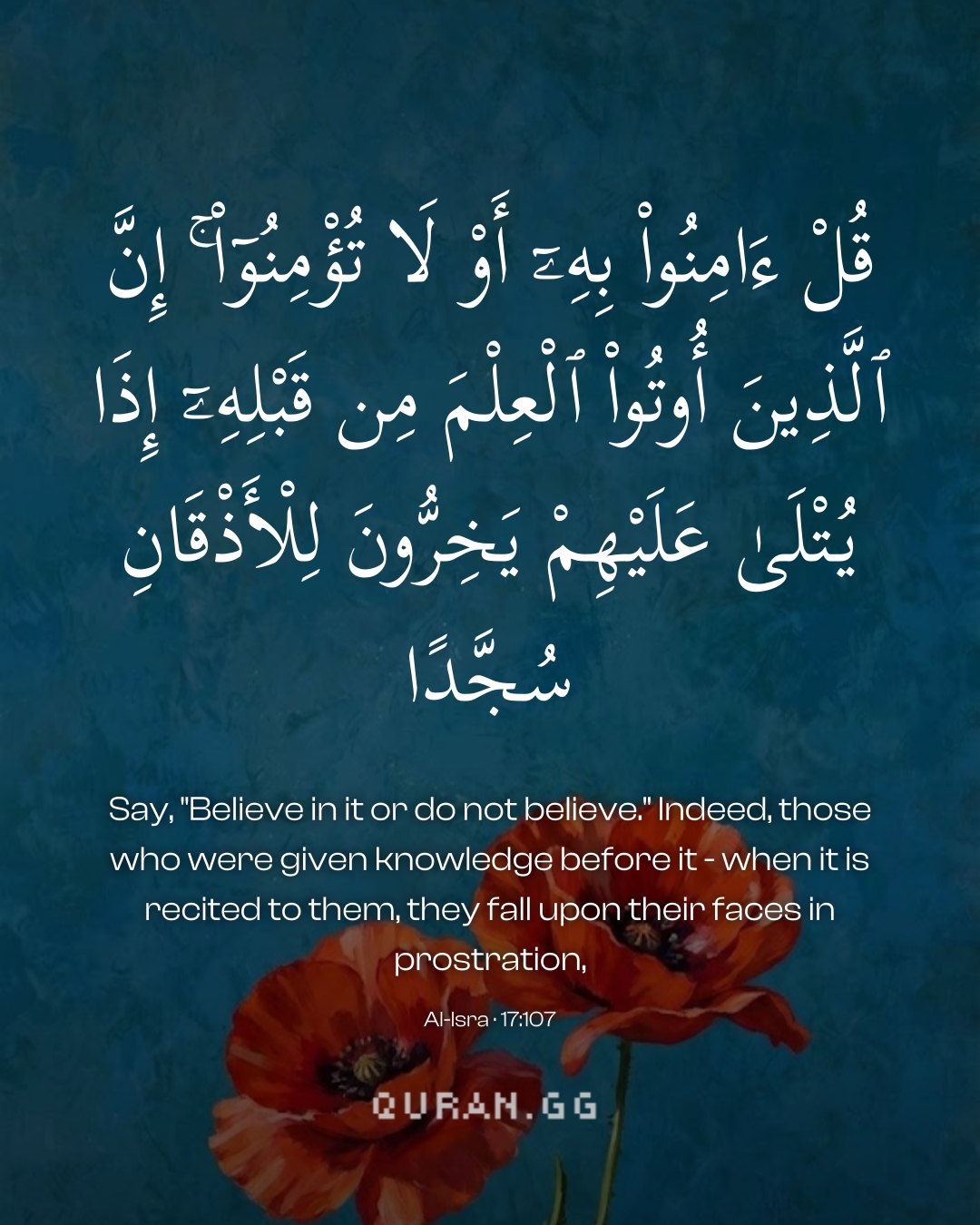
قُلْ ءَامِنُوا۟ بِهِۦٓ أَوْ لَا تُؤْمِنُوٓا۟ ۚ إِنَّ ٱلَّذِينَ أُوتُوا۟ ٱلْعِلْمَ مِن قَبْلِهِۦٓ إِذَا يُتْلَىٰ عَلَيْهِمْ يَخِرُّونَ لِلْأَذْقَانِ سُجَّدًا ١٠٧

Say, "Believe in it or do not believe." Indeed, those who were given knowledge before it - when it is recited to them, they fall upon their faces in prostration,

Surah Al-Isra 17:107 in Arabic with its translation: “Say, "Believe in it or do not believe." Indeed, those who were given knowledge before it - when it is recited…”

Make something with this ayah

Turn it into a video for Stories, Reels or TikTok, recited by the reciter you pick, or an image on a background you choose. Free, in your browser.

Download this image

Tafsir Ibn Kathir (abridged)

Those Who were given Knowledge before truly admit the Qur'an

Allah says to His Prophet Muhammad ﷺ:

قُلْ

(Say) O Muhammad to these disbelievers concerning what you have brought to them of this Glorious Qur'an:

ءَامِنُواْ بِهِ أَوْ لاَ تُؤْمِنُواْ

("Believe in it (the Qur'an) or do not believe (in it).) meaning, it is all the same whether you believe in it or not, for it is true in and of itself. It was revealed by Allah, Who mentioned it previously in the Books that He revealed to other Messengers. Hence He says:

إِنَّ الَّذِينَ أُوتُواْ الْعِلْمَ مِن قَبْلِهِ

(Verily, those who were given knowledge before it,) meaning righteous people among the People of the Book, who adhered to their Books and appreciated them without distorting them.

إِذَا يُتْلَى عَلَيْهِمْ

(when it is recited to them,) means, when this Qur'an is recited to them,

يَخِرُّونَ لِلاٌّذْقَانِ سُجَّدًا

(fall down on their chins (faces) in humble prostration. ) means, to Allah, in gratitude for the blessing He has bestowed on them by considering them fit to live until they met this Messenger to whom this Book was revealed. Hence they say:

سُبْحَانَ رَبِّنَآ

(Glory be to our Lord!), meaning, they extol and glorify their Lord for His perfect power and for not delaying the fulfillment of the promise which He made through His earlier Prophets, that He would send Muhammad ﷺ. Hence they said:

سُبْحَانَ رَبِّنَآ إِن كَانَ وَعْدُ رَبِّنَا لَمَفْعُولاً

(Glory be to our Lord! Truly, the promise of our Lord must be fulfilled.)

وَيَخِرُّونَ لِلاٌّذْقَانِ يَبْكُونَ

(And they fall down on their chins (faces) weeping) means, in submission to Allah, may He be glorified, and in expression of their belief and faith in His Book and His Messenger .

وَيَزِيدُهُمْ خُشُوعًا

(and it increases their humility.) means, it increases them in faith and submission. As Allah says:

وَالَّذِينَ اهْتَدَوْاْ زَادَهُمْ هُدًى وَءَاتَـهُمْ تَقُوَاهُمْ

(While as for those who accept guidance, He increases their guidance and bestows on them their Taqwa. ) (47:17).

وَيَخِرُّونَ

(And they fall down) is a description rather than an action (i.e., this is a further description of their humility as referred to in Ayah 107; it does not imply that they prostrate twice).

Ma'arif al-Qur'an

Commentary

The first verse (101): وَلَقَدْ آتَيْنَا مُوسَىٰ تِسْعَ آيَاتٍ mentions the bestowal of nine clear signs on Sayyidna Musa (علیہ السلام) . The word: آیَہ ('ayah) carries the meaning of miracle or sign as well as that of the آیَت : ayat or verses of the Qur'an, that is, the divine injunctions. At this place, the probability of both meanings exists. Therefore, a number of commentators have taken the word 'ayat' to mean miracles - and the number nine does not make it necessary that they will not be more than nine - but, at this place, the figure 'nine' has been mentioned on the basis of some particular importance it has. Sayyidna ` Abdullah ibn ` Abbas ؓ has enumerated these miracles as follows:

Continue reading the tafsir of ayahs 101–108

Tazkirul Quran

The Quran is a declaration of pristine truth. But this pristine truth is what is least acceptable to man. For this reason God did not burden the preacher of truth with the responsibility of forcing people to believe in him. All that is desired of him is that he should communicate the truth to the addressee to the fullest possible extent. The Quran makes full allowances for the weaknesses of the addressees. Hence the Quran has been revealed at intervals, so that those who are serious about it, may have time to fully understand it; slowly and steadily it may become a part and parcel of their thoughts and actions.

Uthmani text of the Madinah mushaf (King Fahd Complex). Translation: Saheeh International. Tafsir via Quran.com.