On each meaning, on each of the two groups, those who desire this world and those who desire the Hereafter, We bestow what they want
مِنْ عَطَآءِ رَبِّكَ
(from the bounties of your Lord.) means, He is the One Who is in control of all things, and He is never unjust. He gives to each what he deserves, whether it is eternal happiness or doom. His decree is unstoppable, no one can withhold what He gives or change what He wants. Allah says:
وَمَا كَانَ عَطَآءُ رَبِّكَ مَحْظُورًا
(And the bounties of your Lord can never be forbidden.) meaning, no one can withhold or prevent them. Qatadah said,
A self-opinionated deed and an act of religious innovation, no matter how appealing, is not acceptable
In this verse (19), by adding the word: سَعْيَهَا (as due), it has been made explicit that every deed and every effort is not necessarily beneficial or acceptable with Allah. Instead, the only deed or effort credible is that which is appropriate to the essential objective (of the Hereafter). And whether or not it is appropriate can only be found out from the statement of Allah Ta’ ala and His Messenger ﷺ . Therefore, even well meaning efforts made by insisting on bland personal opinion and self-invented ways - which includes common customs of Bid'ah (innovations in established religion) - no matter how good and beneficial they may appear at their face, but are not appropriate to the effort made for the Hereafter. Consequently, they are neither acceptable with Allah nor are they of any use in the Hereafter.
Explaining the word: سَعْيَهَا (as due), Tafsir Ruh al-Ma’ ani says that the 'effort' should be in accordance with 'sunnah.' Along with it, it adds that this effort or deed should also have uprightness and firmness. In other words, this deed should be beneficial in accordance with the Sunnah as well as it should be upright and constant. Doing it haphazardly or doing it in a cycle of doing and not doing is not good. It never yields the maximum benefit.
Tazkirul Quran
Maulana Wahiduddin KhanOn ayahs 21–24
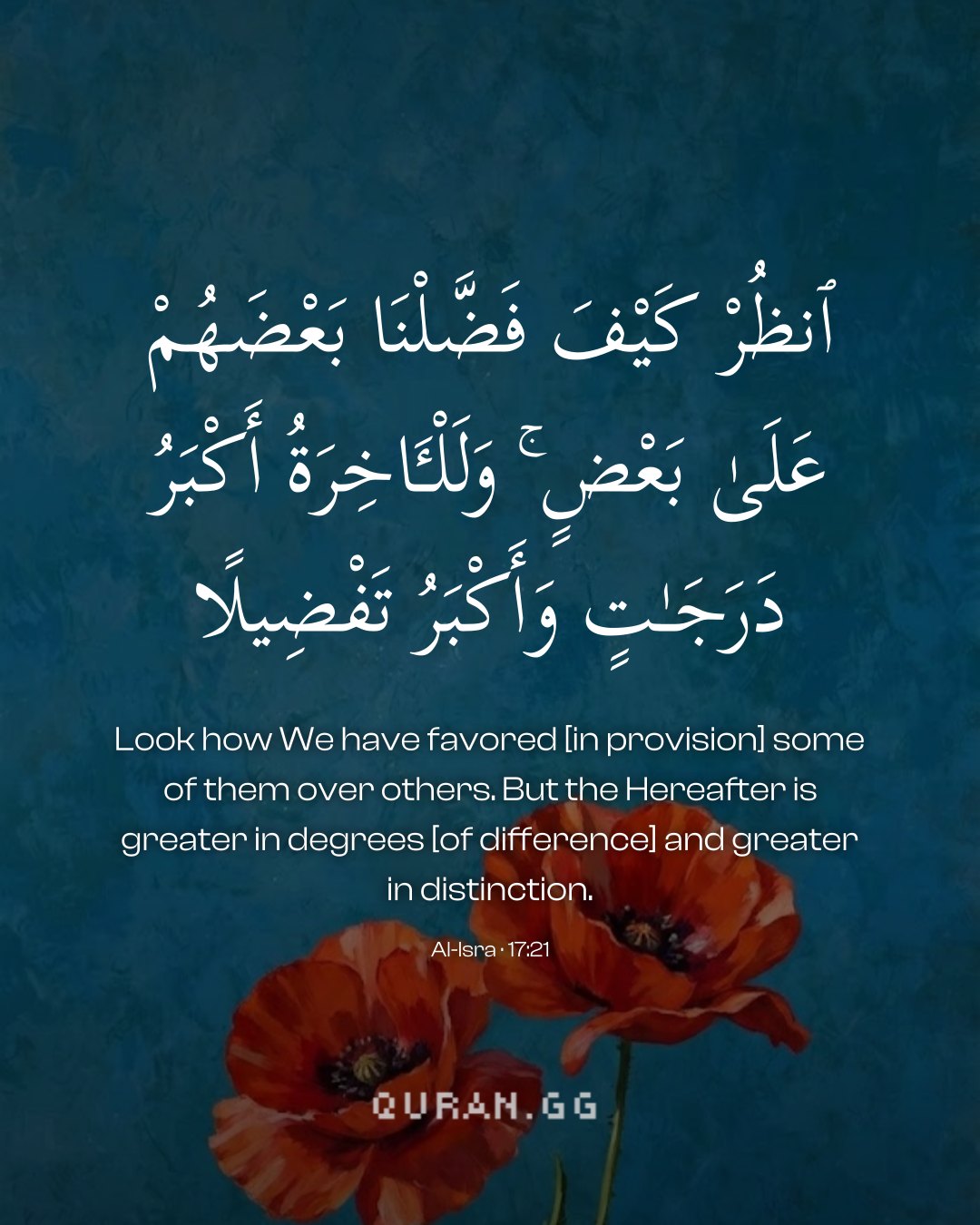
Be it in this world or in the Hereafter, success results from availing of the opportunities provided by God. For those who have made success in the life Hereafter the goal of their lives, God has made such dispositions as will facilitate the spiritual journey leading to that success in the next world. One can see that in this world some people are ahead of others, while some are lagging behind. Some have more and some have less. These are ways of telling us in the language of symbols, that there is no limit to opportunities in this world of God. The harder one works the more one achieves. Similarly, the more one is involved in Hereafter-oriented activities, the greater the reward one will receive in the Hereafter. Furthermore, whatever one receives in the next world will be eternal, while whatever one receives in this world will be ephemeral in nature.
Uthmani text of the Madinah mushaf (King Fahd Complex). Translation: Saheeh International. Tafsir via Quran.com.