Tafsir Ibn Kathir (abridged)
The Reward of those Who fear their Lord unseen
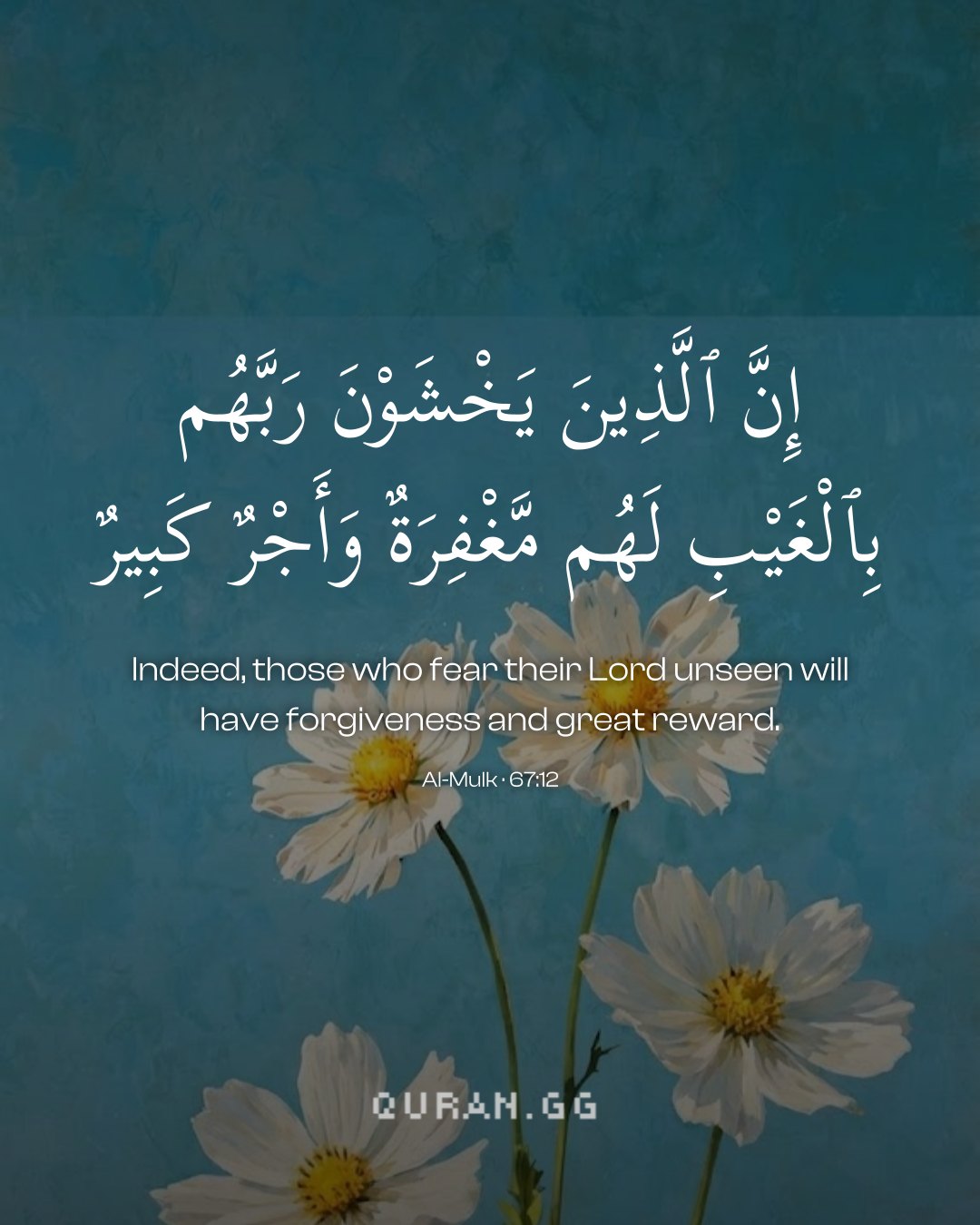
Allah informs of he who fears standing before his Lord, being frightened about matters between himself and Allah when he is not in the presence of other people. So he refrains from disobedience and he performs acts of obedience when no one sees him except Allah. Allah mentions that this person will have forgiveness and a great reward. This means that his sins will be remitted and he will be rewarded abundantly. This is similar to what has been confirmed in the Two Sahihs,
«سَبْعَةٌ يُظِلُّهُمُ اللهُ تَعَالى فِي ظِلِّ عَرْشِهِ يَوْمَ لَا ظِلَّ إِلَّا ظِلُّه»
(There are seven people whom Allah the Exalted will shade in the shade of His Throne on the Day when there will be no shade except its shade.) Then he mentioned that among those people are:
«دَعَتْهُ امْرَأَةٌ ذَاتُ مَنْصِبٍ وَجَمَالٍ فَقَالَ: إِنِّي أَخَافُ اللهَ، وَرَجُلًا تَصَدَّقَ بِصَدَقَةٍ فَأَخْفَاهَا حَتْى لَا تَعْلَمَ شِمَالُهُ مَا تُنْفِقُ يَمِينُه»
(A man who is tempted by a beautiful woman of high social status, but he says: `Verily, I fear Allah.' Another person from among them is a man who gives charity and he conceals it so that his left hand does not know what his right hand spent.) Then He says, while informing that He is aware of the innermost conscience and secrets,
وَأَسِرُّواْ قَوْلَكُمْ أَوِ اجْهَرُواْ بِهِ إِنَّهُ عَلِيمٌ بِذَاتِ الصُّدُورِ
(And whether you keep your talk secret or disclose it, verily, He is the All-Knower of what is in the breasts.) meaning, that which occurs in the hearts (ideas, thoughts, etc.).
أَلاَ يَعْلَمُ مَنْ خَلَقَ
(Should not He Who has created know) This means, `doesn't the Creator know'
وَهُوَ اللَّطِيفُ الْخَبِيرُ
(And He is the Most Kind and Courteous, All-Aware (of everything).)
Allah's Favor of subjugating the Earth to His Servants
Then Allah mentions His favor to His creation in subjugating the earth to them, and making it subservient to them. This is by His making it a stable abode and dwelling place. He placed in it mountains and caused water springs to gush forth from it. He fashioned pathways, and placed useful things in it and places fertile for the growth of fruit and vegetation. Allah says,
هُوَ الَّذِى جَعَلَ لَكُمُ الاٌّرْضَ ذَلُولاً فَامْشُواْ فِى مَنَاكِبِهَا
(He it is Who has made the earth subservient to you; so walk in the paths thereof) meaning, travel wherever you wish throughout its regions and frequent its countrysides and all the areas of its domain in your various journeys to seek earnings and trade. And know that your efforts will not benefit you anything unless Allah makes matters easy for you. Allah continues to say,
وَكُلُواْ مِن رِّزْقِهِ
(and eat of His provision.) Thus, striving by using the means (to attain something) does not negate the necessity of depending upon Allah (At-Tawakkul). This is similar to what Imam Ahmad recorded from `Umar bin Al-Khattab, that he heard the Messenger of Allah ﷺ say,
«لَوْأَنَّكُمْ تَتَوَكَّلُونَ عَلَى اللهِ حَقَّ تَوَكُّلِهِ، لَرَزَقَكُمْ كَمَا يَرْزُقُ الطَّيْرَ، تَغْدُو خِمَاصًا وَتَرُوحُ بِطَانًا»
(If you would trust in Allah as He truly should be trusted in, He would surely provide for you as He provides for the birds. They set out in the morning with empty stomachs and return in the evening with full stomachs.) At-Tirmidhi, An-Nasa'i and Ibn Majah all recorded this Hadith. At-Tirmidhi said, "Hasan Sahih." So this confirms that the bird searches morning and evening for its sustenance while depending upon Allah. For He is the Subduer, the Controller and the One Who causes everything.
وَإِلَيْهِ النُّشُورُ
(And to Him will be the resurrection.) meaning, the place of return on the Day of Judgement. Ibn `Abbas, Mujahid, As-Suddi and Qatadah all said that Manakibiha (its paths) means its outermost borders, its roads and its regions.