Which was Revealed in Makkah
بِسْمِ اللَّهِ الرَّحْمَـنِ الرَّحِيمِ
In the Name of Allah, the Most Gracious, the Most Merciful.
The Success is for the believers whose qualities are described here
قَدْ أَفْلَحَ الْمُؤْمِنُونَ
(Successful indeed are the believers) means, they have attained victory and are blessed, for they have succeeded. These are the believers who have the following characteristics:
الَّذِينَ هُمْ فِى صَلاَتِهِمْ خَـشِعُونَ
(Those who with their Salah are Khashi`un.) `Ali bin Abi Talhah reported that Ibn `Abbas said:
خَـشِعُونَ
"(Khashi`un) means those with fear and with tranquillity." This was also narrated from Mujahid, Al-Hasan, Qatadah and Az-Zuhri. It was reported from `Ali bin Abi Talib, may Allah be pleased with him, that Khushu` means the Khushu` of the heart. This was also the view of Ibrahim An-Nakha`i. Al-Hasan Al-Basri said, "Their Khushu` was in their hearts." So they lowered their gaze and were humble towards others. Khushu` in prayer is only attained by the one who has emptied his heart totally, who does not pay attention to anything else besides it, and who prefers it above all else. At that point it becomes a delight and a joy for eyes, as in the Hadith recorded by Imam Ahmad and An-Nasa'i from Anas, who said that the Messenger of Allah ﷺ said:
Continue reading the tafsir of ayahs 1–11Ma'arif al-Qur'an
Mufti Muhammad Shafi
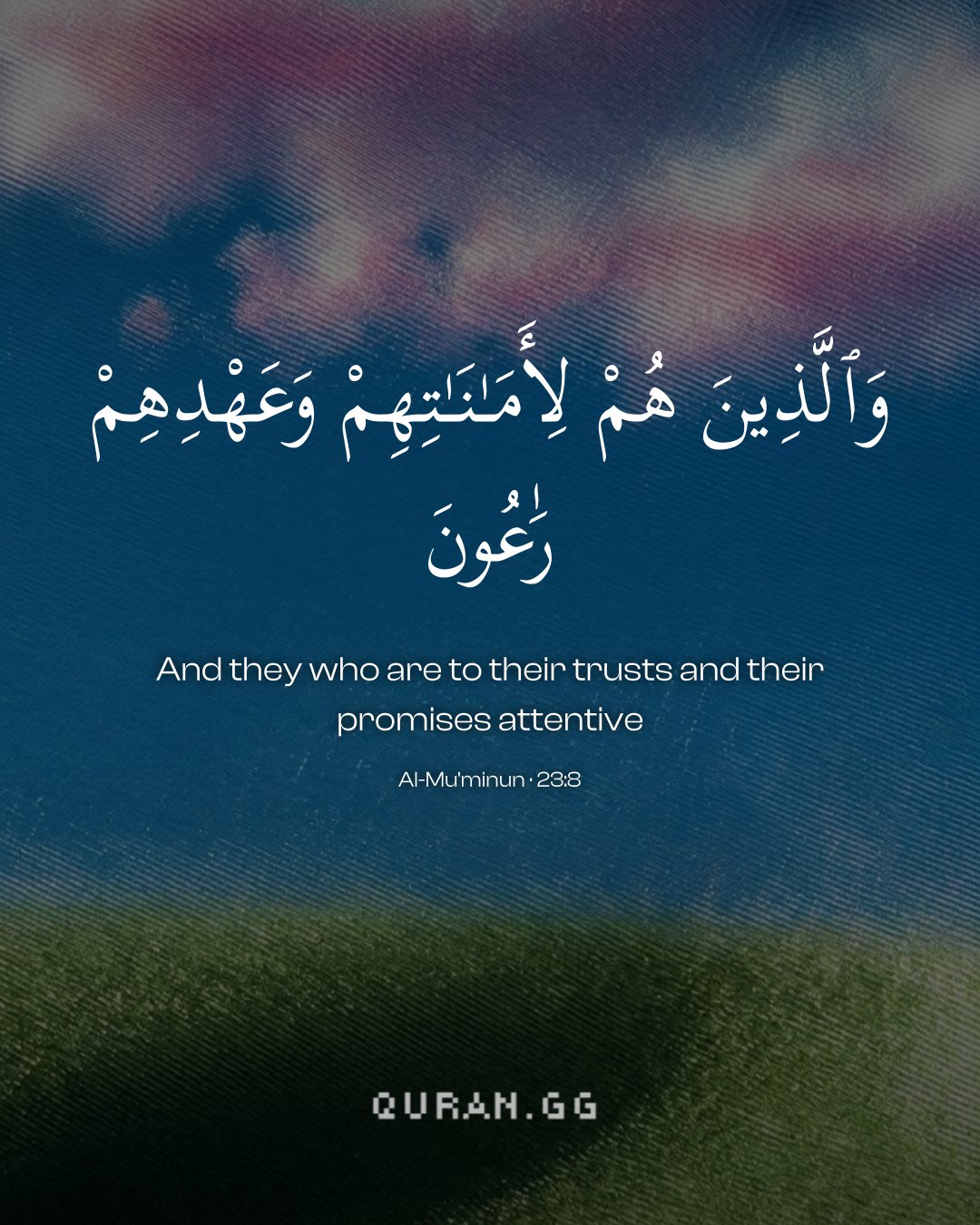
Fifth Attribute of a good Muslim is that he should discharge his trust truly and faithfully. وَالَّذِينَ هُمْ لِأَمَانَاتِهِمْ وَعَهْدِهِمْ رَاعُونَ (And [ success is attained ] by those who honestly look after their trusts and covenant, - 23:8). The word اَمَنَات (trusts) covers everything which a person has undertaken to perform or which have been placed under his care as trust. Since it may be of many kinds, the word is used in plural, so that it may include all sorts of trusts whether they may relate to the rights of Allah or to the rights of human beings. To perform scrupulously all the injunctions and duties made obligatory by religious laws and to abstain from things which have been forbidden or declared undesirable is to look after the trust that relates to the rights of Allah. As regards the discharge of trusts relating to the rights of human beings, these take numerous forms, and the most well-known is that a person must promptly return to the owner on demand any goods which have been in his custody as trust. Any information received in confidence is a trust and to reveal it to anybody else without the permission of the person who gave it is a breach of trust. Mutual settlement between an employer and an employee of the terms of employment, i.e. the work to be done and time to be spent in the performance of work, and the wages to be paid is a trust and binding on both the parties and a violation of this agreement by either party would constitute a breach of trust. Hence discharge of trust is an all-encompassing word.
Sixth Attribute of a perfect Muslim is to fulfill his covenant. The word عھد . (covenant) has two connotations. One is a covenant between two parties specifying the duties and obligations of either party and is binding on both and a breach of this covenant by either party is a fraud and deceit and therefore forbidden in Islam. The other is where a person voluntarily promises to give something to someone or undertakes to do some job. This is known as وعدہ (promise) and its fulfillment is also obligatory under the dictates of Shari. There is a Hadith which says العدۃ دین (a promise is like a debt). It means that a promise is like a debt and must be fulfilled in the same manner as a debt must be discharged, the difference being that whereas the repayment of a debt can be enforced through a court of law, a voluntary promise is not enforceable likewise. Nevertheless the person making the promise is morally bound to abide by it and failure to do so would be a sin unless there is a religious ground for his inability to fulfill his promise.
Uthmani text of the Madinah mushaf (King Fahd Complex). Translation: Saheeh International. Tafsir via Quran.com.