Surah Al-Mu'minun Ayah 9 (23:9) — Meaning & Tafsir | Quran.GG

Surah Al-Mu'minun, Ayah 9

23:9 · Meaning and tafsir

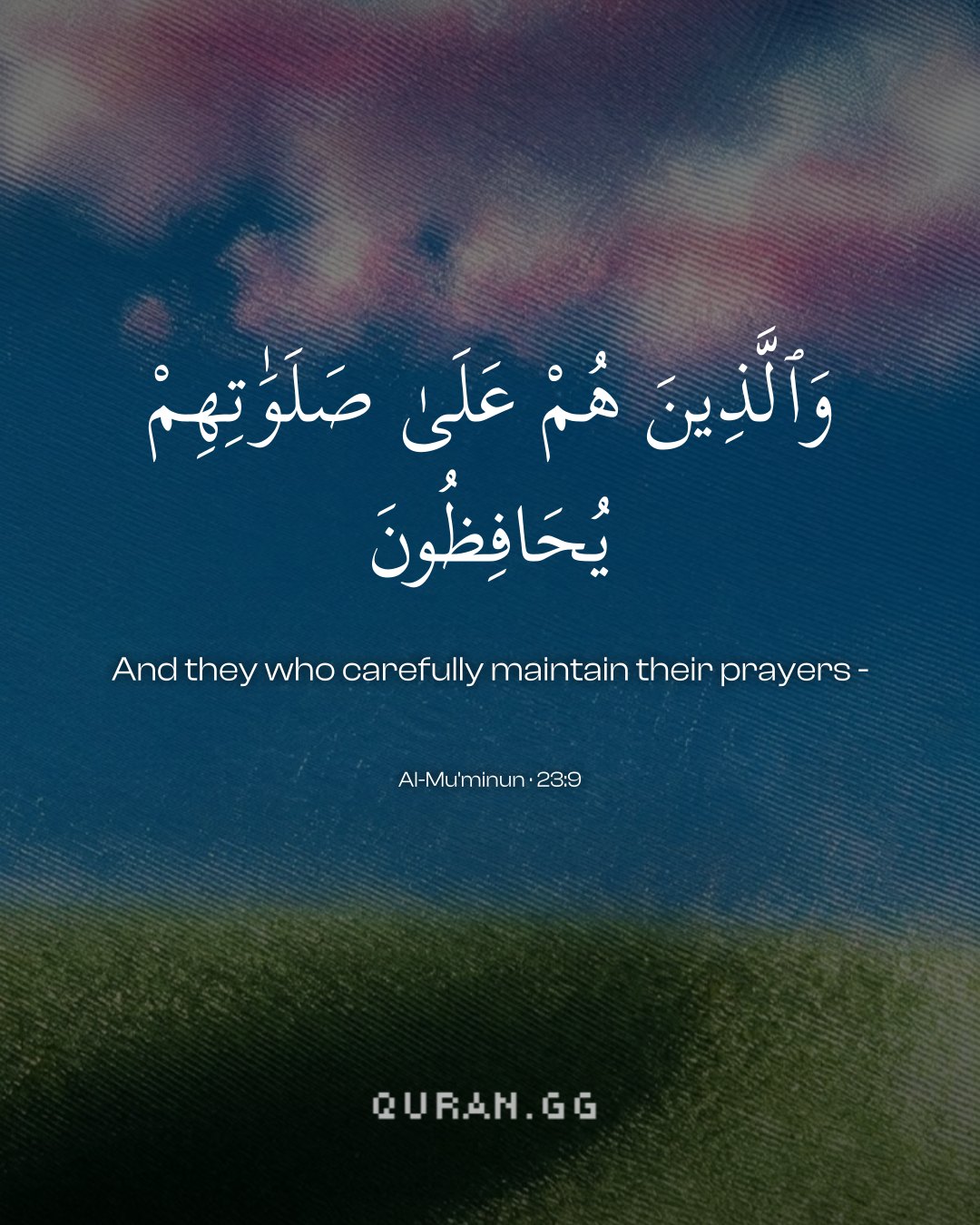
وَٱلَّذِينَ هُمْ عَلَىٰ صَلَوَٰتِهِمْ يُحَافِظُونَ ٩

And they who carefully maintain their prayers -

Surah Al-Mu'minun 23:9 in Arabic with its translation: “And they who carefully maintain their prayers -”

Make something with this ayah

Turn it into a video for Stories, Reels or TikTok, recited by the reciter you pick, or an image on a background you choose. Free, in your browser.

Download this image

Tafsir Ibn Kathir (abridged)

Which was Revealed in Makkah

بِسْمِ اللَّهِ الرَّحْمَـنِ الرَّحِيمِ

In the Name of Allah, the Most Gracious, the Most Merciful.

The Success is for the believers whose qualities are described here

قَدْ أَفْلَحَ الْمُؤْمِنُونَ

(Successful indeed are the believers) means, they have attained victory and are blessed, for they have succeeded. These are the believers who have the following characteristics:

الَّذِينَ هُمْ فِى صَلاَتِهِمْ خَـشِعُونَ

(Those who with their Salah are Khashi`un.) `Ali bin Abi Talhah reported that Ibn `Abbas said:

خَـشِعُونَ

"(Khashi`un) means those with fear and with tranquillity." This was also narrated from Mujahid, Al-Hasan, Qatadah and Az-Zuhri. It was reported from `Ali bin Abi Talib, may Allah be pleased with him, that Khushu` means the Khushu` of the heart. This was also the view of Ibrahim An-Nakha`i. Al-Hasan Al-Basri said, "Their Khushu` was in their hearts." So they lowered their gaze and were humble towards others. Khushu` in prayer is only attained by the one who has emptied his heart totally, who does not pay attention to anything else besides it, and who prefers it above all else. At that point it becomes a delight and a joy for eyes, as in the Hadith recorded by Imam Ahmad and An-Nasa'i from Anas, who said that the Messenger of Allah ﷺ said:

Continue reading the tafsir of ayahs 1–11

Ma'arif al-Qur'an

Seventh attribute

وَالَّذِينَ هُمْ عَلَىٰ صَلَوَاتِهِمْ يُحَافِظُونَ (And who consistently observe their prayers -23:9). To observe one’ s prayers here means to offer them regularly at the appointed time, and the word صَلَوَات (Prayers) has been used in the plural form to include all the five prayers. In an earlier verses the word صَلَوَاتِ (Salah: prayers) was used in the singular because the emphasis was on Khushu` which is the essence of all prayers whether they are fard, wajib, sunnah or nafl.

A careful study of the above seven attributes would show that they encompass all the duties which man owes to Allah and to fellow men, and all the laws governing those duties. A person who possesses these attributes and adheres to them is a complete mu'min (believer) and deserving of falah in this world and in the Hereafter. It will also be noted that these seven attributes begin and also end with a reference to prayers which suggests that if prayers are offered in the prescribed manner with all their requirements, the other attributes will appear automatically.

Uthmani text of the Madinah mushaf (King Fahd Complex). Translation: Saheeh International. Tafsir via Quran.com.