(In the Name of Allah, the Most Gracious, the Most Merciful.
The Command to stand at Night (in Prayer)
Allah commands His Messenger to cease being wrapped up, and this means to be covered during the night. He commands him to get up and stand in prayer to His Lord. This is as Allah says,
(Their sides forsake their beds, to invoke their Lord in fear and hope, and they spend out of what We have bestowed on them.) (32:16) Thus, the Prophet did as Allah ordered him, by standing for prayer at night. This was obligatory upon him alone, as Allah said,
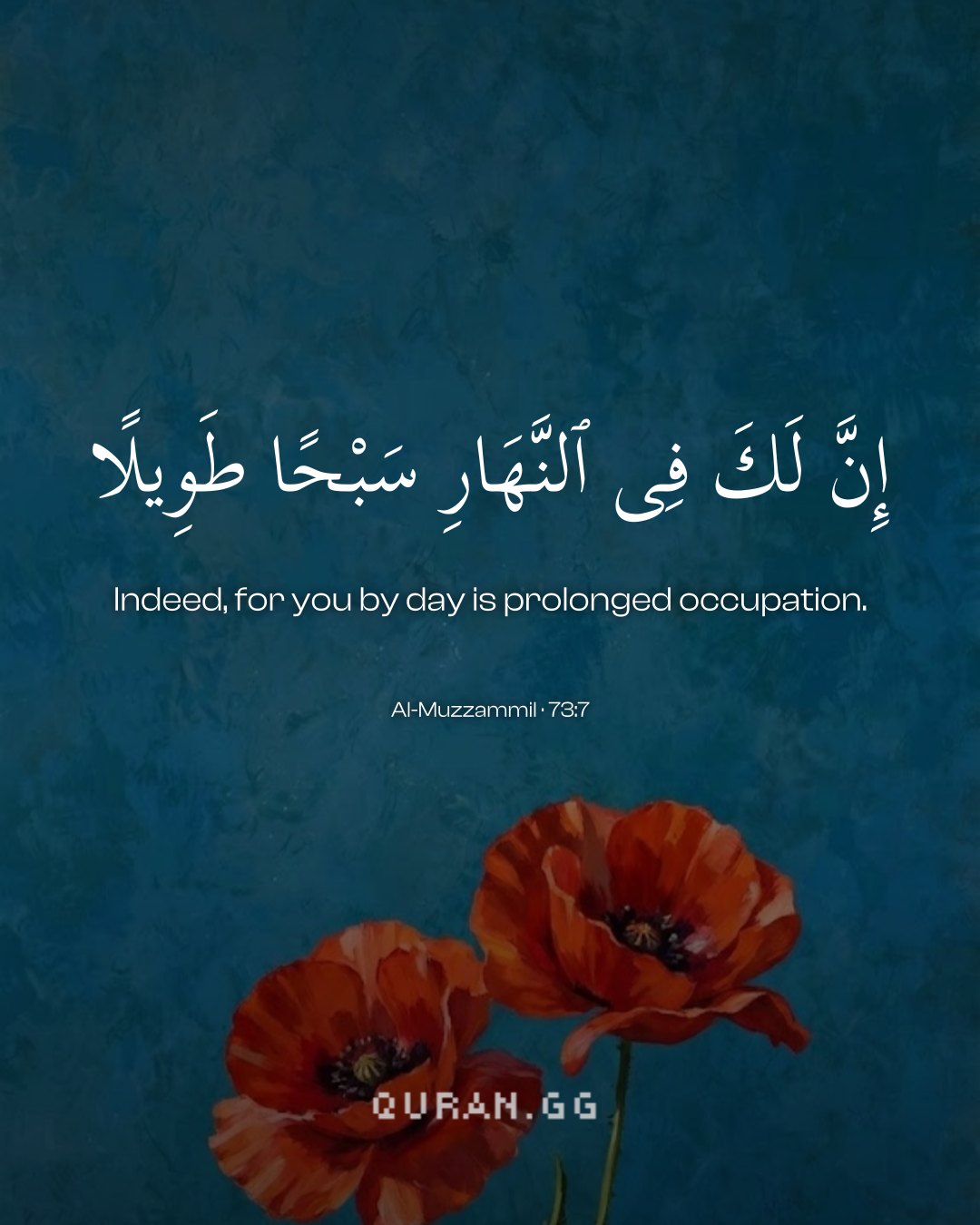
إِنَّ لَكَ فِي النَّهَارِ سَبْحًا طَوِيلًا (Surely, in daytime, you have a lengthy work to do... 73:7). The word sabhun, literally means, 'to flow, walk or move about' from which we also get the sense 'of swimming in the water' because when a swimmer swims in the water, he moves about in it freely without any obstruction. Here the word signifies 'long chain of engagements in the day' which refers to multifarious duties to be performed with alacrity, such as educating the people, preaching to them, reforming humanity, performing domestic chores, discharging social responsibilities and moving about to many other tasks and obligations.
The current verse explicates the third point of wisdom as to why night-prayer was enjoined. This relates both to the Holy Prophet ﷺ and the general body of the Muslim community. During the day the Holy Prophet ﷺ as well as other people have a long chain of engagements for which they disperse and move about as explained in the foregoing paragraph. As a result, it is difficult for them to concentrate on their worshipping activity. The night should be reserved for this purpose. A person should sleep according to his need and perform his night-prayer as well.
A Special Note
Jurists have said that the verse under comment confirms that scholars
Tazkirul Quran
Maulana Wahiduddin KhanOn ayahs 5–13
Literally ‘weighty words’ refers to that order for giving warning which is mentioned in the next chapter, ‘Arise and give warning’ ( 74:2 ). This means inform people about the hazards of the Hereafter. Undoubtedly this is the most difficult task in the world. For this, the missionary has to stand by the pure and unadulterated Truth, even if he becomes a stranger to all his people. He has to tolerate being tormented by the people, so that the relationship between him and his addressees remains unaffected till the last moment. He has to be unilaterally governed by the principles of patience and avoidance of confrontation, so that his status as da‘i should not be damaged.
Uthmani text of the Madinah mushaf (King Fahd Complex). Translation: Saheeh International. Tafsir via Quran.com.