Tafsir Ibn Kathir (abridged)
Musa before Fir`awn and His People
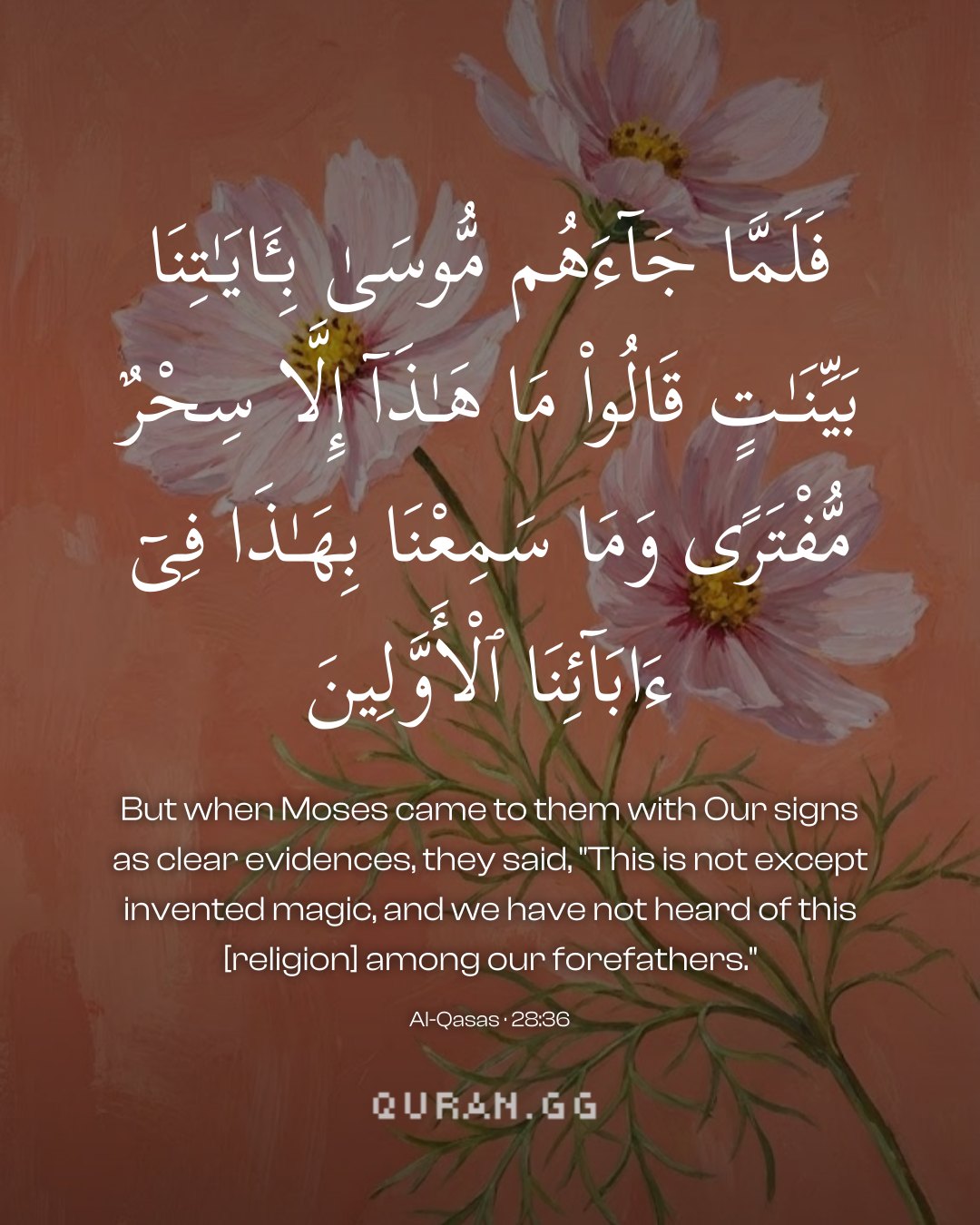
Allah tells us how Musa and his brother Harun came before Fir`awn and his chiefs, and showed them the clear miracles and overwhelming proof that Allah had given them to confirm the truth of what they were saying about Allah being One and that His commandments were to be followed. Fir`awn and his chiefs saw that with their own eyes and realized that it was certainly from Allah, but because of their disbelief and sin they resorted to stubbornness and false arguments. This was because they were too evil and arrogant to follow the truth. They said:
مَا هَـذَآ إِلاَّ سِحْرٌ مُّفْتَرًى
(This is nothing but invented magic.) meaning, fabricated and made up. They wanted to oppose him by means of their own tricks and their position and power, but this did not work.
وَمَا سَمِعْنَا بِهَـذَا فِى ءَابَآئِنَا الاٌّوَّلِينَ
(Never did we hear of this among our fathers of old.) They were referring worshipping Allah Alone, with no partner or associate. They said: "We have never seen anyone among our forefathers following this religion; we have only ever seen people associating other gods in worship with Allah. Musa said in response to them:
رَبِّى أَعْلَمُ بِمَن جَآءَ بِالْهُدَى مِنْ عِندِهِ
(My Lord knows best him who came with guidance from Him,) meaning, `of me and you, and He will decide between me and you.' So he said:
وَمَن تَكُونُ لَهُ عَـقِبَةُ الدَّارِ
(and whose will be the happy end in the Hereafter. ) meaning, who will be supported and will prevail.
إِنَّهُ لاَ يُفْلِحُ الظَّـلِمُونَ
(Verily, the wrongdoers will not be successful.) refers to the idolators who associate others in worship with Allah.