Surah Al-Qasas Ayah 37 (28:37) — Meaning & Tafsir | Quran.GG

Surah Al-Qasas, Ayah 37

28:37 · Meaning and tafsir

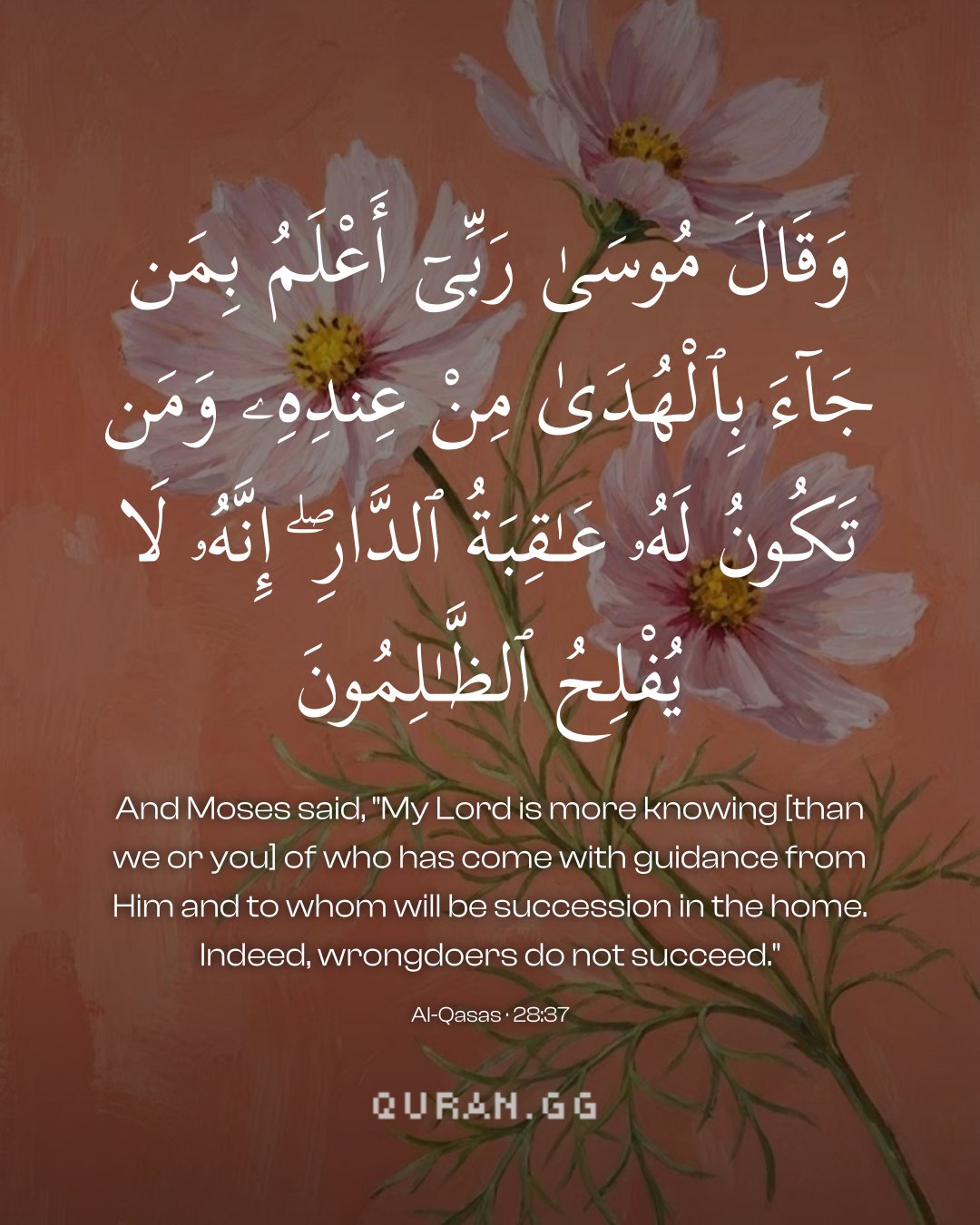
وَقَالَ مُوسَىٰ رَبِّىٓ أَعْلَمُ بِمَن جَآءَ بِٱلْهُدَىٰ مِنْ عِندِهِۦ وَمَن تَكُونُ لَهُۥ عَـٰقِبَةُ ٱلدَّارِ ۖ إِنَّهُۥ لَا يُفْلِحُ ٱلظَّـٰلِمُونَ ٣٧

And Moses said, "My Lord is more knowing [than we or you] of who has come with guidance from Him and to whom will be succession in the home. Indeed, wrongdoers do not succeed."

Surah Al-Qasas 28:37 in Arabic with its translation: “And Moses said, "My Lord is more knowing [than we or you] of who has come with guidance from Him and to whom…”

Make something with this ayah

Turn it into a video for Stories, Reels or TikTok, recited by the reciter you pick, or an image on a background you choose. Free, in your browser.

Download this image

Tafsir Ibn Kathir (abridged)

Musa before Fir`awn and His People

Allah tells us how Musa and his brother Harun came before Fir`awn and his chiefs, and showed them the clear miracles and overwhelming proof that Allah had given them to confirm the truth of what they were saying about Allah being One and that His commandments were to be followed. Fir`awn and his chiefs saw that with their own eyes and realized that it was certainly from Allah, but because of their disbelief and sin they resorted to stubbornness and false arguments. This was because they were too evil and arrogant to follow the truth. They said:

مَا هَـذَآ إِلاَّ سِحْرٌ مُّفْتَرًى

(This is nothing but invented magic.) meaning, fabricated and made up. They wanted to oppose him by means of their own tricks and their position and power, but this did not work.

Continue reading the tafsir of ayahs 36–37

Ma'arif al-Qur'an

A sermon should have high degree of eloquence

هُوَ أَفْصَحُ مِنِّي لِسَانًا (He is more fluent in his tongue - 28:34). This verse points out that a high degree of oratory and eloquence is desirable for sermons and preaching, and there is no harm if one takes training in that.

Tazkirul Quran

If an individual thinks highly of himself, and if someone of apparently ordinary status comes before him and voices outright criticism of him, he immediately flares up. He ridicules his critic and makes different types of derogatory statements with a view to undermining him. This is what Pharaoh did in the case of Moses.

Uthmani text of the Madinah mushaf (King Fahd Complex). Translation: Saheeh International. Tafsir via Quran.com.