Warning Muslims Against Imitating People of the Scriptures
Allah warns His believing servants against obeying the People of the Book, who envy the believers for the favor that Allah gave them by sending His Messenger . Similarly, Allah said,
وَدَّ كَثِيرٌ مِّنْ أَهْلِ الْكِتَـبِ لَوْ يَرُدُّونَكُم مِن بَعْدِ إِيمَـنِكُمْ كُفَّارًا حَسَدًا مِّنْ عِنْدِ أَنْفُسِهِمْ
(Many of the People of the Scripture (Jews and Christians) wish that they could turn you away as disbelievers after you have believed, out of their own envy) 2:109.
In this Ayah 3:100, Allah said,
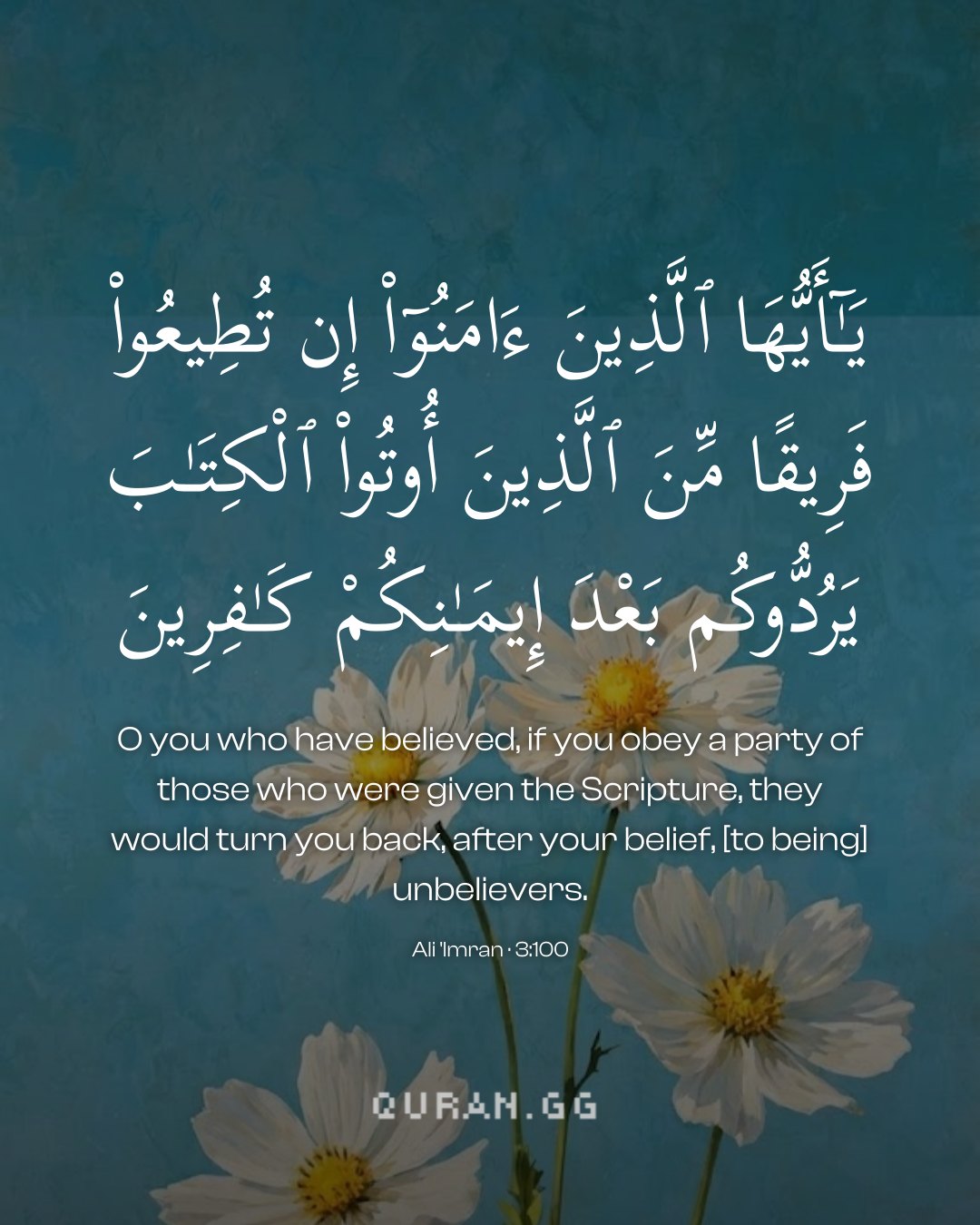
إِن تُطِيعُواْ فَرِيقاً مِّنَ الَّذِينَ أُوتُواْ الْكِتَـبَ يَرُدُّوكُم بَعْدَ إِيمَـنِكُمْ كَـفِرِينَ
(If you obey a group of those who were given the Scripture (Jews and Christians), they would (indeed) render you disbelievers after you have believed!), then said,
وَكَيْفَ تَكْفُرُونَ وَأَنْتُمْ تُتْلَى عَلَيْكُمْ ءَايَـتُ اللَّهِ وَفِيكُمْ رَسُولُهُ
(And how would you disbelieve, while unto you are recited the verses of Allah, and among you is His Messenger), meaning, disbelief is far from touching you, since the Ayat of Allah are being sent down on His Messenger day and night, and he recites and conveys them to you. Similarly, Allah said,
وَمَا لَكُمْ لاَ تُؤْمِنُونَ بِاللَّهِ وَالرَّسُولُ يَدْعُوكُمْ لِتُؤْمِنُواْ بِرَبِّكُمْ وَقَدْ أَخَذَ مِيثَـقَكُمْ إِن كُنتُمْ مُّؤْمِنِينَ
(And what is the matter with you that you believe not in Allah! While the Messenger invites you to believe in your Lord; and He has indeed taken your covenant, if you are real believers) 57:8. A Hadith states that one day, the Prophet said to his Companions,
«أَيُّ الْمُؤْمِنِينَ أَعْجَبُ إِلَيْكُمْ إِيمَانًا؟»
قالوا: الملائكة. قال:
«وَكَيْفَ لَا يُؤْمِنُونَ وَهُمْ عِنْدَ رَبِّهِم»
؟ وذكروا الأنبياء، قال:
«وَكَيْفَ لَا يُؤْمِنُونَ وَالْوَحْيُ يَنْزِلُ عَلَيْهِمْ؟»
قالوا: فنحن. قال:
«وَكَيْفَ لَا تُؤْمِنُونَ وَأَنَا بَيْنَ أَظْهُرِكُمْ؟»
قالوا: فأي الناس أعجب إيمانًا؟ قال:
«قَوْمٌ يَجِيئُونَ مِنْ بَعْدِكُمْ يَجِدُونَ صُحُفًا يُؤْمِنُونَ بِمَا فِيهَا»
("Who among the faithful believers do you consider has the most amazing faith" They said, "The angels." He said, "Why would they not believe, since they are with their Lord" They mentioned the Prophets, and the Prophet said, "Why would they not believe while the revelation is sent down to them" They said, "Then, we are." He said, "Why would not you believe when I am among you" They asked, "Who has the most amazing faith" The Prophet said, "A people who will come after you and who will find only books that they will believe in.")
Allah said next,
وَمَن يَعْتَصِم بِاللَّهِ فَقَدْ هُدِىَ إِلَى صِرَطٍ مّسْتَقِيمٍ
(And whoever depends upon Allah, then he is indeed guided to the right path) 3:101 for trusting and relying on Allah are the basis of achieving the right guidance and staying away from the path of wickedness. They also represent the tool to acquiring guidance and truth and achieving the righteous aims.
Commentary
Several verses earlier, the text was dealing with the people of the Book, their false beliefs and their doubts. Then, appeared the mention of بیت اللہ Baytullah and Hajj. Now once again, the people of the Book are the addressees. These verses relate to a particular event. There was a Jew, Shammas ibn Qays, who harboured a chronic malice against Muslims. Once, when he saw two Ansar tribes, Aws and Khazraj, gathered together amiably at one place, his malevolence got the better of him and he went about looking for ways to sow seeds of discord between them. Finally, he set up a man suggesting to him that these two tribes have fought much long-drawn war in pre-Islam days and both parties had recited poetical compositions highlighting their tribal pride. So why not recite these self-congratulating poetical compositions while both sit together. The moment these poems were recited there, emotions rose high, there were charges and counter-charges to the limit that the place and time of a fresh war was all set. When the Holy Prophet ﷺ heard about this, he came to them and said: 'What is all this? Here I am present amidst you and you are doing this after having become Muslims and after having become united and friendly with each other. This is sheer ignorance. Do you want, in this state of yours, to revert to kufr?'
Continue reading the tafsir of ayahs 98–101 When the call of truth comes in all its purity, the interests of those who contrived to convince others that their self-styled religion had indeed been revealed by God are put at risk. People serving their own interests oppose the new messenger by raising different kinds of objections based on fallacies in order to turn others away from the true message. In their self-styled religion the basics of faith are not stressed. Instead, by giving importance to hair-splitting arguments on the relative aspects of religion, the acme of virtue is equated with full adherence to a man-made religious form. For example, they would shun rabbit’s meat, saying that it was not consumed by their saints, although along with this, many illegal things would have been legalized by them. They would consider it of the utmost importance to face exactly in the direction of al-Bayt al-Maqdis, like a compass needle pointing to the pole. But they would show no interest in making their daily activities God-oriented. Virtue, however, hinges upon the making of sacrifices and not on the mere fact of opting for a religious form. God’s true servant is one who offers his Lord the gift of love, and for whom no material thing is dearer than God. He is ever ready to pay the price of losing his prestige by recognizing the truth; he is ever ready to spend his wealth for the cause of God. Whoever is ready to pay the price of sacrificing his most cherished ambitions will be counted among the virtuous and considered a God-worshipper in the eyes of God.
Uthmani text of the Madinah mushaf (King Fahd Complex). Translation: Saheeh International. Tafsir via Quran.com.