Interest (Riba) is Prohibited
Allah prohibits His believing servants from dealing in Riba and from requiring interest on their capital, just as they used to do during the time of Jahiliyyah. For instance, when the time to pay a loan comes, the creditor would say to the debtor, "Either pay now, or the loan will incur interest." If the debtor asks for deferment of the loan, the creditor would require interest and this would occur year after year until the little capital becomes multiplied many times. Allah also commands His servants to have Taqwa of Him so that they may achieve success in this life and the Hereafter. Allah also threatens them with the Fire and warns them against it, saying,
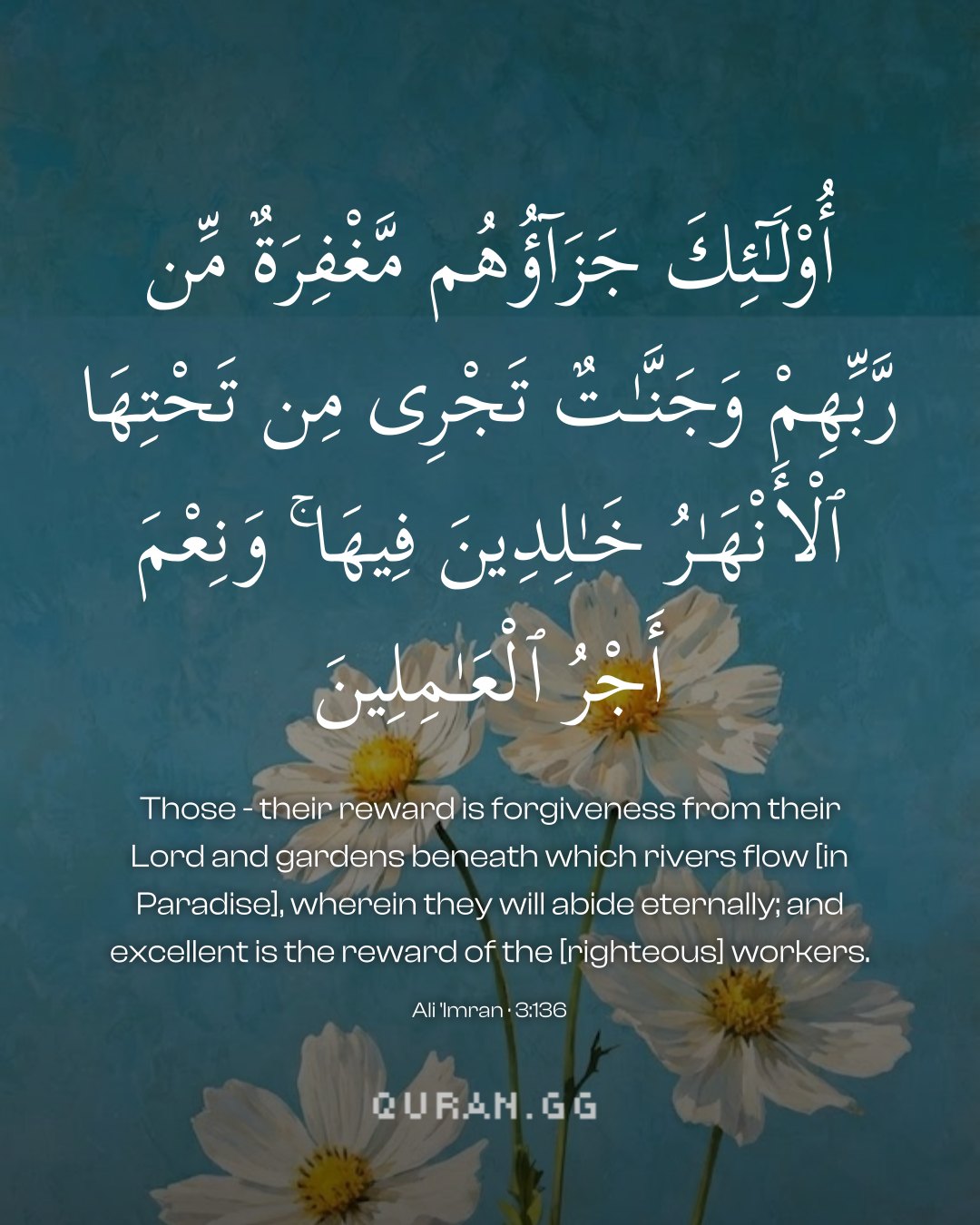
Continue reading the tafsir of ayahs 130–136 Upto this point, the text describes qualities of character that relate to the fulfillment of human rights. Following this, come qualities that relate to the rights of Allah where it has been said that true Muslims do not disobey Allah. Should they ever fall in sin under the compulsions of human weakness, they immediately turn to Allah, repent, seek His forgiveness and resolve to abstain from that sin in future.
This character of true Muslims appears in the text in the following words:
وَالَّذِينَ إِذَا فَعَلُوا فَاحِشَةً أَوْ ظَلَمُوا أَنفُسَهُمْ ذَكَرُوا اللَّـهَ فَاسْتَغْفَرُوا لِذُنُوبِهِمْ وَمَن يَغْفِرُ الذُّنُوبَ إِلَّا اللَّـهُ وَلَمْ يُصِرُّوا عَلَىٰ مَا فَعَلُوا وَهُمْ يَعْلَمُونَ ﴿135﴾
...and those who, when they happen to commit a shameful act or wrong themselves, remember Allah, then, seek forgiveness for their sins - and who is there to forgive sins except Allah? - and they do not persist in what they have done, knowingly.(135)
The verse tells us that involvement in sin is caused by one's negligence in remembering Allah. So, the instruction is: If a sin has been committed, one should immediately turn to Allah, renew the zeal to obey Him and start remembering Him as He should be remembered.
Another point of guidance here tells us that forgiveness of sins depends on two things:
1. To regret past sins, seek pardon for these and to pray for forgiveness.
2. To resolve fully not to go near them in future.
May Allah Almighty bestow upon us the good fortune to become possessed with these supreme morals identified by the Holy Qur'an. Aamin.
Engaging in usury is the ultimate in money worship. A usurer thinks day in and day out as to how to double and quadruple his money. But what he ought to pursue relentlessly is not the acquisition of material things but his entry into Paradise in the Hereafter. He ought to be ever eager to attain God’s mercy and blessing, but not by increasing his worldly wealth in order to guarantee himself a life of grandeur in this world. Honour and success are of no importance when compared to Paradise, the pleasure and enjoyment of which are immeasurable. Wise is the one who pursues God’s Paradise. Hastening towards it means giving away more and more of one’s wealth for the cause of God. The way to worldly success is to increase one’s riches, while the way to success in the Hereafter is to decrease one’s riches. If the inspiration to tread the former path is the love of money, the inspiration towards the latter is the love of God and His Messenger. If the ‘wealth’ of the former is worldly profit, the ‘wealth’ of the latter is the profit of the Hereafter. Where those desirous of riches have the fear of worldly loss, those of a spiritual bent of mind fear loss in the Hereafter.
Uthmani text of the Madinah mushaf (King Fahd Complex). Translation: Saheeh International. Tafsir via Quran.com.