Surah Ali 'Imran Ayah 64 (3:64) — Meaning & Tafsir | Quran.GG

Surah Ali 'Imran, Ayah 64

3:64 · Meaning and tafsir

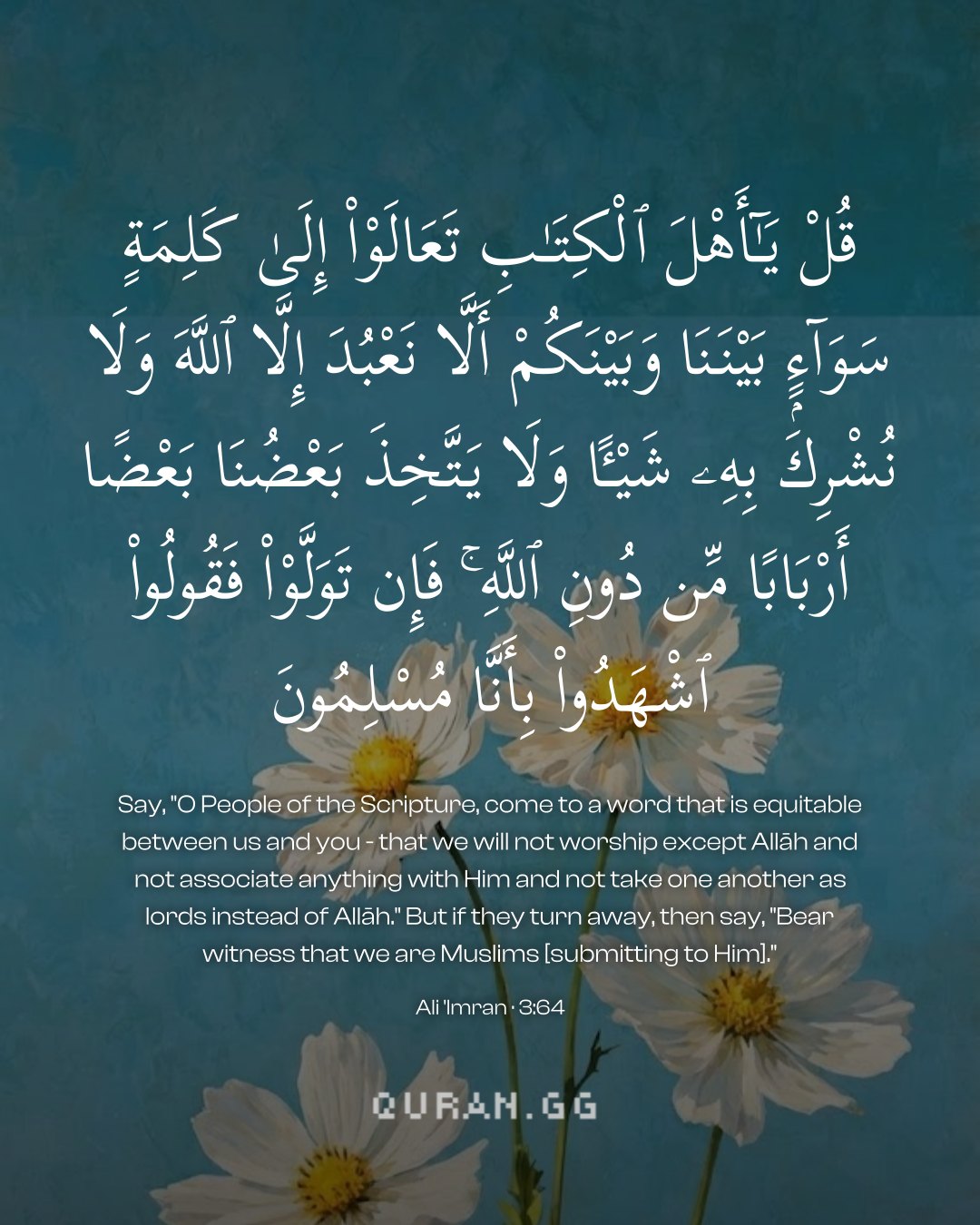
قُلْ يَـٰٓأَهْلَ ٱلْكِتَـٰبِ تَعَالَوْا۟ إِلَىٰ كَلِمَةٍ سَوَآءٍۭ بَيْنَنَا وَبَيْنَكُمْ أَلَّا نَعْبُدَ إِلَّا ٱللَّهَ وَلَا نُشْرِكَ بِهِۦ شَيْـًٔا وَلَا يَتَّخِذَ بَعْضُنَا بَعْضًا أَرْبَابًا مِّن دُونِ ٱللَّهِ ۚ فَإِن تَوَلَّوْا۟ فَقُولُوا۟ ٱشْهَدُوا۟ بِأَنَّا مُسْلِمُونَ ٦٤

Say, "O People of the Scripture, come to a word that is equitable between us and you - that we will not worship except Allāh and not associate anything with Him and not take one another as lords instead of Allāh." But if they turn away, then say, "Bear witness that we are Muslims [submitting to Him]."

Surah Ali 'Imran 3:64 in Arabic with its translation: “Say, "O People of the Scripture, come to a word that is equitable between us and you - that we will not…”

Make something with this ayah

Turn it into a video for Stories, Reels or TikTok, recited by the reciter you pick, or an image on a background you choose. Free, in your browser.

Download this image

Tafsir Ibn Kathir (abridged)

Every Person Knows about Tawhid

This Ayah includes the People of the Book, the Jews and Christians, and those who follow their ways.

قُلْ يأَهْلَ الْكِتَـبِ تَعَالَوْاْ إِلَى كَلِمَةٍ

(Say: "O people of the Scripture! Come to a word")

`Word' - in Arabic - also means a complete sentence, as evident from this Ayah. Allah described this word as being one,

سَوَآءٍ بَيْنَنَا وَبَيْنَكُمْ

(that is the same between us and you), an honest and righteous word that is fair to both parties. Allah then explained this word,

أَلاَّ نَعْبُدَ إِلاَّ اللَّهَ وَلاَ نُشْرِكَ بِهِ شَيْئاً

(that we worship none but Allah (Alone), and that we associate no partners with Him,) we worship neither a statue, cross, idol, Taghut (false gods), fire or anything else. Rather, we worship Allah Alone without partners, and this is the message of all of Allah's Messengers. Allah said,

وَمَآ أَرْسَلْنَا مِن قَبْلِكَ مِن رَّسُولٍ إِلاَّ نُوحِى إِلَيْهِ أَنَّهُ لا إِلَـهَ إِلاَّ أَنَاْ فَاعْبُدُونِ

(And We did not send any Messenger before you but We revealed to him (saying): "None has the right to be worshipped but I (Allah), so worship Me (Alone and none else).") 21:25 and,

وَلَقَدْ بَعَثْنَا فِى كُلِّ أُمَّةٍ رَّسُولاً أَنِ اعْبُدُواْ اللَّهَ وَاجْتَنِبُواْ الْطَّـغُوتَ

(And verily, We have sent among every Ummah a Messenger (proclaiming): "Worship Allah (Alone), and avoid (or keep away from) Taghut (all false deities).") 16:36. Allah said next,

وَلاَ يَتَّخِذَ بَعْضُنَا بَعْضًا أَرْبَابًا مِّن دُونِ اللَّهِ

("and that none of us shall take others as lords besides Allah.") Ibn Jurayj commented, "We do not obey each other in disobedience to Allah."

فَإِن تَوَلَّوْاْ فَقُولُواْ اشْهَدُواْ بِأَنَّا مُسْلِمُونَ

(Then, if they turn away, say: "Bear witness that we are Muslims.") if they abandon this fair call, then let them know that you will remain in Islam as Allah has legislated for you.

We should mention that the letter that the Prophet sent to Heraclius reads, "In the Name of Allah, the Most Gracious, the Most Merciful. From Muhammad, the Messenger of Allah ﷺ, to Heraclius, Leader of the Romans: peace be upon those who follow the true guidance. Embrace Islam and you will acquire safety, embrace Islam and Allah will grant you a double reward. However, if you turn away from it, then you will carry the burden of the peasants, and,

يأَهْلَ الْكِتَـبِ تَعَالَوْاْ إِلَى كَلِمَةٍ سَوَآءٍ بَيْنَنَا وَبَيْنَكُمْ أَلاَّ نَعْبُدَ إِلاَّ اللَّهَ وَلاَ نُشْرِكَ بِهِ شَيْئاً وَلاَ يَتَّخِذَ بَعْضُنَا بَعْضًا أَرْبَابًا مِّن دُونِ اللَّهِ فَإِن تَوَلَّوْاْ فَقُولُواْ اشْهَدُواْ بِأَنَّا مُسْلِمُونَ

("O people of the Scripture: Come to a word that is the same between us and you, that we worship none but Allah (Alone), and that we associate no partners with Him, and that none of us shall take others as lords besides Allah." Then, if they turn away, say: "Bear witness that we are Muslims.")"

Muhammad bin Ishaq and other scholars said that the beginning of Surah Al `Imran, and more than eighty verses thereafter; were revealed about the delegation of Najran. Az-Zuhri stated that the people of Najran were the first people to pay the Jizyah (tax money paid to the Muslim State). However, there is no disagreement that the Ayah that ordained the Jizyah 9:29 was revealed after the Fath (conquering Makkah, and therefore, after the delegation of Najran came to Al-Madinah). So, how can this Ayah 3:64 be contained in the Prophet's letter to Heraclius before the victory of Makkah, and how can we harmonize between the statements of Muhammad bin Ishaq and Az-Zuhri The answer is that the delegation of Najran came before Al-Hudaybiyyah (before the victory of Makkah), and what they paid was in lieu of the Mubahalah; not as Jizyah. The Ayah about the Jizyah was later revealed, and its ruling supported what occurred with the Najran people. In support of this opinion, we should mention that in another instance, the ruling on dividing the booty into one - fifth (for the Prophet ) and four-fifths (for the fighters) agreed with the practice of `Abdullah bin Jahsh during the raid that he led before Badr. An Ayah later on upheld the way `Abdullah divided the booty. Therefore, it is possible that the Prophet wrote this statement (Say, "O People of the Scripture. ..") in his letter to Heraclius before the Ayah was revealed. Later on, the Qur'an agreed with the Prophet's statement, word by word. It is also a fact that the Qur'an was revealed in agreement with what `Umar said regarding the captured disbelievers at Badr, the Hijab (Muslim woman code of dress), refraining from performing prayer for the hypocrites, and regarding his statements:

وَاتَّخِذُواْ مِن مَّقَامِ إِبْرَهِيمَ مُصَلًّى

(And take you the Maqam (place) of Ibrahim as a place of prayer.) 2:125, and,

عَسَى رَبُّهُ إِن طَلَّقَكُنَّ أَن يُبْدِلَهُ أَزْوَجاً خَيْراً مِّنكُنَّ

(It may be if he divorced you (all) that his Lord will give him instead of you, wives better than you.) 66:5.

Ma'arif al-Qur'an

Commentary:

Important Principles of Tabligh and Da'wah:

This verse: تَعَالَوْا إِلَىٰ كَلِمَةٍ سَوَاءٍ بَيْنَنَا وَبَيْنَكُمْ unfolds an important principle of Tabligh تبلیغ (Preaching) and Da'wah دعوہ (Preaching Islam). The principle requires that a person, who desires to carry his call to a group which holds beliefs and ideas different from his own, should follow a particular method. That method is to induce that group to unite only on what they both can agree to, for instance, when the Holy Prophet ﷺ gave the Byzantine ruler, Hiraql (Heraclius) the call to Islam, he picked up a particular point on which there was mutual agreement, i.e., on the Oneness of Allah Almighty. That invitation is reproduced below:

بسم اللہ الرحمٰن الرحیم، مِن محمد عبداللہ ورسولہ الی ھرقل عظیم الروم، سلام علی من اتبع الھدی، اما بعد فانی ادعوک بدعایۃ الاسلام ، اسلم ِ تسلم یؤتک اللہ اجرک مرتین فان علیک اثم الیریسین، لْ يَا أَهْلَ الْكِتَابِ تَعَالَوْا إِلَىٰ كَلِمَةٍ سَوَاءٍ بَيْنَنَا وَبَيْنَكُمْ أَلَّا نَعْبُدَ إِلَّا اللَّـهَ وَلَا نُشْرِ‌كَ بِهِ شَيْئًا وَلَا يَتَّخِذَ بَعْضُنَا بَعْضًا أَرْ‌بَابًا مِّن دُونِ اللَّـهِ (البخاری)

I begin with the name of Allah who is All-Merciful, Very-Merciful. From Muhammad, servant of Allah, and His messenger: To Heraclius, the Byzantine emperor. Peace be on him who takes the right path. After that, I invite you to the call of Islam. Embrace Islam and be in peace. Allah will bestow upon you a twofold reward, but should you turn away, then, on you shall be the sin of your subjects. "0 people of the Book, come to a word common between us and you that we worship none but Allah, that we associate nothing with Him and that some of us do not take some others as Lord instead of Allah." (Al-Bukhari)

The statement, 'you be witness...' in the last sentence of the verse teaches us a lesson, that is, should someone refuse to accept the truth, even after it has been proved clearly, then the proper course is to re-state one's own belief and conclude the conversation. Entering into fur-ther debate and verbal altercation is not appropriate.

Tazkirul Quran

Najran (about 150 miles north of Sana‘ towards Yemen) was a great centre of Christianity at the time of the revelation of the Quran. In the 10th year of the Hijra, a Christian deputation came from Najran, to discuss Christian beliefs with the Prophet Muhammad. The Prophet presented many arguments to them. He asked how Christ could be God’s son, when God is a living being who would never die, whereas Jesus would eventually be overcome by death. They could not counter his arguments but, nevertheless, stood their ground. When the Prophet saw that they were not going to accept his arguments, however sound they might be, he gave them a final challenge. He said that if they really believed that they were right (in believing Christ to be the son of God) they should be ready for a mubahalah, i.e., a solemn meeting, in which both sides should summon not only their men, but their women and children, to pray earnestly to God, and invoke the curse of God on those who lied. Those who were pure and sincere in their faith would not hesitate. The next day the Prophet came out of his home accompanied by his grandsons, Hasan and Husayn, and his daughter Fatimah, and son-in-law ‘Ali. On seeing this the Christians were so impressed that they sought some time to reconsider. In their consultations one of their religious scholars said: ‘You know God has promised to send a Prophet among the Ishmaelites. Suppose he be the same prophet. In that case, the only result of engaging in a mubahalah with him would be the destruction of all our people and its effect would even extend to our next generations. By God, I am seeing such faces as could move mountains with their prayers. So it is better to enter into certain peace treaties with him and go back to our homes.’

Continue reading the tafsir of ayahs 63–65

Uthmani text of the Madinah mushaf (King Fahd Complex). Translation: Saheeh International. Tafsir via Quran.com.