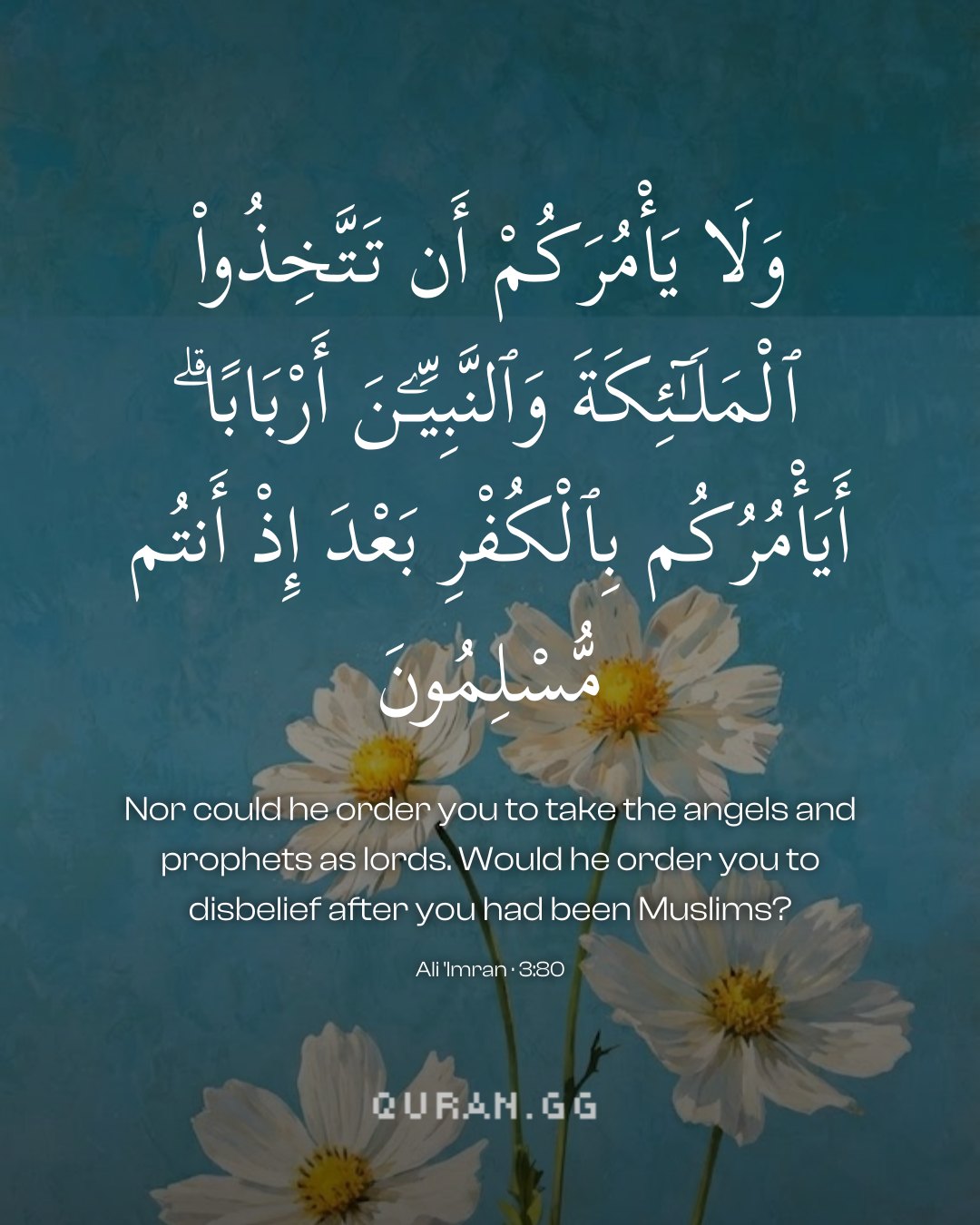
No Prophet Ever Called People to Worship him or to Worship Other Than Allah
This Ayah 3:79 means, it is not for a person whom Allah has given the Book, knowledge in the Law and prophethood to proclaim to the people, "Worship me instead of Allah," meaning, along with Allah. If this is not the right of a Prophet or a Messenger, then indeed, it is not the right of anyone else to issue such a claim.
This criticism refers to the ignorant rabbis, priests and teachers of misguidance, unlike the Messengers and their sincere knowledgeable followers who implement their knowledge; for they only command what Allah commands them, as their honorable Messengers conveyed to them. They also forbid what Allah forbade for them, by the words of His honorable Messengers. The Messengers, may Allah's peace and blessings be on all of them, are the emissaries between Allah and His creation, conveying Allah's Message and Trust. The messengers indeed fulfilled their mission, gave sincere advice to creation and conveyed the truth to them. Allah's statement,
The verse implies that a person whom Allah invests with the Book, the Wisdom and the power of making decisions, and places him on the great station of prophethood is always faithful to his mission when he communicates the Divine message to people and calls on them to be-come His faithful servants. That he starts moving people away from the worship of only one God and starts asking them to become his own worshippers or the worshippers of some other creatures is something he can never do. If so, this would mean that the one whom Allah had sent as his messenger did not, in fact, deserve this designation. Any government of this world, when appointing someone to an office of responsibility, always takes two factors into consideration:
Those who buy the world in exchange for the Hereafter do not deny religion or the Hereafter outright. Rather, they fully associate themselves with their religion. Then how do they reconcile these two conflicting spheres? This is done in a devious way, that is, by putting a self-styled construction upon revealed teachings. Aspirants to material honour and glory pervert the teachings of their religion in order to justify their worldly ways, sometimes by altering the wordings of revelations and sometimes by a wilful misinterpretation supportive of their selfish interests. Instead of changing themselves, they change the book of God, so that whatever it takes to give a religious aura to their irreligious lives may be shown to be contained therein. The most heinous crime in the eyes of God is to attribute to God something which He has not said. The simplest and most certain testimony of the truth of any teaching is that it brings God’s servants closer to their Lord, that it directs people’s feelings of love and fear towards God. On the contrary, any teaching which produces a personal cult or any other cult for that matter, or which diverts peoples’ finer feelings and emotions towards anything other than God, should be considered based on falsehood, even if it be couched in religious terms.
Uthmani text of the Madinah mushaf (King Fahd Complex). Translation: Saheeh International. Tafsir via Quran.com.