Surah Ali 'Imran Ayah 81 (3:81) — Meaning & Tafsir | Quran.GG

Surah Ali 'Imran, Ayah 81

3:81 · Meaning and tafsir

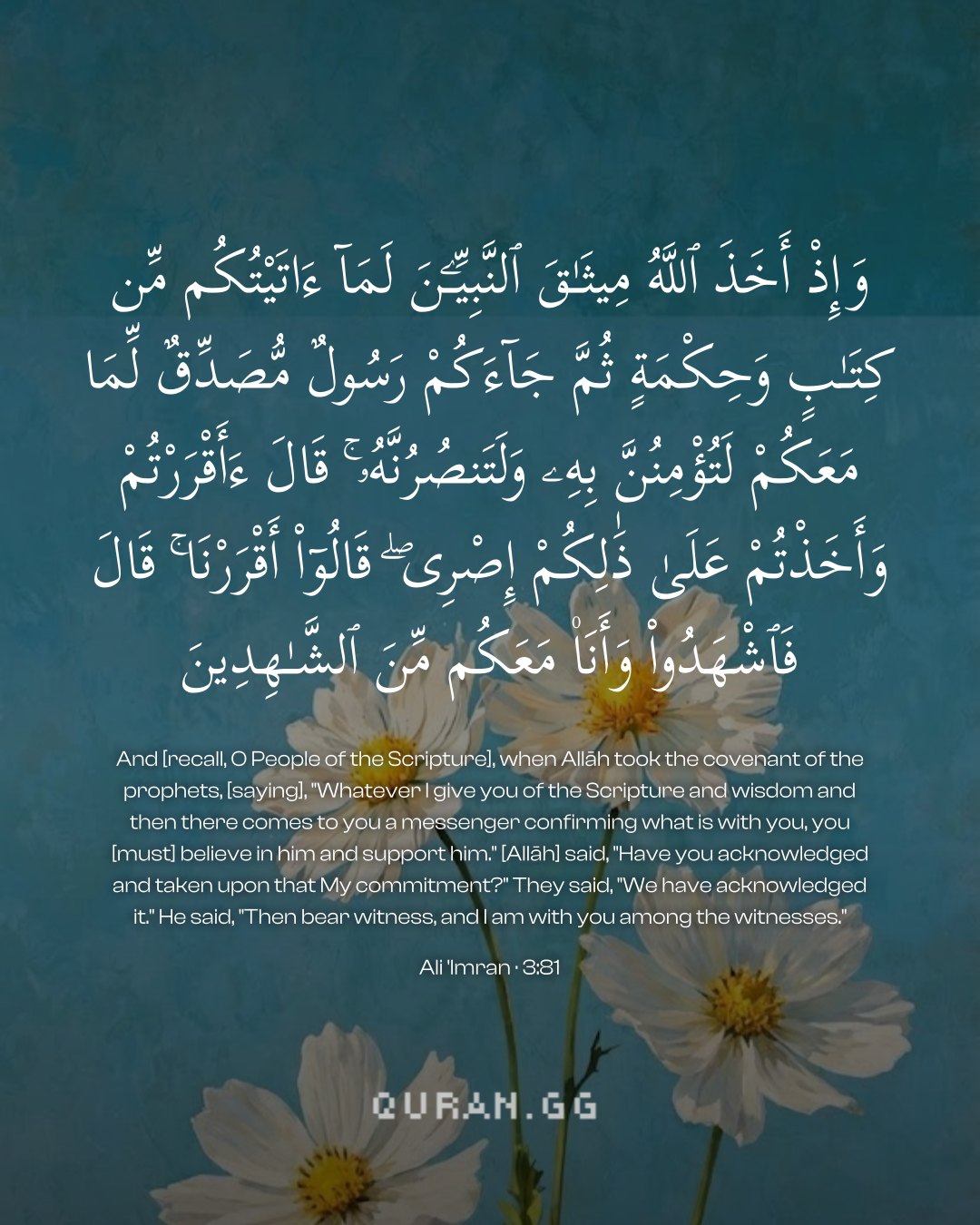
وَإِذْ أَخَذَ ٱللَّهُ مِيثَـٰقَ ٱلنَّبِيِّـۧنَ لَمَآ ءَاتَيْتُكُم مِّن كِتَـٰبٍ وَحِكْمَةٍ ثُمَّ جَآءَكُمْ رَسُولٌ مُّصَدِّقٌ لِّمَا مَعَكُمْ لَتُؤْمِنُنَّ بِهِۦ وَلَتَنصُرُنَّهُۥ ۚ قَالَ ءَأَقْرَرْتُمْ وَأَخَذْتُمْ عَلَىٰ ذَٰلِكُمْ إِصْرِى ۖ قَالُوٓا۟ أَقْرَرْنَا ۚ قَالَ فَٱشْهَدُوا۟ وَأَنَا۠ مَعَكُم مِّنَ ٱلشَّـٰهِدِينَ ٨١

And [recall, O People of the Scripture], when Allāh took the covenant of the prophets, [saying], "Whatever I give you of the Scripture and wisdom and then there comes to you a messenger confirming what is with you, you [must] believe in him and support him." [Allāh] said, "Have you acknowledged and taken upon that My commitment?" They said, "We have acknowledged it." He said, "Then bear witness, and I am with you among the witnesses."

Surah Ali 'Imran 3:81 in Arabic with its translation: “And [recall, O People of the Scripture], when Allāh took the covenant of the prophets, [saying], "Whatever I…”

Make something with this ayah

Turn it into a video for Stories, Reels or TikTok, recited by the reciter you pick, or an image on a background you choose. Free, in your browser.

Download this image

Tafsir Ibn Kathir (abridged)

Taking a Pledge From the Prophets to Believe in Our Prophet, Muhammad ﷺ

Allah states that He took a pledge from every Prophet whom He sent from Adam until `Isa, that when Allah gives them the Book and the Hikmah, thus acquiring whatever high grades they deserve, then a Messenger came afterwards, they would believe in and support him. Even though Allah has given the Prophets the knowledge and the prophethood, this fact should not make them refrain from following and supporting the Prophet who comes after them. This is why Allah, the Most High, Most Honored, said

وَإِذْ أَخَذَ اللَّهُ مِيثَـقَ النَّبِيِّيْنَ لَمَآ ءَاتَيْتُكُم مِّن كِتَـبٍ وَحِكْمَةٍ

(And (remember) when Allah took the covenant of the Prophets, saying: "Take whatever I gave you from the Book and Hikmah.") meaning, if I give you the Book and the Hikmah,

ثُمَّ جَآءَكُمْ رَسُولٌ مُّصَدِّقٌ لِّمَا مَعَكُمْ لَتُؤْمِنُنَّ بِهِ وَلَتَنصُرُنَّهُ قَالَ ءَأَقْرَرْتُمْ وَأَخَذْتُمْ عَلَى ذلِكُمْ إِصْرِى

("and afterwards there will come to you a Messenger confirming what is with you; you must, then, believe in him and help him." Allah said, "Do you agree (to it) and will you take up Isri")

Ibn `Abbas, Mujahid, Ar-Rabi`, Qatadah and As-Suddi said that `Isri' means, "My covenant." Muhammad bin Ishaq said that,

إِصْرِى

(Isri) means, "The responsibility of My covenant that you took," meaning, the ratified pledge that you gave Me.

قَالُواْ أَقْرَرْنَا قَالَ فَاشْهَدُواْ وَأَنَاْ مَعَكُمْ مِّنَ الشَّـهِدِينَفَمَنْ تَوَلَّى بَعْدَ ذَلِكَ

(They said: "We agree." He said: "Then bear witness; and I am with you among the witnesses." then whoever turns away after this,") from fulfilling this pledge and covenant, c

فَأُوْلَـئِكَ هُمُ الْفَـسِقُونَ

(they are the rebellious.) `Ali bin Abi Talib and his cousin `Abdullah bin `Abbas said, "Allah never sent a Prophet but after taking his pledge that if Muhammad ﷺ were sent in his lifetime, he would believe in and support him." Allah commanded each Prophet to take a pledge from his nation that if Muhammad were sent in their time, they would believe in and support him. Tawus, Al-Hasan Al-Basri and Qatadah said, "Allah took the pledge from the Prophets that they would believe in each other", and this statement does not contradict what `Ali and Ibn `Abbas stated.

Therefore, Muhammad ﷺ is the Final Prophet until the Day of Resurrection. He is the greatest Imam, who if he existed in any time period, deserves to be obeyed, rather than all other Prophets. This is why Muhammad ﷺ led the Prophets in prayer during the night of Isra' when they gathered in Bayt Al-Maqdis (Jerusalem). He is the intercessor on the Day of Gathering, when the Lord comes to judge between His servants. This is Al-Maqam Al-Mahmud (the praised station) refer to 17:79 that only Muhammad ﷺ deserves, a responsibility which the mighty Prophets and Messengers will decline to assume. However, Muhammad ﷺ will carry the task of intercession, may Allah's peace and blessings be on him.

Ma'arif al-Qur'an

The infallibility of the Prophets

The verse implies that a person whom Allah invests with the Book, the Wisdom and the power of making decisions, and places him on the great station of prophethood is always faithful to his mission when he communicates the Divine message to people and calls on them to be-come His faithful servants. That he starts moving people away from the worship of only one God and starts asking them to become his own worshippers or the worshippers of some other creatures is something he can never do. If so, this would mean that the one whom Allah had sent as his messenger did not, in fact, deserve this designation. Any government of this world, when appointing someone to an office of responsibility, always takes two factors into consideration:

Continue reading the tafsir of ayahs 79–84

Tazkirul Quran

Those who buy the world in exchange for the Hereafter do not deny religion or the Hereafter outright. Rather, they fully associate themselves with their religion. Then how do they reconcile these two conflicting spheres? This is done in a devious way, that is, by putting a self-styled construction upon revealed teachings. Aspirants to material honour and glory pervert the teachings of their religion in order to justify their worldly ways, sometimes by altering the wordings of revelations and sometimes by a wilful misinterpretation supportive of their selfish interests. Instead of changing themselves, they change the book of God, so that whatever it takes to give a religious aura to their irreligious lives may be shown to be contained therein. The most heinous crime in the eyes of God is to attribute to God something which He has not said. The simplest and most certain testimony of the truth of any teaching is that it brings God’s servants closer to their Lord, that it directs people’s feelings of love and fear towards God. On the contrary, any teaching which produces a personal cult or any other cult for that matter, or which diverts peoples’ finer feelings and emotions towards anything other than God, should be considered based on falsehood, even if it be couched in religious terms.

Uthmani text of the Madinah mushaf (King Fahd Complex). Translation: Saheeh International. Tafsir via Quran.com.