And whoever does evil or wrongs himself but afterwards seeks Allah's forgiveness, he will find Allah Oft-Forgiving, Most Merciful.Ali bin Abi Talhah said that Ibn Abbas commented about this Ayah,"Allah informs His servants of His forgiveness, forbearing generosity and expansive mercy. So whoever commits a sin, whether minor or major,
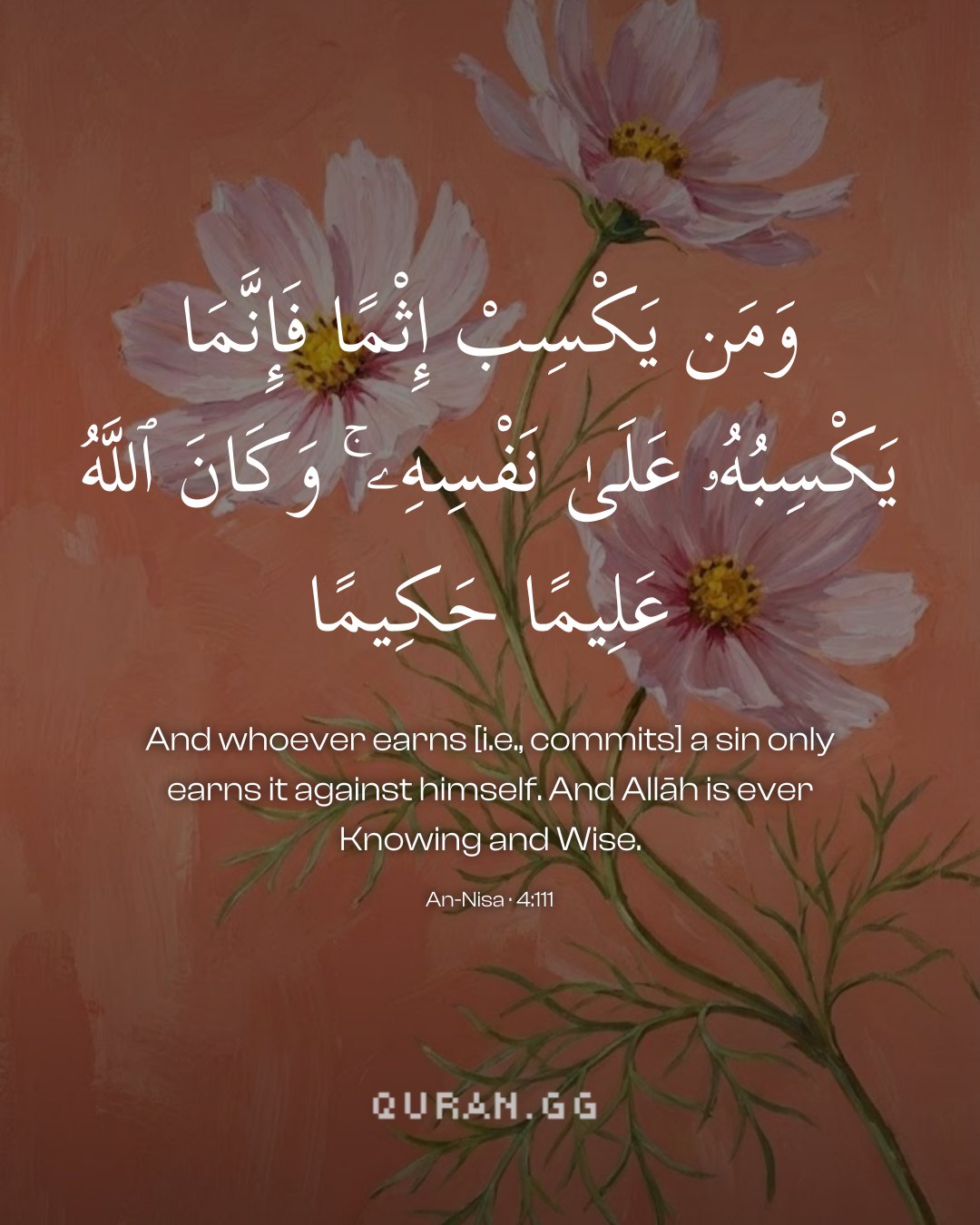
In the event that these people choose not to repent despite the option given to them, the seventh verse (111) carries the assurance that this action of theirs brings no harm to Almighty Allah or His Messenger or to Muslims. The sad nemesis of a person's evil deed shall be faced by the person himself.
Tazkirul Quran
Maulana Wahiduddin KhanOn ayahs 111–112
This world is a place of trial. Everyone may commit mistakes here, both with regard to God as well as to His servants. When someone errs, the right course is that he should sincerely repent and seek the guidance of God, beg for His forgiveness and pray to be assisted to perform only virtuous deeds in future. One who seeks God’s shelter so sincerely, will certainly receive it from Him. By the grace of God, his religious sensibility will be sharpened and he will be enabled to live more prudently in this world. On the other hand, a person may do some wrong, but does not care to admit it; he rather attempts to justify himself. He then gathers his supporters and fights with those who simply intended to inform him of his mistake. Such arrogant, un-repentant individuals and their supporters are the worst criminals in the eyes of God. Their eloquence, used to hide their wrongs, will become meaningless, and the host of supporters, who propped up their arrogance, will be of no avail in the Hereafter.
Uthmani text of the Madinah mushaf (King Fahd Complex). Translation: Saheeh International. Tafsir via Quran.com.