The Ruling Concerning Desertion on the Part of the Husband
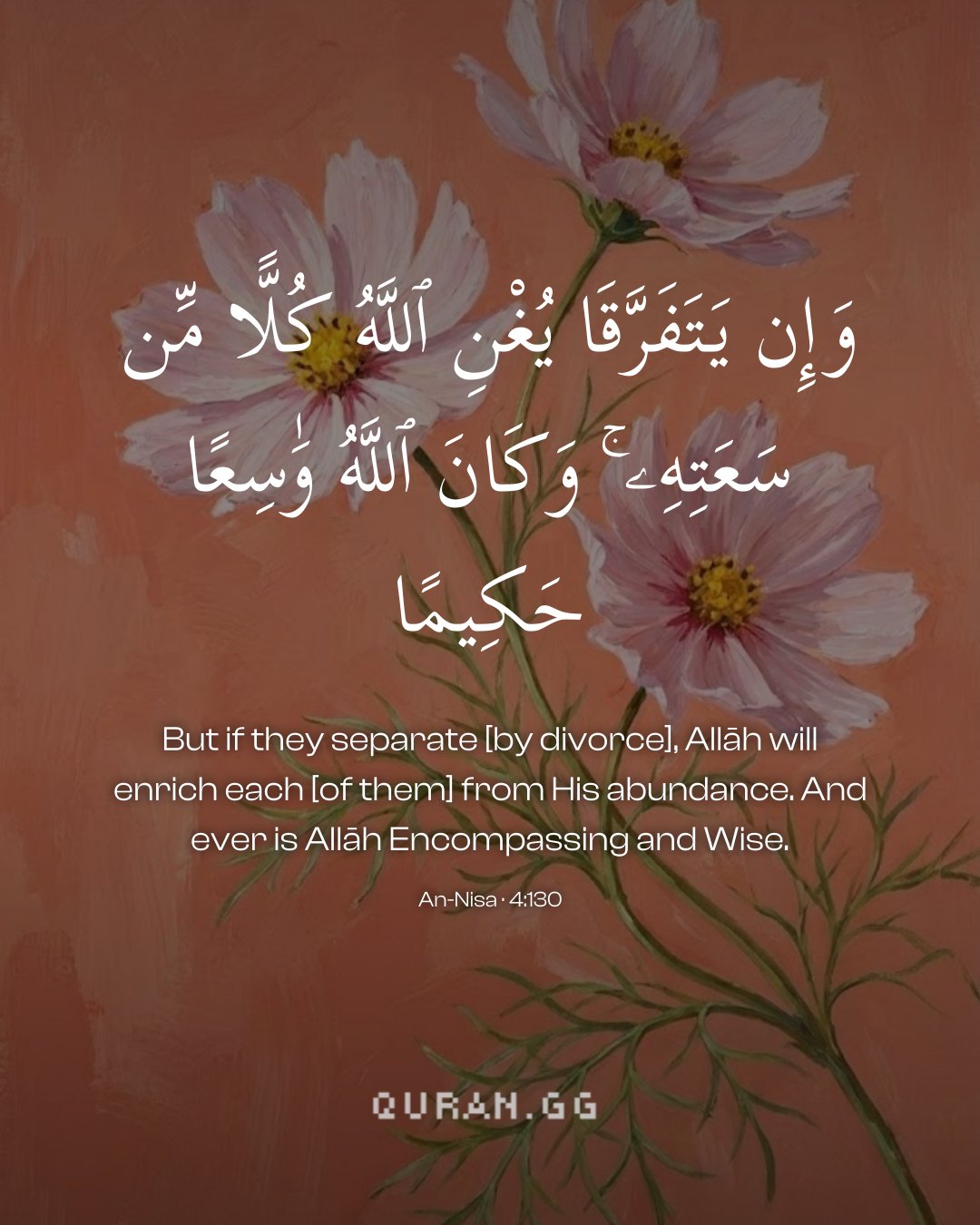
Allah states, and thus legislates accordingly, that sometimes, the man inclines away from his wife, sometimes towards her and sometimes he parts with her. In the first case, when the wife fears that her husband is steering away from her or deserting her, she is allowed to forfeit all or part of her rights, such as provisions, clothing, dwelling, and so forth, and the husband is allowed to accept such concessions from her. Hence, there is no harm if she offers such concessions, and if her husband accepts them. This is why Allah said,
No one is responsible for something beyond his control
In order to make married life pleasant and stable, the Holy Qur'an has given important instructions to both parties in these verses. Out of these, there is the verse: وَلَن تَسْتَطِيعُوا أَن تَعْدِلُوا بَيْنَ النِّسَاءِ (And you shall never be able to maintain real equality between wives ... -129) which carries a special instruction for both. At this point it will be recalled that the Holy Qur'an has already established in the beginning of Surah al-Nis-a' that a man who holds more than one wife in the bond of marriage is duty-bond to maintain justice and equality among all wives, and that if one thinks that he would be unable to fulfill this obligation, he should not take more than one wife. It was said: فَإِنْ خِفْتُمْ أَلَّا تَعْدِلُوا فَوَاحِدَةً "But, if you fear that you will not maintain equity, then, (keep to) one woman (4:3)."
The differences emerging between husband and wife or between any other two persons largely result from greed. One party, without any consideration for the other, wants his demands to be fulfilled. This mentality leads to distrust between the two. The proper course is for each party to give thought to the other’s problems and making due allowances, try to reach some consensus. Just as God desires people to be considerate to one another, similarly He shows the maximum consideration to His servants. God does not seize man for his natural weaknesses but rather takes man to task for his deliberate excesses and acts of injustice out of haughtiness and insolence. If man fears God and has the urge of reform in his heart, all his acts done with the right intentions would be considered pardonable in the Hereafter. Besides, one should never nurture such thoughts in his mind that it is he who is behind the success of such and such a person and that if he had not helped that person, success could never have been achieved. One must remember the fact that God alone is the provider. He alone is behind every success and achievement, and His help may come under diverse sets of circumstances.
Uthmani text of the Madinah mushaf (King Fahd Complex). Translation: Saheeh International. Tafsir via Quran.com.