Tafsir Ibn Kathir (abridged)
The Necessity of Taqwa of Allah
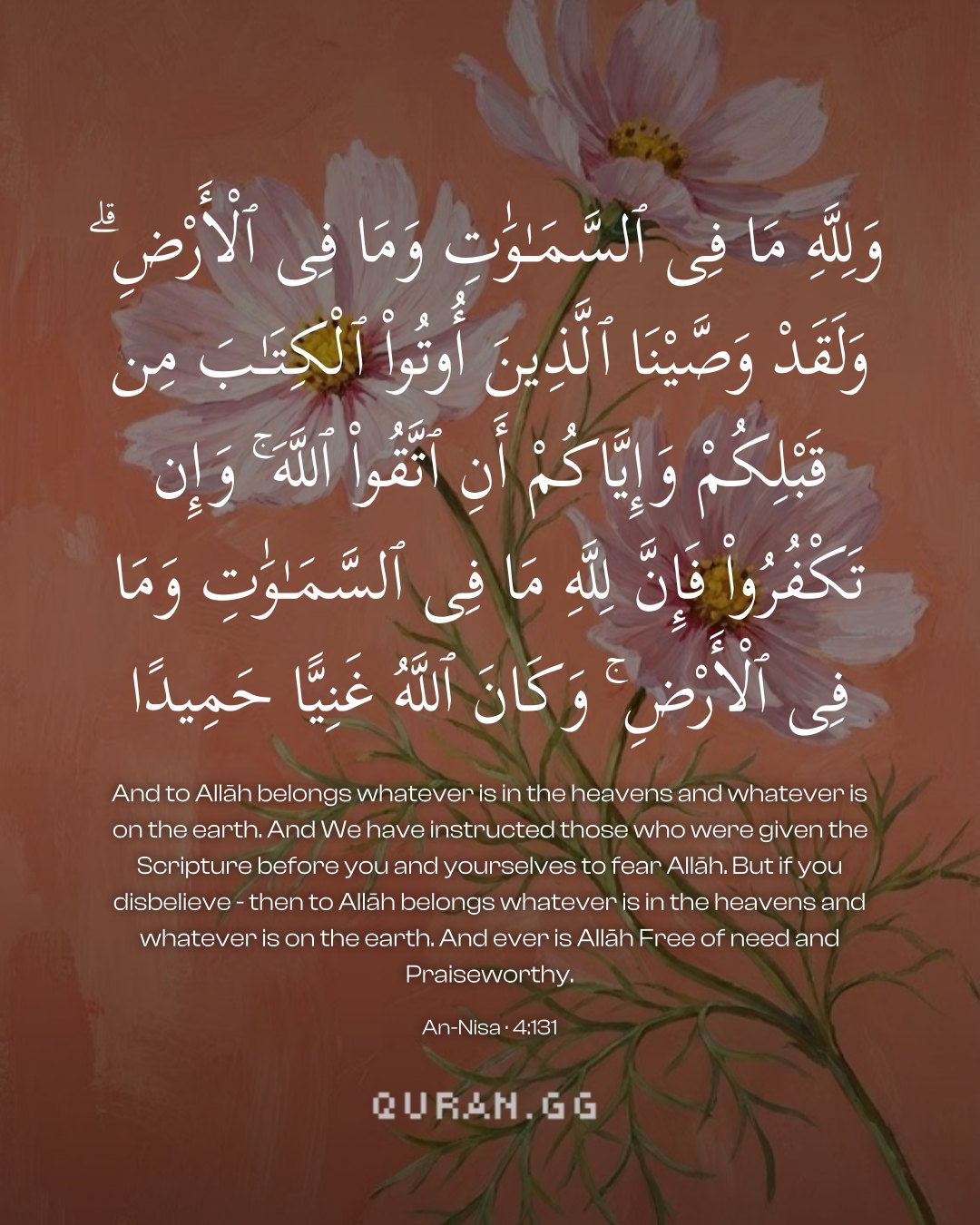
Allah states that He is the Owner of the heavens and earth and that He is the Supreme Authority over them. Hence Allah's statement,
وَلَقَدْ وَصَّيْنَا الَّذِينَ أُوتُواْ الْكِتَـبَ مِن قَبْلِكُمْ وَإِيَّـكُمْ
(And verily, We have recommended to the People of the Scripture before you, and to you) meaning, We have recommended to you what We recommended to the People of Scriptures; Taqwa of Allah, by worshipping Him Alone without partners. Allah then said,
وَإِن تَكْفُرُواْ فَإِنَّ للَّهِ مَا فِى السَّمَـوَتِ وَمَا فِى الاٌّرْضِ
(But if you disbelieve, then unto Allah belongs all that is in the heavens and all that is in the earth). In another Ayah, Allah said that Musa said to his people,
إِن تَكْفُرُواْ أَنتُمْ وَمَن فِى الاٌّرْضِ جَمِيعًا فَإِنَّ اللَّهَ لَغَنِىٌّ حَمِيدٌ
("If you disbelieve, you and all on the earth together, then verily, Allah is Rich (free of any need), Owner of all praise."). Allah said,
فَكَفَرُواْ وَتَوَلَّواْ وَّاسْتَغْنَى اللَّهُ وَاللَّهُ غَنِىٌّ حَمِيدٌ
(So they disbelieved and turned away. But Allah was not in need (of them). And Allah is Rich (free of any need), Worthy of all praise) meaning, He is far too Rich than to need His servants, and worthy of all praise in all His decisions and commandments. The meaning of Allah's statement,
وَللَّهِ مَا فِى السَّمَـوَتِ وَمَا فِى الاٌّرْضِ وَكَفَى بِاللَّهِ وَكِيلاً
(And to Allah belongs all that is in the heavens and all that is in the earth. And Allah is Ever All-Sufficient as a Disposer of affairs.) He has perfect watch over every soul, knowing what it deserves, He is the Watcher, and Witness of all things. Allah's statement,
إِن يَشَأْ يُذْهِبْكُمْ أَيُّهَا النَّاسُ وَيَأْتِ بِـاخَرِينَ وَكَانَ اللَّهُ عَلَى ذلِكَ قَدِيراً
(If He wills, He can take you away, O people, and bring others. And Allah is Ever All-Potent over that.) means, He is able to take you away and replace you with other people if you disobey Him. In a similar Ayah, Allah said,
الْفُقَرَآءُ وَإِن تَتَوَلَّوْاْ يَسْتَبْدِلْ قَوْماً غَيْرَكُمْ ثُمَّ لاَ يَكُونُواْ
(And if you turn away, He will exchange you for some other people and they will not be your likes) Allah's statement,
مَّن كَانَ يُرِيدُ ثَوَابَ الدُّنْيَا فَعِندَ اللَّهِ ثَوَابُ الدُّنْيَا وَالاٌّخِرَةِ
(Whoever desires the rewards of this life, then with Allah is the reward of this worldly life and of the Hereafter.) means, O those whose ultimate desire is this life, know that Allah owns the rewards of this life and the Hereafter. Therefore, if you ask Allah for both, He will enrich you, award you and suffice for you. As Allah said,
فَإِذَا قَضَيْتُم مَّنَـسِكَكُمْ فَاذْكُرُواْ اللَّهَ كَذِكْرِكُمْ ءَابَآءَكُمْ أَوْ أَشَدَّ ذِكْرًا فَمِنَ النَّاسِ مَن يَقُولُ رَبَّنَآ ءَاتِنَا فِى الدُّنْيَا وَمَا لَهُ فِى الاٌّخِرَةِ مِنْ خَلَـقٍ - وِمِنْهُم مَّن يَقُولُ رَبَّنَآ ءَاتِنَا فِى الدُّنْيَا حَسَنَةً وَفِي الاٌّخِرَةِ حَسَنَةً وَقِنَا عَذَابَ النَّارِ أُولَـئِكَ لَهُمْ نَصِيبٌ مِّمَّا كَسَبُواْ
(But of mankind there are some who say: "Our Lord! Give us in this world!" and for such there will be no portion in the Hereafter. And of them there are some who say: "Our Lord! Give us in this world that which is good and in the Hereafter that which is good, and save us from the torment of the Fire!" For them there will be alloted a share for what they have earned),
مَن كَانَ يُرِيدُ حَرْثَ الاٌّخِرَةِ نَزِدْ لَهُ فِى حَرْثِهِ
(Whosoever desires (by his deeds) the reward of the Hereafter, We give him increase in his reward), and
مَّن كَانَ يُرِيدُ الْعَـجِلَةَ عَجَّلْنَا لَهُ فِيهَا مَا نَشَآءُ لِمَن نُّرِيدُ
(Whoever desires the quick-passing (transitory enjoyment of this world), We readily grant him what We will for whom We like) until,
انظُرْ كَيْفَ فَضَّلْنَا بَعْضَهُمْ عَلَى بَعْضٍ
(See how We prefer one above another (in this world)). So Allah said here,
وَكَانَ اللَّهُ سَمِيعاً بَصِيراً
(And Allah is Ever All-Hearer, All-Seer.)