Tafsir Ibn Kathir (abridged)
The Prohibition of Wilayah with the Disbelievers
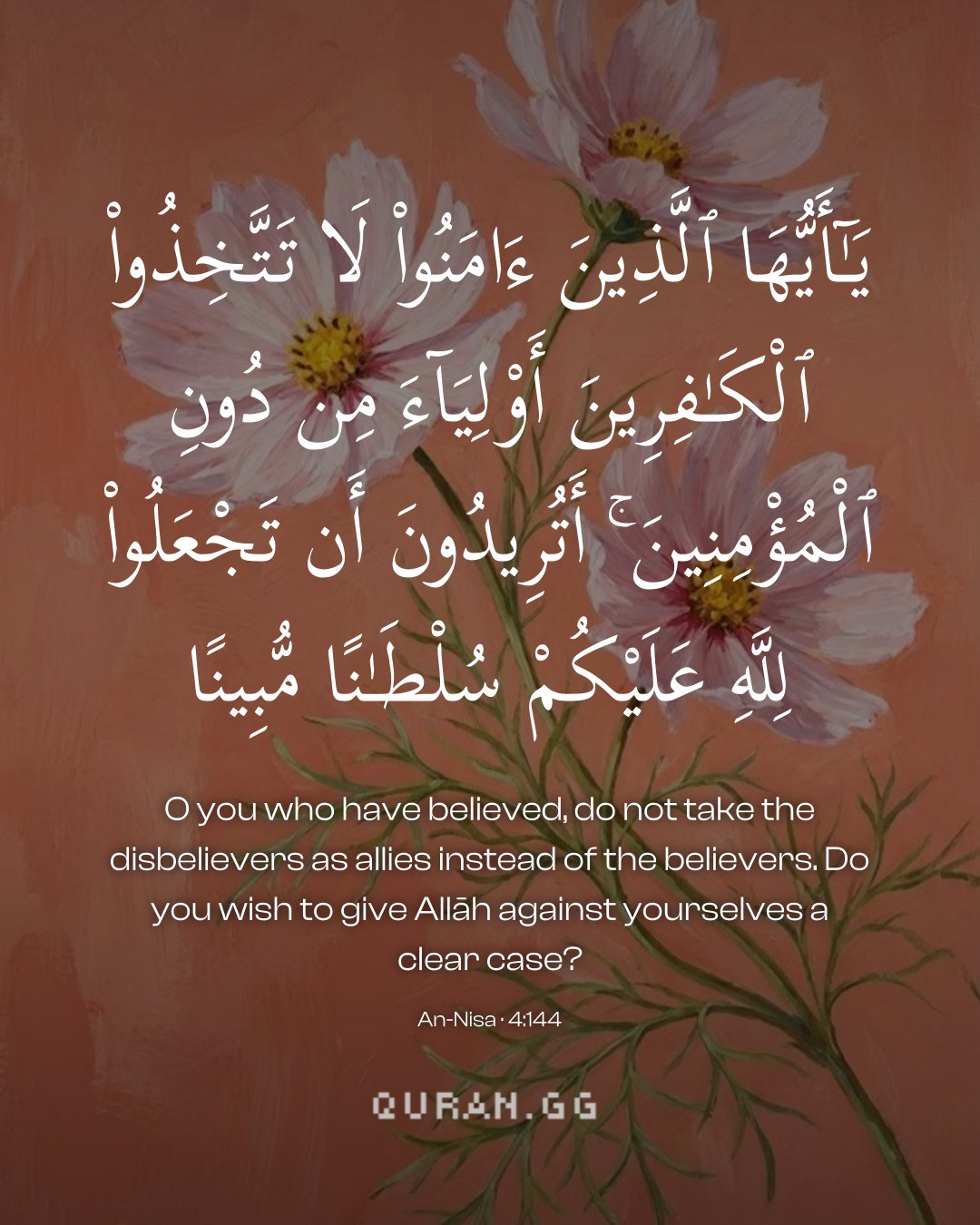
Allah forbids His believing servants from taking the disbelievers as friends instead of the believers. This includes being friends and associates of the disbelievers, advising them, being intimate with them and exposing the secrets of the believers to them. In another Ayah, Allah said,
لاَّ يَتَّخِذِ الْمُؤْمِنُونَ الْكَـفِرِينَ أَوْلِيَآءَ مِن دُونِ الْمُؤْمِنِينَ وَمَن يَفْعَلْ ذَلِكَ فَلَيْسَ مِنَ اللَّهِ فِي شَىْءٍ إِلاَ أَن تَتَّقُواْ مِنْهُمْ تُقَـةً وَيُحَذِّرْكُمُ اللَّهُ نَفْسَهُ
(Let not the believers take the disbelievers as friends instead of the believers, and whoever does that, will never be helped by Allah in any way, except if you indeed fear a danger from them. And Allah warns you against Himself). meaning, He warns you against His punishment if you fall into what He has prohibited. This is why Allah said here,
أَتُرِيدُونَ أَن تَجْعَلُواْ للَّهِ عَلَيْكُمْ سُلْطَاناً مُّبِيناً
(Do you wish to offer Allah a manifest Sultan against yourselves) meaning, proof against you that warrants receiving His torment. Ibn Abi Hatim narrated that Ibn `Abbas commented;
سُلْطَاناً مُّبِيناً
(manifest Sultan), "The word Sultan in the Qur'an means proof. " There is an authentic chain of narration for this statement, which is also the saying of Mujahid, `Ikrimah, Sa`id bin Jubayr, Muhammad bin Ka`b Al-Qurazi, Ad-Dahhak, As-Suddi and An-Nadr bin `Arabi.
The Hypocrites and the Friends of Disbelievers are in the LowestDepth of the Fire, Unless they Repent
Allah then states that,
إِنَّ الْمُنَـفِقِينَ فِى الدَّرْكِ الاٌّسْفَلِ مِنَ النَّارِ
(Verily, the hypocrites will be in the lowest depths of the Fire;) on the Day of Resurrection due to their tremendous Kufr. Al-Walibi `Ali bin Abi Talhah said that Ibn `Abbas said,
فِى الدَّرْكِ الاٌّسْفَلِ مِنَ النَّارِ
(in the lowest depths (grade) of the Fire;) means, in the bottom of the Fire. Other scholars said that the Fire has ever lower depths just as Paradise had ever higher grades. Ibn Jarir recorded that `Abdullah bin Mas`ud said that,
إِنَّ الْمُنَـفِقِينَ فِى الدَّرْكِ الاٌّسْفَلِ مِنَ النَّارِ
(Verily, the hypocrites will be in the lowest depths (grade) of the Fire), "Inside coffins of Fire that surround them, for they are closed and sealed in them." Ibn Abi Hatim recorded that when Ibn Mas`ud was asked about the hypocrites, he said, "They will be placed in coffins made of fire and they will be closed in them in the lowest depth of the Fire."
وَلَن تَجِدَ لَهُمْ نَصِيراً
(no helper will you find for them. ) to save them from their misery and painful torment. Allah then states that whoever among the hypocrites repents in this life, Allah will accept his repentance and sorrow, if his repentance were sincere and he then follows it by performing righteous deeds, all the while depending on his Lord. Allah said, a
إِلاَّ الَّذِينَ تَابُواْ وَأَصْلَحُواْ وَاعْتَصَمُواْ بِاللَّهِ وَأَخْلَصُواْ دِينَهُمْ للَّهِ
(Except those who repent (from hypocrisy), do righteous good deeds, depend on Allah, and purify their religion for Allah) replacing showing off with sincerity, so that their good deeds will benefit them, even if they were minute.
فَأُوْلَـئِكَ مَعَ الْمُؤْمِنِينَ
(then they will be with the believers.) on the Day of Resurrection,
وَسَوْفَ يُؤْتِ اللَّهُ الْمُؤْمِنِينَ أَجْراً عَظِيماً
(And Allah will grant to the believers a great reward.) Allah then states that He is too Rich to need anyone and that He only punishes the servants because of their sins,
مَّا يَفْعَلُ اللَّهُ بِعَذَابِكُمْ إِن شَكَرْتُمْ وَءَامَنْتُمْ
(Why should Allah punish you if you have thanked (Him) and have believed in Him.) by correcting your actions and having faith in Allah and His Messenger ,
وَكَانَ اللَّهُ شَـكِراً عَلِيماً
(And Allah is Ever All-Appreciative (of good), All-Knowing.) Allah appreciates those who appreciate Him, and has knowledge of those whose hearts believe in Him, and He will give them perfect rewar.