Surah An-Nur Ayah 53 (24:53) — Meaning & Tafsir | Quran.GG

Surah An-Nur, Ayah 53

24:53 · Meaning and tafsir

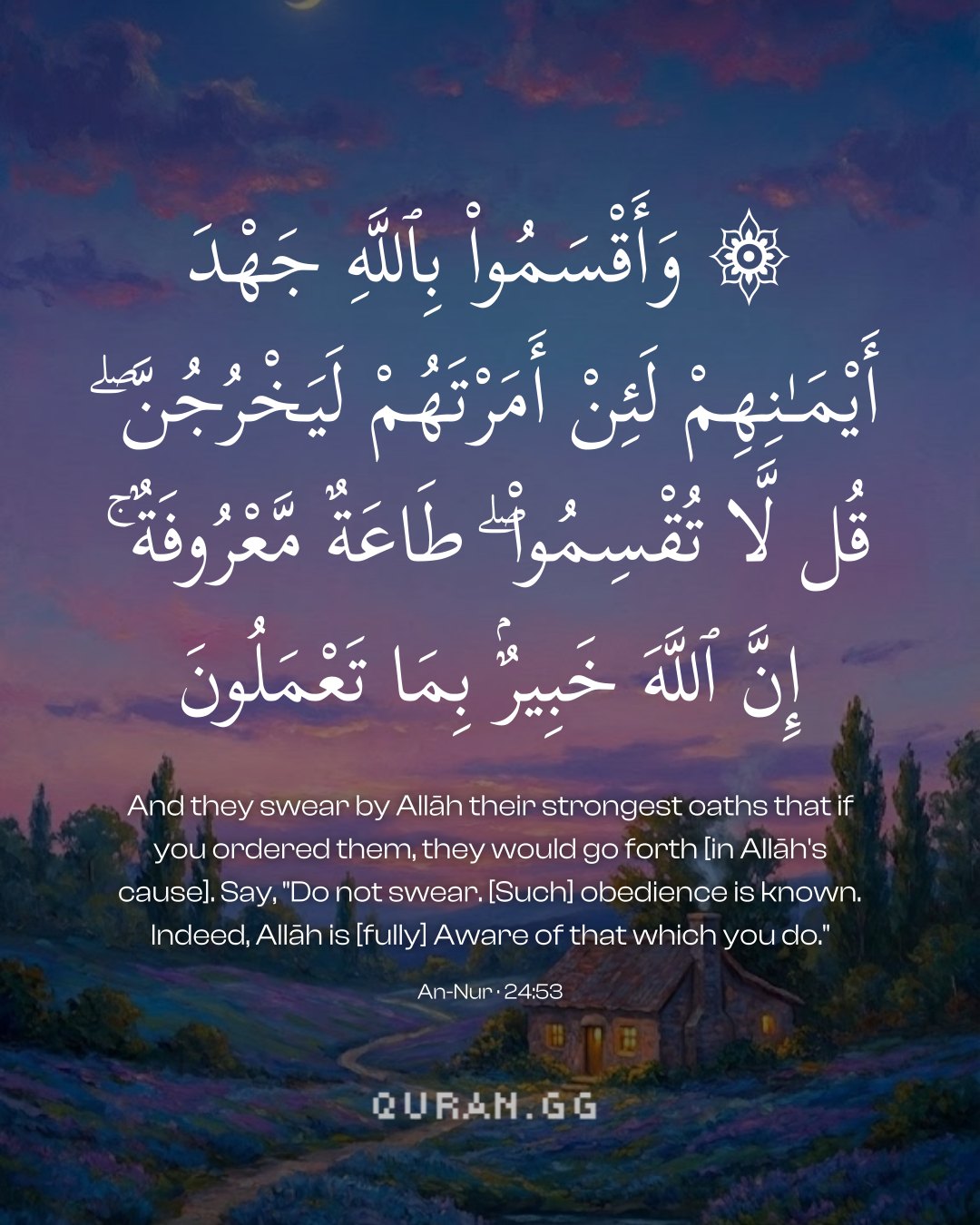
۞ وَأَقْسَمُوا۟ بِٱللَّهِ جَهْدَ أَيْمَـٰنِهِمْ لَئِنْ أَمَرْتَهُمْ لَيَخْرُجُنَّ ۖ قُل لَّا تُقْسِمُوا۟ ۖ طَاعَةٌ مَّعْرُوفَةٌ ۚ إِنَّ ٱللَّهَ خَبِيرٌۢ بِمَا تَعْمَلُونَ ٥٣

And they swear by Allāh their strongest oaths that if you ordered them, they would go forth [in Allāh's cause]. Say, "Do not swear. [Such] obedience is known. Indeed, Allāh is [fully] Aware of that which you do."

Surah An-Nur 24:53 in Arabic with its translation: “And they swear by Allāh their strongest oaths that if you ordered them, they would go forth [in Allāh's…”

Make something with this ayah

Turn it into a video for Stories, Reels or TikTok, recited by the reciter you pick, or an image on a background you choose. Free, in your browser.

Download this image

Tafsir Ibn Kathir (abridged)

قُل لاَّ تُقْسِمُواْ

(Say: "Swear you not...") meaning, do not swear this oath.

طَاعَةٌ مَّعْرُوفَةٌ

(obedience is known.) It was said that the meaning is, your obedience is known, i.e., it is known that your obedience is merely verbal and is not accompanied by action. Every time you swear an oath you lie. This is like the Ayah:

يَحْلِفُونَ لَكُمْ لِتَرْضَوْاْ عَنْهُمْ

(They swear to you that you may be pleased with them...) 9:96 And Allah says:

اتَّخَذْواْ أَيْمَـنَهُمْ جُنَّةً

(They have made their oaths a screen (for their evil actions).) 58:16 It is part of their nature to tell lies, even in the issues they choose, as Allah says:

أَلَمْ تَرَ إِلَى الَّذِينَ نَـفَقُواْ يَقُولُونَ لإِخْوَانِهِمُ الَّذِينَ كَفَرُواْ مِنْ أَهْلِ الْكِتَـبِ لَئِنْ أُخْرِجْتُمْ لَنَخْرُجَنَّ مَعَكُمْ وَلاَ نُطِيعُ فيكُمْ أَحَداً أَبَداً وَإِن قُوتِلْتُمْ لَنَنصُرَنَّكُمْ وَاللَّهُ يَشْهَدُ إِنَّهُمْ لَكَـذِبُونَ - لَئِنْ أُخْرِجُواْ لاَ يَخْرُجُونَ مَعَهُمْ وَلَئِن قُوتِلُواْ لاَ يَنصُرُونَهُمْ وَلَئِن نَّصَرُوهُمْ لَيُوَلُّنَّ الاٌّدْبَـرَ ثُمَّ لاَ يُنصَرُونَ

(Have you not observed the hypocrites who say to their friends among the people of the Scripture who disbelieve: "If you are expelled, we indeed will go out with you, and we shall never obey any one against you; and if you are attacked, we shall indeed help you." But Allah is Witness that they verily are liars. Surely, if they are expelled, never will they go out with them; and if they are attacked, they will never help them. And if they do help them, they will turn their backs, and they will not be victorious.) 59:11-12 Then Allah says:

قُلْ أَطِيعُواْ اللَّهَ وَأَطِيعُواْ الرَّسُولَ

(Say: "Obey Allah and obey the Messenger...) meaning, follow the Book of Allah and the Sunnah of His Messenger .

فَإِن تَوَلَّوْاْ

(but if you turn away,) if you ignore what he has brought to you,

فَإِنَّمَا عَلَيْهِ مَا حُمِّلَ

(he is only responsible for the duty placed on him), conveying the Message and fulfilling the trust.

وَعَلَيْكُمْ مَّا حُمِّلْتُمْ

(and you for that placed on you.) accepting that, and venerating it and doing as it commanded.

وَإِن تُطِيعُوهُ تَهْتَدُواْ

(If you obey him, you shall be on the right guidance.) because he calls to the straight path,

صِرَطِ اللَّهِ الَّذِى لَهُ مَا فِى السَّمَـوَتِ وَمَا فِى الاٌّرْضِ

(The path of Allah to Whom belongs all that is in the heavens and all that is in the earth. ..) 42:53

وَمَا عَلَى الرَّسُولِ إِلاَّ الْبَلَـغُ الْمُبِينُ

(The Messenger's duty is only to convey in a clear way.) This is like the Ayat:

فَإِنَّمَا عَلَيْكَ الْبَلَـغُ وَعَلَيْنَا الْحِسَابُ

(your duty is only to convey and on Us is the reckoning.) 13:40

فَذَكِّرْ إِنَّمَآ أَنتَ مُذَكِّرٌ - لَّسْتَ عَلَيْهِم بِمُسَيْطِرٍ

(So remind them -- you are only one who reminds. You are not a dictator over them.) 88:21-22

Ma'arif al-Qur'an

Four conditions for success and victory

وَمَن يُطِعِ اللَّـهَ وَرَ‌سُولَهُ وَيَخْشَ اللَّـهَ وَيَتَّقْهِ فَأُولَـٰئِكَ هُمُ الْفَائِزُونَ ﴿52﴾

And whoever obeys, Allah and His messenger and has awe of Him and observes Tagwa of Him, then such people are the victorious. [ 52]

In this verse it is declared that those who bind themselves to follow these four things are the ones who are successful and victorious in this world and the Hereafter.

An astonishing incident

An incident of Sayyidna ` Umar ؓ is reported in Tafsir Qurtubi, which explains the difference between these four things and puts them in right perspective. It so happened that one day Sayyidna ` Umar ؓ was standing in the Prophet's mosque, when suddenly a Roman villager appeared and stood beside him, and said انا اَشھَدُ اَنَّ لا إله إلا اللہ و اَشھَدُ اَنَّ مُحَمَّدَاً رَّسُولُ اَلله . Sayyidna ` Umar ؓ inquired ` What is the matter?' He replied ` I have accepted Islam for Allah's sake'. Then Sayyidna Umar ؓ asked if there was any reason for that, to which he replied in the affirmative, and elaborated that he had read Torah, Injil, Zabur and a number of other books brought by past messengers. But lately he had heard a verse of the Holy Qur'an recited by a Muslim prisoner and realized that in that small verse all the older books have been condensed. So, he was convinced that it was Allah's revelation. Then Sayyidna ` Umar ؓ enquired from him about the verse he was referring to, and he recited this very verse. That Roman villager also gave a very astonishing commentary of the verse, which goes like this:

Continue reading the tafsir of ayahs 52–54

Tazkirul Quran

One whose heart has been deeply permeated by God-realisation always has his eyes downcast. His sense of responsibility prepares him for great sacrifices and makes him a man who is frugal with words as he is conscious of his accountability before God. On the contrary, one who is remiss in his relations with God is assiduous in his relations with other people. He compensates for his shortcomings in deeds by an excess of words. Since he has no proof of good character, he remonstrates with big words in order to promote his image as a trustworthy and respectable person. Those who try to influence others by using the charm of words think that all matters are between human beings. Those who are certain that the real matter is rather between God and man experience a sea-change in their attitude.

Uthmani text of the Madinah mushaf (King Fahd Complex). Translation: Saheeh International. Tafsir via Quran.com.