The Command to pray, give the Zakah and obey the Messenger ﷺ; the inability of the Disbelievers to escape, and the ultimate Destiny
Allah commands His believing servants to establish prayer, which means worshipping Allah Alone with no partner or associate; to pay the Zakah, which is an act of kindness towards His poor and weak creatures; and by doing so to obey the Messenger of Allah ﷺ, i.e., to do as he commands them and to avoid what he forbids them, so that Allah will have mercy on them for that. No doubt, whoever does that, Allah will have mercy on him, as Allah says in another Ayah:
أُوْلَـئِكَ سَيَرْحَمُهُمُ اللَّهُ
(Allah will have His mercy on them) 9:71
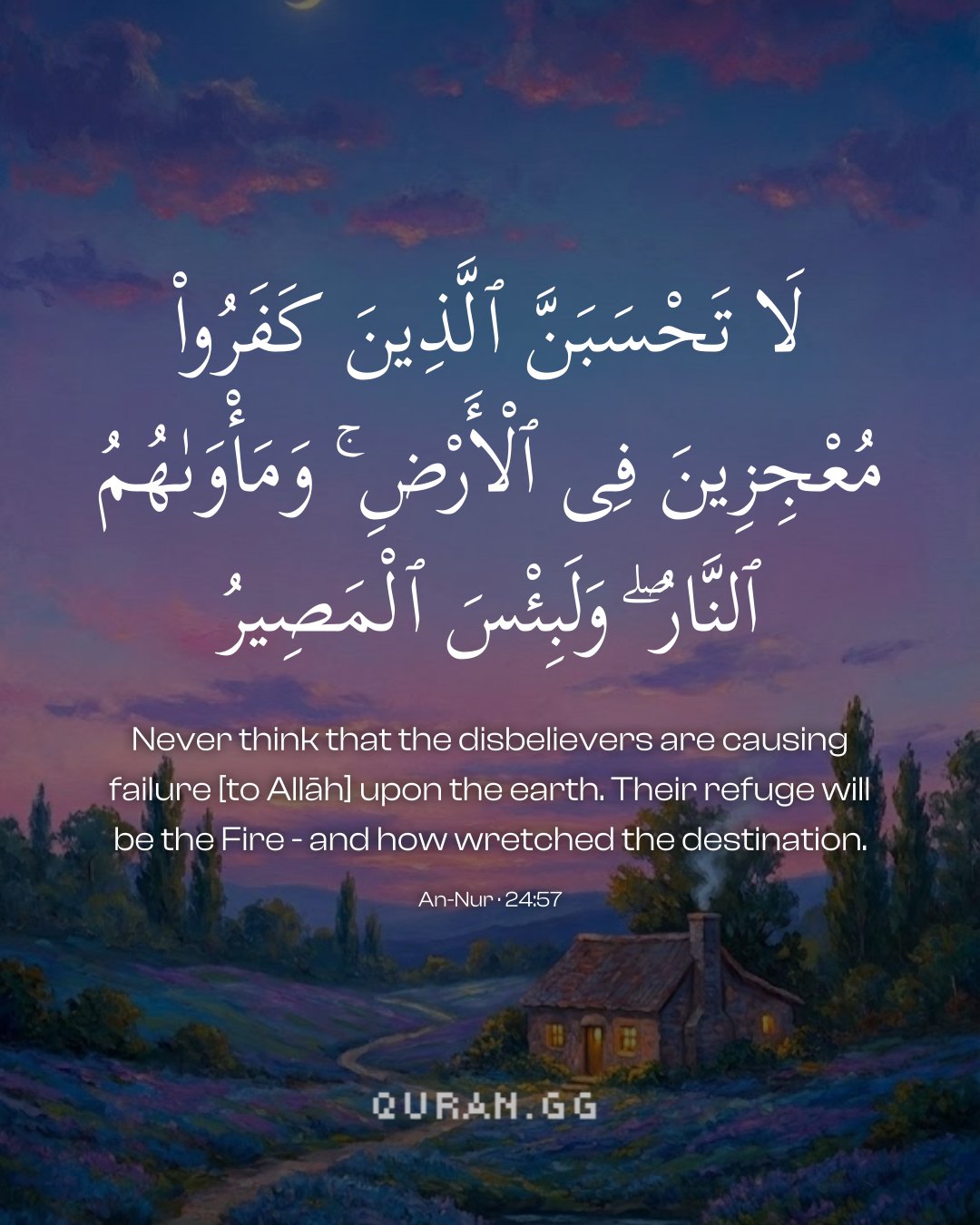
لاَ تَحْسَبَنَّ
(Consider not) means, `do not think, O Muhammad,' that:
الَّذِينَ كَفَرُواْ
(the disbelievers) meaning, those who opposed and denied you,
مُعْجِزِينَ فِى الاٌّرْضِ
(can escape in the land.) means, that they can flee from Allah. No, Allah is able to deal with them and He will punish them most severely for that. Allah says:
وَمَأْوَاهُمُ
(Their abode) meaning, in the Hereafter,
النَّارُ وَلَبِئْسَ الْمَصِيرُ
(shall be the Fire -- and worst indeed is that destination.) means, how terrible the consequences will be for the disbelievers, how evil a place to stay in and how awful a place to rest!
Commentary
Background of Revelation
Qurtubi has reported on authority of Abul ` Aliyah that the Holy Prophet ﷺ stayed in Makkah for ten years after commencement of revelation and declaration of prophethood, during which time there was a constant fear of the infidels and disbelievers. Then after the Hijrah to Madina also there was a ceaseless danger of attacks from the disbelievers. So, someone asked the Holy Prophet ﷺ "Would a time come to us when we will be able to live in peace without wearing our weaponry?' The Holy Prophet ﷺ replied ` Yes, the time is coming very soon'. On that occasion these verses were revealed. (Qurtubi and Bahr). Sayyidna ` Abdullah Ibn 'Abbas ؓ ، has said that these verses relate the promise of Allah Ta’ ala, which He had made with the Ummah of Muhammad ﷺ before their creation in the Torah and the Injil. (Bahr Muhit)
Continue reading the tafsir of ayahs 55–57 The blessings of God refer to the position of dominance in the present world and Paradise in the Hereafter. Those who want to make themselves worthy of this blessing should foster three virtues in themselves: piety, charity and the willingness to follow the example of the Prophet. The first quality is evinced in the regular saying of prayers. Observance of prayers regularly acts as a strong incentive to lead a life of sincerity, modesty and humility, rather than one of false pride and arrogance. The second quality takes its practical form in zakat, the prescribed alms-giving, which means the setting aside of some amount at the prescribed rate from one’s wealth and handing it over to bayt al-mal or the ‘Public Fund’. Zakat, conveys the message that people should not be selfish but should be the well-wishers of others. Their well-wishing should go to the extent of fostering a feeling that others have a certain right over them. The third quality is obedience to the Prophet Muhammad. During his lifetime, this meant obeying him personally, while beyond his lifetime, it means obeying his sunnah or tradition. In other words, in all matters of life, the ideal example for the people should be the life of the Prophet of God. People should accept only him as their guide and when confronted with his pronouncements, they should forego their personal opinions. The Prophet should be in the lead and all others should be behind him.
Uthmani text of the Madinah mushaf (King Fahd Complex). Translation: Saheeh International. Tafsir via Quran.com.