(And a tree that springs forth from Mount Sinai, that grows (produces) oil, and (it is a) relish for the eaters.) (23:20) -- which is the olive tree. This is supported by the Ayah:
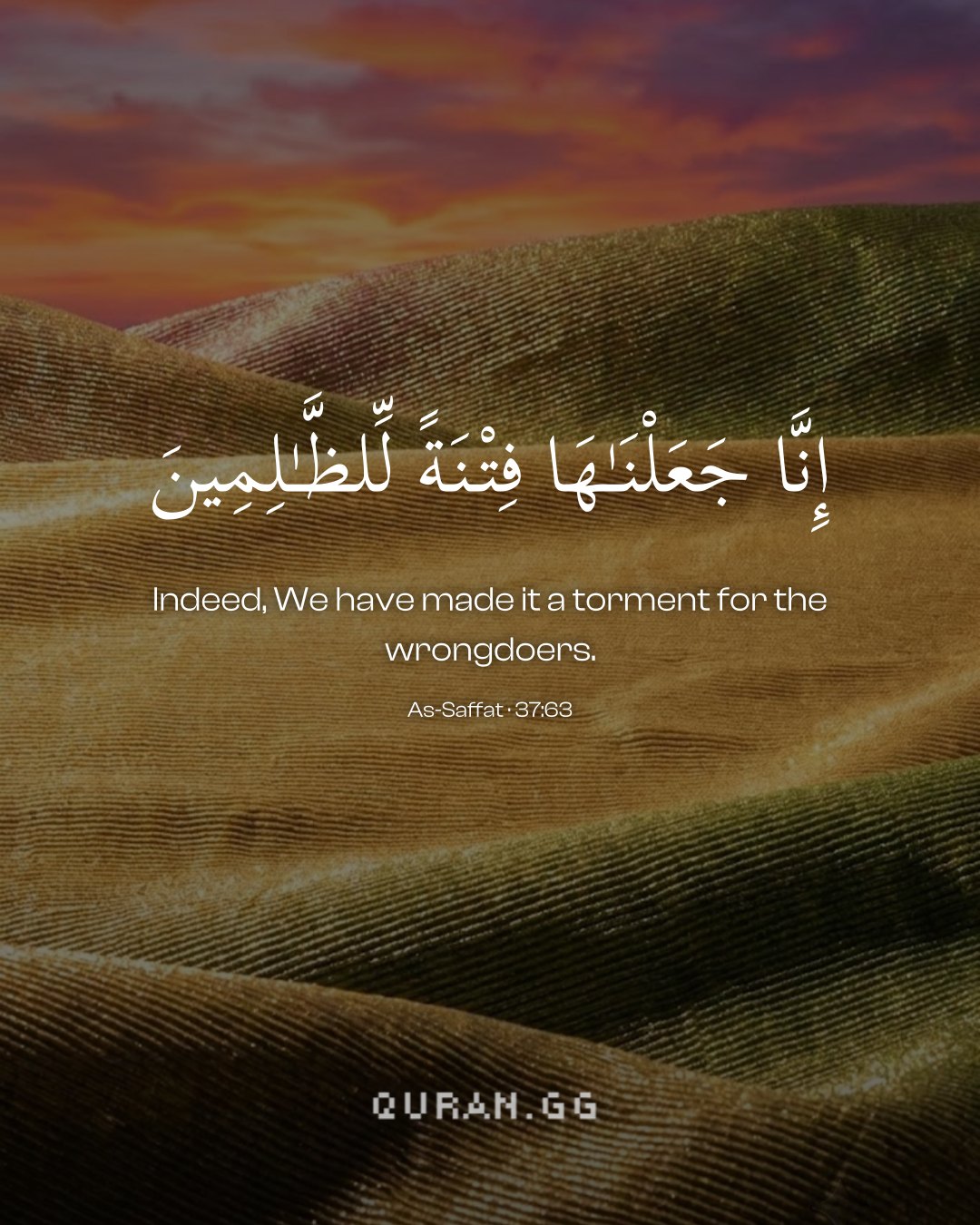
In verse 63, it was said: إِنَّا جَعَلْنَاهَا فِتْنَةً لِّلظَّالِمِينَ (We have made it [ the tree of zaqqum ] a test ['fitnah'] for the unjust). Here, according to some commentators, فِتْنَةً (fitnah) means punishment, that is, 'have turned this tree into a source of punishment.' But, most commentators say that it is more appropriate to translate 'fitnah' at this place as 'trial' or 'test'. The purpose here is to say that Allah wishes to test as to who believes in it, and who ridicules it. Consequently, what happened was that the disbelievers of Arabia failed this test. Rather than fear this punishment and believe, they opted for the method of confrontation and ridicule. According to Hadith narrations, when the verses of the Qur'an in which it has been mentioned that the disbelievers will be made to eat the fruit of zaqqum, Abu Jahl said to his accomplices: "Your friend (Sayyidna Muhammad al-Mustafa ﷺ) says that there is a tree in the Fire - although, fire eats the tree - while we, by God, do know this much that zaqqum is the name of butter-topped dates. So, come and eat this date and butter" (ad-Durr-ul-Manthur, p. 277, v. 5). In fact, in the language of the Berbers, dates topped with butter or cream were known as zaqqum, therefore, Abu Jahl made use of this opportunity to ridicule the prophet of Islam. To the two things he said,
Tazkirul Quran
Maulana Wahiduddin KhanOn ayahs 61–73
Paradise will be a world of aesthetic and noble activity. There will be interesting meetings; there will be enjoyable experiences; intellectually stimulating conversations and all kinds of limitations and unpleasantness will have come to an end. Believing in the Hereafter does not mean a simple acceptance of it but rather considering the existence of the Hereafter as so very real and so very important that its concept should prevail over one’s entire life and one should be prepared to risk one’s all for its sake. Those who had thought of believers who were ever conscious of the Hereafter as being mad will be wonderstruck on seeing their success in the Hereafter. On the other hand, the believers in the Hereafter themselves will be surprised to see their own glory, finding it difficult to believe that God could have rewarded them so generously for their small acts of goodness. How strange is one who does not pine for such a heaven and who does not perform such deeds as will help him achieve it.
Uthmani text of the Madinah mushaf (King Fahd Complex). Translation: Saheeh International. Tafsir via Quran.com.