Tafsir Ibn Kathir (abridged)
The Believer and the Rebellious are not equal
Allah tells us that in His justice and generosity, on the Day of Judgement He will not judge those who believed in His signs and followed His Messengers, in the same way as He will judge those who rebelled, disobeyed Him and rejected the Messengers sent by Allah to them. This is like the Ayat:
أَمْ حَسِبَ الَّذِينَ اجْتَرَحُواْ السَّيِّئَـتِ أَن نَّجْعَلَهُمْ كَالَّذِينَ ءَامَنُواْ وَعَمِلُواْ الصَّـلِحَـتِ سَوَآءً مَّحْيَـهُمْ وَمَمَـتُهُمْ سَآءَ مَا يَحْكُمُونَ
(Or do those who earn evil deeds think that We shall hold them equal with those who believe and do righteous good deeds, in their present life and after their death Worst is the judgement that they make.) (45:21),
أَمْ نَجْعَلُ الَّذِينَ ءَامَنُواْ وَعَمِلُواْ الصَّـلِحَـتِ كَالْمُفْسِدِينَ فِى الاٌّرْضِ أَمْ نَجْعَلُ الْمُتَّقِينَ كَالْفُجَّارِ
(Shall We treat those who believe and do righteous good deeds as corruptors on earth Or shall We treat those who have Taqwa as the wicked) (38:28)
لاَ يَسْتَوِى أَصْحَـبُ النَّارِ وَأَصْحَـبُ الْجَنَّةِ
(Not equal are the dwellers of the Fire and the dwellers of the Paradise...) (59:20). Allah says:
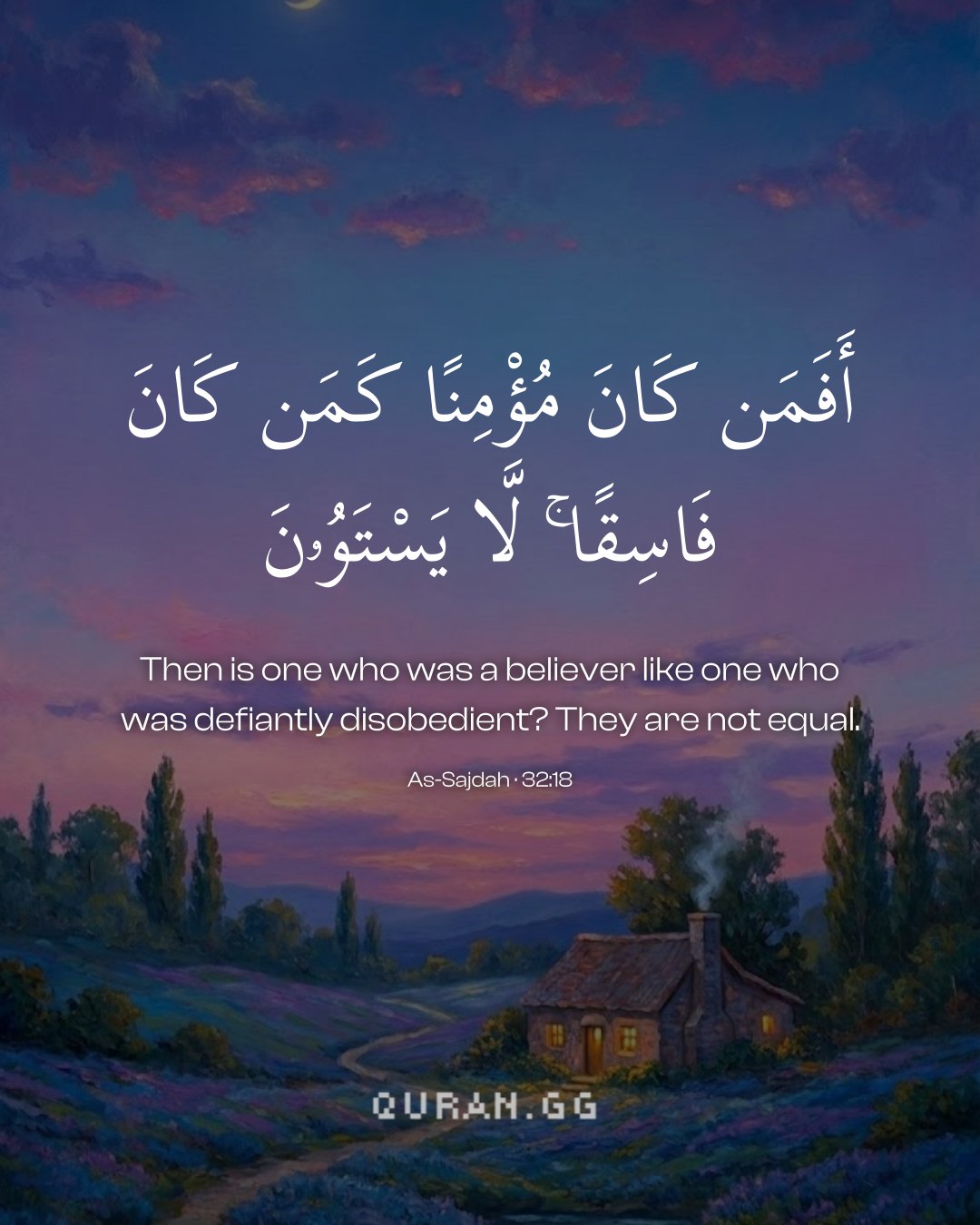
أَفَمَن كَانَ مُؤْمِناً كَمَن كَانَ فَاسِقاً لاَّ يَسْتَوُونَ
(Is then he who is a believer like him who is a rebellious Not equal are they. ) i.e., before Allah on the Day of Resurrection. `Ata' bin Yasar, As-Suddi and others mentioned that this was revealed concerning `Ali bin Abi Talib and `Uqbah bin Abi Mu`it. Hence Allah has judged between them when He said:
أَمَّا الَّذِينَ ءَامَنُواْ وَعَمِلُواْ الصَّـلِحَـتِ
(As for those who believe and do righteous good deeds,) meaning, their hearts believed in the signs of Allah, and they did as the signs of Allah dictate, i.e. righteous good deeds.
فَلَهُمْ جَنَّـتُ الْمَأْوَى
(for them are Gardens of Abode) i.e., in which there are dwellings and houses and lofty apartments.
نُزُلاً
(as an entertainment) means, something to welcome and honor a guest,
بِمَا كَانُواْ يَعْمَلُونَوَأَمَّا الَّذِينَ فَسَقُواْ
(for what they used to do. And as for those who rebel,) means, those who disobeyed Allah, their dwelling place will be the Fire, and every time they want to escape from it, they will be thrown back in, as Allah says:
كُلَّمَآ أَرَادُواْ أَن يَخْرُجُواْ مِنْهَا مِنْ غَمٍّ أُعِيدُواْ فِيهَا
(Every time they seek to get away therefrom, from anguish, they will be driven back therein) (22:22). Al-Fudayl bin `Iyad said: "By Allah, their hands will be tied, their feet will be chained, the flames will lift them up and the angels will strike them.
وَقِيلَ لَهُمْ ذُوقُواْ عَذَابَ النَّارِ الَّذِي كُنتُمْ بِهِ تُكَذِّبُونَ
(and it will be said to them: "Taste you the torment of the Fire which you used to deny.")" means, this will be said to them by way of rebuke and chastisement.
وَلَنُذِيقَنَّهُمْ مِّنَ الْعَذَابِ الاٌّدْنَى دُونَ الْعَذَابِ الاٌّكْبَرِ
(And verily, We will make them taste of the near lighter torment prior to the greater torment,) Ibn `Abbas said, "The near torment means diseases and problems in this world, and the things that happen to its people as a test from Allah to His servants so that they will repent to Him." Something similar was also narrated from Ubayy bin Ka`b, Abu Al-`Aliyah, Al-Hasan, Ibrahim An-Nakha`i, Ad-Dahhak, `Alqamah, `Atiyah, Mujahid, Qatadah, `Abd Al-Karim Al-Jazari and Khusayf.
وَمَنْ أَظْلَمُ مِمَّن ذُكِّرَ بِـَايَـتِ رَبِّهِ ثُمَّ أَعْرَضَ عَنْهَآ
(And who does more wrong than he who is reminded of the Ayat of his Lord, then turns aside therefrom) means, there is no one who does more wrong than the one whom Allah reminds of His signs and explains them to him clearly, then after that he neglects and ignores them, and turns away from them, forgetting them as if he does not know them. Qatadah said: "Beware of turning away from the remembrance of Allah, for whoever turns away from remembering Him will be the most misguided and the most in need, and the most guilty of sin." Allah says, warning the one who does that:
إِنَّا مِنَ الْمُجْرِمِينَ مُنتَقِمُونَ
(Verily, We shall exact retribution from the criminals.) meaning, `We shall avenge Ourselves on those who do that in the strongest possible terms.'