Tafsir Ibn Kathir (abridged)
The Response of Shu`ayb's People, Their Disbelief in Him and the coming of the Punishment upon Them
Allah tells us how his people responded, and how it was like the response of Thamud to their Messenger -- for they were of like mind -- when they said:
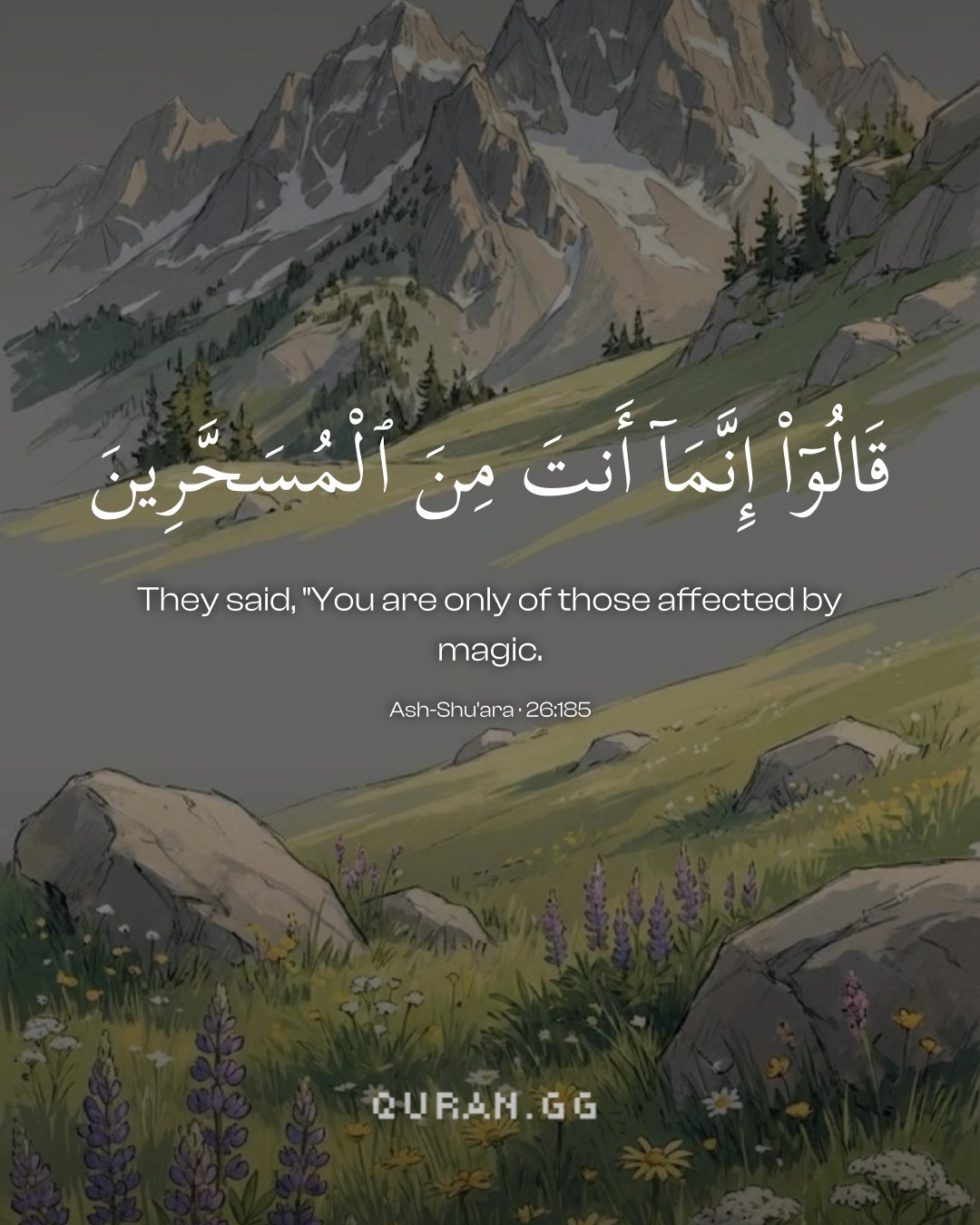
إِنَّمَآ أَنتَ مِنَ الْمُسَحَّرِينَ
(You are only one of those bewitched!) meaning, `you are one of those who are affected by witchcraft.'
وَمَآ أَنتَ إِلاَّ بَشَرٌ مِّثْلُنَا وَإِن نَّظُنُّكَ لَمِنَ الْكَـذِبِينَ
(You are but a human being like us and verily, we think that you are one of the liars!) means, `we think you are deliberately lying to us in what you say, and Allah has not sent you to us.'
فَأَسْقِطْ عَلَيْنَا كِسَفاً مِّنَ السَّمَآءِ
(So cause a piece of the heaven to fall on us,) Ad-Dahhak said: "One side of the heavens." Qatadah said: "A piece of the heaven." As-Suddi said: "A punishment from heaven." This is like what the Quraysh said, as Allah tells us:
وَقَالُواْ لَن نُّؤْمِنَ لَكَ حَتَّى تَفْجُرَ لَنَا مِنَ الاٌّرْضِ يَنْبُوعًا
(And they say: "We shall not believe in you, until you cause a spring to gush forth from the earth for us) until:
أَوْ تُسْقِطَ السَّمَآءَ كَمَا زَعَمْتَ عَلَيْنَا كِسَفًا أَوْ تَأْتِىَ بِاللَّهِ وَالْمَلَـئِكَةِ قَبِيلاً
(Or you cause the heaven to fall upon us in pieces, as you have pretended, or you bring Allah and the angels before (us) face to face.") (17:90-92)
وَإِذْ قَالُواْ اللَّهُمَّ إِن كَانَ هَـذَا هُوَ الْحَقَّ مِنْ عِندِكَ فَأَمْطِرْ عَلَيْنَا حِجَارَةً مِّنَ السَّمَآءِ
(And (remember) when they said: "O Allah! If this is indeed the truth from You, then rain down stones on us from the sky....") (8:32). Similarly, these ignorant disbelievers said:
فَأَسْقِطْ عَلَيْنَا كِسَفاً مِّنَ السَّمَآءِ
(So, cause a piece of the heaven to fall on us, if you are of the truthful!)
قَالَ رَبِّى أَعْلَمُ بِمَا تَعْمَلُونَ
(He said: "My Lord is the Best Knower of what you do.") means, `Allah knows best about you, and if you deserve that, He will punish you therewith, and He will not treat you unjustly.' So this is what happened to them -- as they asked for -- an exact recompense. Allah says:
فَكَذَّبُوهُ فَأَخَذَهُمْ عَذَابُ يَوْمِ الظُّلَّةِ إِنَّهُ كَانَ عَذَابَ يَوْمٍ عَظِيمٍ
(But they denied him, so the torment of the Day of Shadow seized them. Indeed that was the torment of a Great Day.) This is what they asked for, when they asked for a part of the heaven to fall upon them. Allah made their punishment in the form of intense heat which overwhelmed them for seven days, and nothing could protect them from it. Then He sent a cloud to shade them, so they ran towards it to seek its shade from the heat. When all of them had gathered underneath it, Allah sent sparks of fire and flames and intense heat upon them, and caused the earth to convulse beneath them, and He sent against them a mighty Sayhah which destroyed their souls. Allah says:
إِنَّهُ كَانَ عَذَابَ يَوْمٍ عَظِيمٍ
(Indeed that was the torment of a Great Day.) Allah has mentioned how they were destroyed in three places in the Qur'an, in each of which it is described in a manner which fits the context. In Surat Al-A`raf He says that the earthquake seized them, and they lay (dead), prostrate in their homes. This was because they said:
لَنُخْرِجَنَّكَ يـشُعَيْبُ وَالَّذِينَ ءَامَنُواْ مَعَكَ مِن قَرْيَتِنَآ أَوْ لَتَعُودُنَّ فِي مِلَّتِنَا
("We shall certainly drive you out, O Shu`ayb, and those who have believed with you from our town, or else you (all) shall return to our religion.") (7:88). They had sought to scare the Prophet of Allah and those who followed him, so they were seized by the earthquake. In Surah Hud, Allah says:
وَأَخَذَتِ الَّذِينَ ظَلَمُواْ الصَّيْحَةُ
(And As-Sayhah seized the wrongdoers) (11:94). This was because they mocked the Allah's Prophet when they said:
أَصَلَوَتُكَ تَأْمُرُكَ أَن نَّتْرُكَ مَا يَعْبُدُ ءابَاؤُنَآ أَوْ أَن نَّفْعَلَ فِى أَمْوَالِنَا مَا نَشَؤُا إِنَّكَ لاّنتَ الْحَلِيمُ الرَّشِيدُ
("Does your Salah command that we give up what our fathers used to worship, or that we give up doing what we like with our property Verily, you are the forbearer, right-minded!") (11:87). They had said this in a mocking, sarcastic tone, so it was befitting that the Sayhah should come and silence them, as Allah says:
فَأَخَذَتْهُمُ الصَّيْحَةُ
(So As-Saihah overtook them) (15:73).
وَأَخَذَتِ الَّذِينَ ظَلَمُواْ الصَّيْحَةُ
(And As-Saihah seized the wrongdoers) (11:94). And here, they said:
فَأَسْقِطْ عَلَيْنَا كِسَفاً مِّنَ السَّمَآءِ
(So, cause a piece of the heaven to fall on us,) in a stubborn and obstinate manner. So, it was fitting that something they never thought would happen should befall them:
فَأَخَذَهُمْ عَذَابُ يَوْمِ الظُّلَّةِ إِنَّهُ كَانَ عَذَابَ يَوْمٍ عَظِيمٍ
(so the torment of the Day of Shadow seized them. Indeed that was the torment of a Great Day.) Muhammad bin Jarir narrated from Yazid Al-Bahili: "I asked Ibn `Abbas about this Ayah:
فَأَخَذَهُمْ عَذَابُ يَوْمِ الظُّلَّةِ
(so the torment of the Day of Shadow seized them. ) He said: `Allah sent upon them thunder and intense heat, and it terrified them so they entered their houses and it pursued them to the innermost parts of their houses and terrified them further, and they ran fleeing from their houses into the fields. Then Allah sent upon them clouds which shaded them from the sun, and they found it cool and pleasant, so they called out to one another until they had all gathered beneath the cloud, then Allah sent fire upon them.' Ibn `Abbas said, `That was the torment of the Day of Shadow, indeed that was the torment of a Great Day."'
إِنَّ فِي ذَلِكَ لأَيَةً وَمَا كَانَ أَكْثَرُهُمْ مُّؤْمِنِينَ - وَإِنَّ رَبَّكَ لَهُوَ الْعَزِيزُ الرَّحِيمُ
(Verily, in this is an Ayah, yet most of them are not believers. And verily, your Lord, He is truly, the All-Mighty, the Most Merciful.) (26:8-9) meaning, He is All-Mighty in His punishment of the disbelievers, and Most Merciful towards His believing servants.