Tafsir Ibn Kathir (abridged)
The Attributes of Those Who deserve that which is with Allah
Here Allah points out the insignificance of this worldly life and its transient adornments and luxuries.
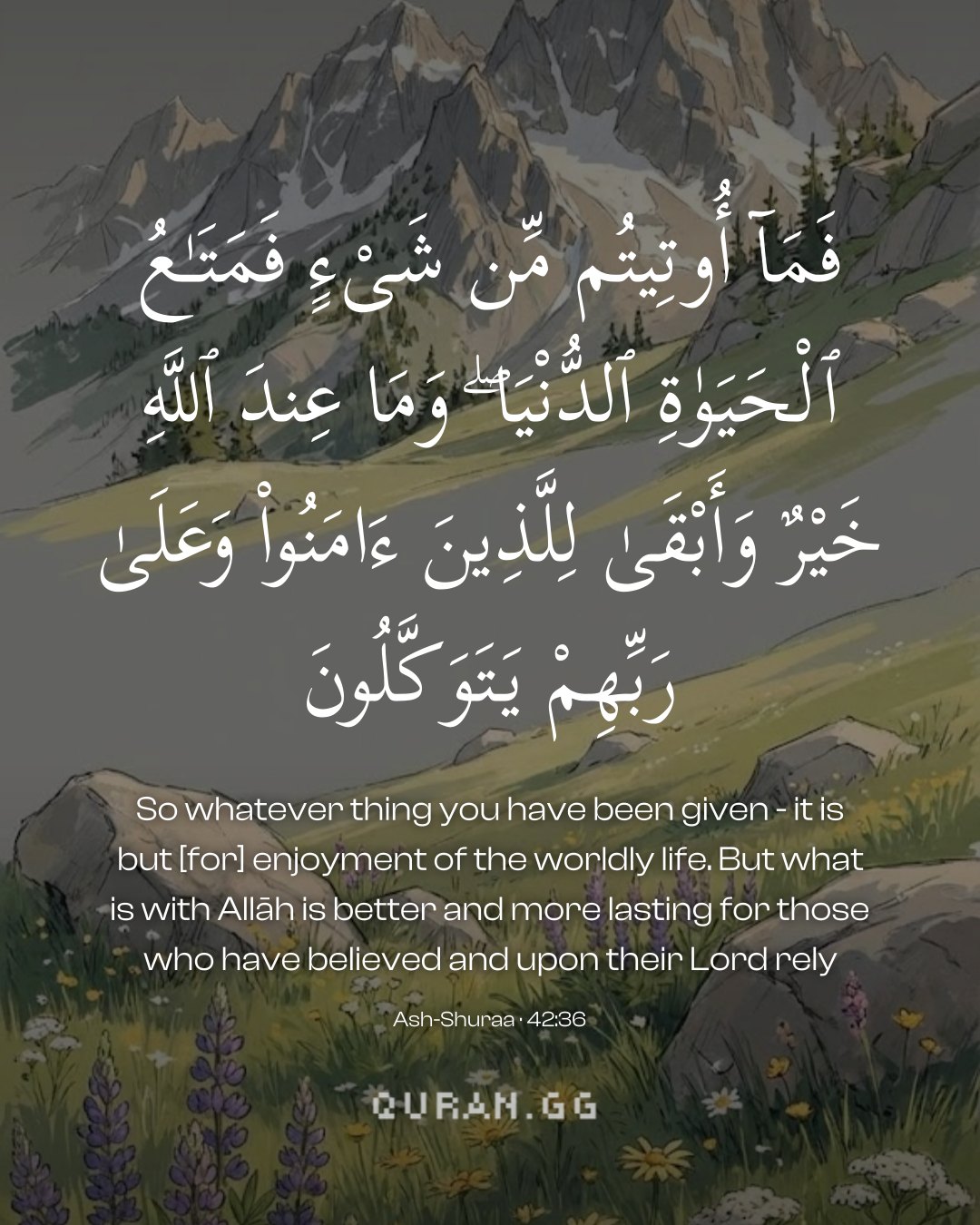
فَمَآ أُوتِيتُمْ مِّن شَىْءٍ فَمَتَـعُ الْحَيَوةِ الدُّنْيَا
(So whatever you have been given is but (a passing) enjoyment for this worldly life.) means, no matter what you achieve and amass, do not be deceived by it, for it is only the enjoyment of this life, which is the lower, transient realm that will undoubtedly come to an end.
وَمَا عِندَ اللَّهِ خَيْرٌ وَأَبْقَى
(but that which is with Allah is better and more lasting) means, the reward of Allah is better than this world, and it will last forever, so do not give preference to that which is transient over that which is lasting. Allah says:
لِلَّذِينَ ءَامَنُواْ
(for those who believe) means, for those who are patient in forgoing the pleasures of this world,
وَعَلَى رَبِّهِمْ يَتَوَكَّلُونَ
(and put their trust in their Lord.) means, so that He will help them to be patient in doing what is obligatory and avoiding what is forbidden. Then Allah says:
وَالَّذِينَ يَجْتَنِبُونَ كَبَـئِرَ الإِثْمِ وَالْفَوَحِشَ
(And those who shun the greater sins, and Al-Fawahish,) We have already discussed sin and Al-Fawahish in Surat Al-A`raf.
وَإِذَا مَا غَضِبُواْ هُمْ يَغْفِرُونَ
(and when they are angry, they forgive.) means, their nature dictates that they should forgive people and be tolerant. Vengeance is not in their nature. It was reported in the Sahih that the Messenger of Allah ﷺ never took revenge for his own sake, only when the sacred Laws of Allah were violated.
وَالَّذِينَ اسْتَجَابُواْ لِرَبِّهِمْ
(And those who answer the Call of their Lord,) means, they follow His Messenger and obey His commands and avoid that which He has prohibited.
وَأَقَامُواْ الصَّلَوةَ
(and perform As-Salah) -- which is the greatest act of worship of Allah, may He be glorified.
وَأَمْرُهُمْ شُورَى بَيْنَهُمْ
(and who (conduct) their affairs by mutual consultation,) means, they do not make a decision without consulting one another on the matter so that they can help one another by sharing their ideas concerning issues such as wars and other matters. This is like the Ayah:
وَشَاوِرْهُمْ فِى الاٌّمْرِ
(and consult them in the affairs) (3:159). The Prophet used to consult with them concerning wars and other matters, so that they would feel confidant. When `Umar bin Al-Khattab, may Allah be pleased with him, was dying, after he had been stabbed, he entrusted the choice of the next Khalifah to six people who were to be consulted. They were `Uthman, `Ali, Talhah, Az-Zubayr, Sa`id and `Abdur-Rahman bin `Awf, may Allah be pleased with them all. Then all of the Companions, may Allah be pleased with them, agreed to appoint `Uthman as their leader.
وَمِمَّا رَزَقْنَـهُمْ يُنفِقُونَ
(and who spend of what We have bestowed on them.) this means kindly treating the creation of Allah, starting with those who are closest, then the next closest, and so on.
وَالَّذِينَ إِذَآ أَصَابَهُمُ الْبَغْىُ هُمْ يَنتَصِرُونَ
(And those who, when an oppressive wrong is done to them, take revenge.) ameans, they have the strength to take revenge on those who commit aggressive wrong and hostile acts against them. They are not incapable of doing so and they are not helpless; they are able to take revenge against those who transgress against them, even though when they have the power to take revenge, they prefer to forgive, as when Yusuf, peace be upon him, said to his brothers:
لاَ تَثْرَيبَ عَلَيْكُمُ الْيَوْمَ يَغْفِرُ اللَّهُ لَكُمْ
(No reproach on you this day; may Allah forgive you) (12: 92). even though he was in a position to take revenge on them for what they had done to him. The Messenger of Allah ﷺ forgave the eighty people who intended to do him harm during the year of Al-Hudaybiyah, camping by the mountain of At-Tan`im. When he overpowered them, he set them free, even though he was in a position to take revenge on them. He also forgave Ghawrath bin Al-Harith who wanted to kill him and unsheathed his sword while he was sleeping. The Prophet woke up to find him pointing the sword at him. He reproached him angrily and the sword dropped. Then the Messenger of Allah ﷺ picked up the sword and called his Companions He told them what had happened, and he forgave the man. There are many similar Hadiths and reports. And Allah knows best.