(So whatever you have been given is but (a passing) enjoyment for this worldly life.) means, no matter what you achieve and amass, do not be deceived by it, for it is only the enjoyment of this life, which is the lower, transient realm that will undoubtedly come to an end.
وَمَا عِندَ اللَّهِ خَيْرٌ وَأَبْقَى
(but that which is with Allah is better and more lasting) means, the reward of Allah is better than this world, and it will last forever, so do not give preference to that which is transient over that which is lasting. Allah says:
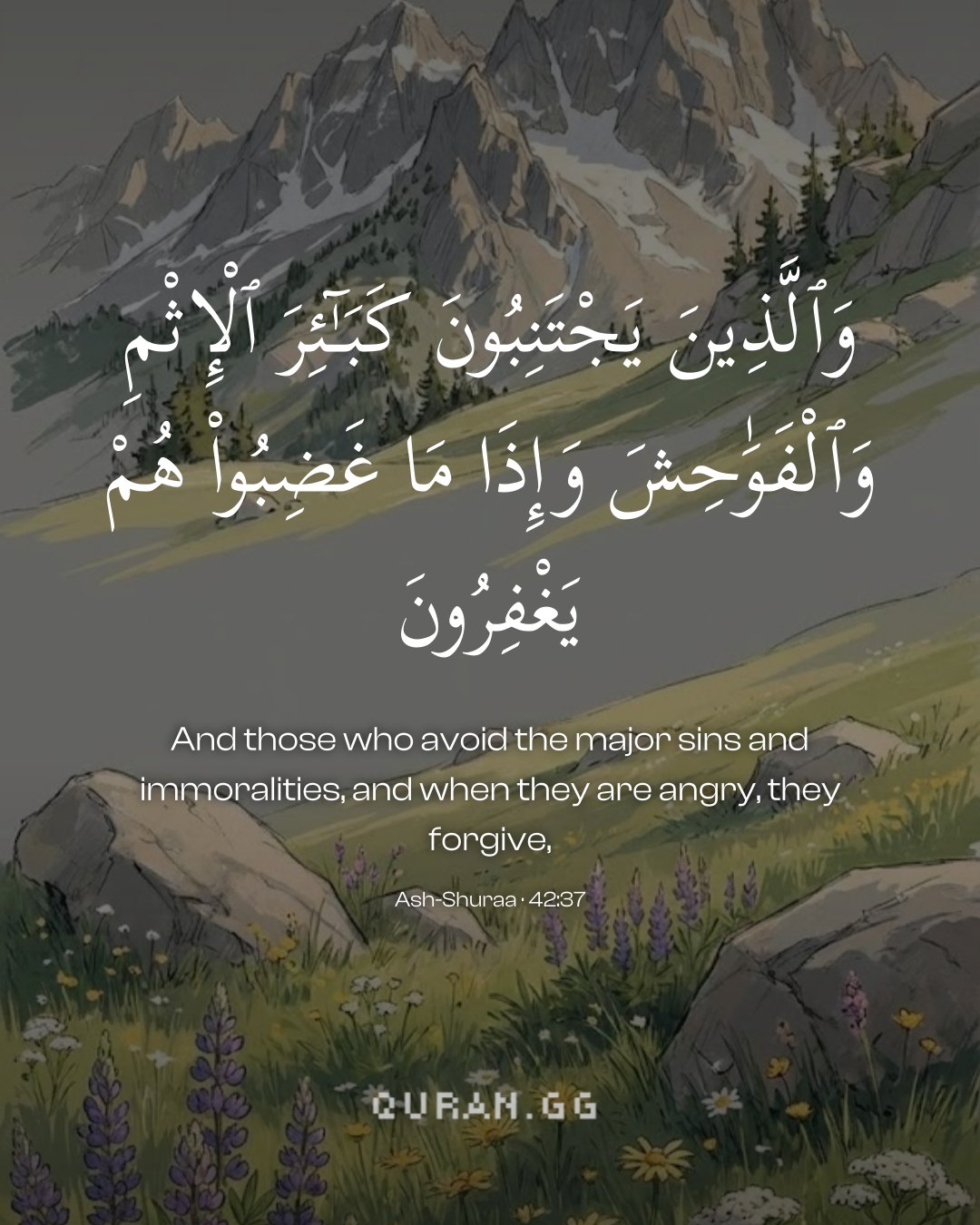
Second virtue: الَّذِينَ يَجْتَنِبُونَ كَبَائِرَ الْإِثْمِ وَالْفَوَاحِشَ (those who abstain from the major sins and from shameless acts - 37). What are major sins? Details have already been stated in the commentary of Surah Nisa'; the author has also given a complete list of major and minor sins in his booklet in Urdu published under the little of "Gunah-e- bay ladhdhat گناہ بےلذّت .
The wisdom behind specially mentioning shameless acts, apart from all the other major sins, is that they are not only graver, but also infectious in that they influence others also. Shameless acts include adultery and the acts that precede it as preludes, and those bad deeds which are committed brazenly in public, because they corrupt the whole society and their liability is also very severe.
Third virtue: وَإِذَا مَا غَضِبُوا هُمْ يَغْفِرُونَ (and when they get angry, they forgive - 37) This is a moral quality of the highest order, because when love and anger prevail upon someone, they make him blind and deaf, and he loses his ability to distinguish right from wrong, and true from false, rather, he cannot appreciate the results of his own actions. The one who is angry tries his utmost to vent his anger fully upon the one with whom he is angry. That is why Allah Ta’ ala has defined this quality of Mu'mins and virtuous persons that when they are angry, they not only maintain the limits of right and wrong, but also forgo their justified rights.
Tazkirul Quran
Maulana Wahiduddin KhanOn ayahs 35–38
Man sails his ships on the seas and flies his aircraft in the sky. This has become possible because God has made the laws of nature favourable to us. Had this not been so, neither would our boats have been able to sail the seas nor our planes been able to fly in the air. Every event in life has a lesson for man in it. But if man is to derive food for thought from events, it is necessary for him to have patience and adopt a grateful attitude. One has to face many vicissitudes in life. In times of trouble, man has to rise above his circumstances, so that he may see things from different angles. And this is not possible unless one possesses the quality of patience. Similarly, in times of plenty, it is necessary for man to consider whatever he receives, apparently as a result of his own efforts, to be really the bounty of God, and this can be done only by one who has developed in himself that high degree of consciousness which is known as gratitude. When in an event divine guidance is made manifest, and even then man does not accept it and tries to impute a different meaning to it, this in fact amounts to ‘raising disputes over God’s signs.’ Those who do so are arrogant in the eyes of God. Such arrogant, rebellious people cannot receive God’s blessing in the Hereafter.
Uthmani text of the Madinah mushaf (King Fahd Complex). Translation: Saheeh International. Tafsir via Quran.com.