Tafsir Ibn Kathir (abridged)
Forgiving or exacting Revenge on Wrongdoers
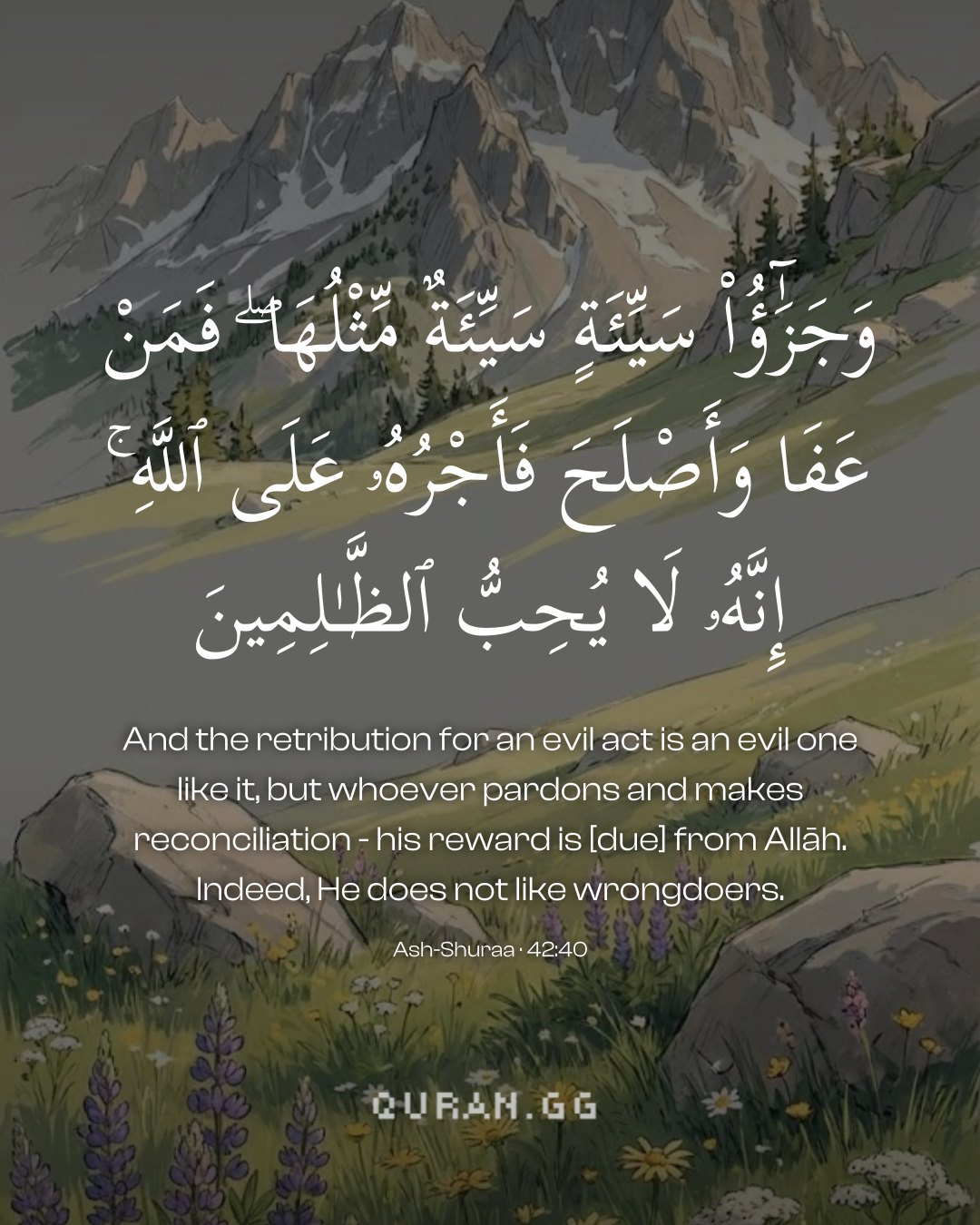
وَجَزَآءُ سَيِّئَةٍ سَيِّئَةٌ مِّثْلُهَا
(The recompense for an evil is an evil like thereof). This is like the Ayat:
فَمَنِ اعْتَدَى عَلَيْكُمْ فَاعْتَدُواْ عَلَيْهِ بِمِثْلِ مَا اعْتَدَى عَلَيْكُمْ
(Then whoever transgresses the prohibition against you, you transgress likewise against him) (2:194), and
وَإِنْ عَاقَبْتُمْ فَعَاقِبُواْ بِمِثْلِ مَا عُوقِبْتُمْ بِهِ
(And if you punish, then punish them with the like of that with which you were afflicted) (16:126). Justice, has been prescribed, in the form of the prescribed laws of equality in punishment (Al-Qisas), but the better way, which means forgiving, is recommended, as Allah says:
وَالْجُرُوحَ قِصَاصٌ فَمَن تَصَدَّقَ بِهِ فَهُوَ كَفَّارَةٌ لَّهُ
(and wounds equal for equal. But if anyone remits the retaliation by way of charity, it shall be for him an expiation) (5:45). Allah says here:
فَمَنْ عَفَا وَأَصْلَحَ فَأَجْرُهُ عَلَى اللَّهِ
(but whoever forgives and makes reconciliation, his reward is with Allah. ) means, that will not be wasted with Allah. As it says in a Sahih Hadith:
«وَمَا زَادَ اللهُ تَعَالَى عَبْدًا بِعَفْوٍ إِلَّا عِزًّا»
(Allah does not increase the person who forgives except in honor.)"
إِنَّهُ لاَ يُحِبُّ الظَّـلِمِينَ
(Verily, He likes not the wrongdoers.) means, the aggressors, i.e., those who initiate the evil actions.
وَلَمَنِ انتَصَرَ بَعْدَ ظُلْمِهِ فَأُوْلَـئِكَ مَا عَلَيْهِمْ مِّن سَبِيلٍ
(And indeed whosoever takes revenge after he has suffered wrong, for such there is no way (of blame) against them.) means, there is no sin on him for taking revenge against the one who wronged him.
إِنَّمَا السَّبِيلُ
(The way) means, the burden of sin,
عَلَى الَّذِينَ يَظْلِمُونَ النَّاسَ وَيَبْغُونَ فِى الاٌّرْضِ بِغَيْرِ الْحَقِّ
(is only against those who oppress men and rebel in the earth without justification;) means, those who initiate wrongful actions against others, as it says in the Sahih Hadith:
«الْمُسْتَبَّانِ مَا قَالَا فَعَلَى الْبَادِىءِ، مَا لَمْ يَعْتَدِ الْمَظْلُوم»
(When two persons indulge in abusing each other, the one who initiated the wrongful action is to blame, unless the one who was wronged oversteps the mark in retaliation.)
أُوْلَـئِكَ لَهُمْ عَذَابٌ أَلِيمٌ
(for such there will be a painful torment.) means, intense and agonizing. It was reported that Muhammad bin Wasi` said, "I came to Makkah and there was a security out post over the trench whose guards took me to Marwan bin Al-Muhallab, who was the governor of Basrah. He said, `What do you need, O Abu `Abdullah' I said, `If you can do it, I need you to be like the brother of Banu `Adiy.' He said, `Who is the brother of Banu `Adiy' He said, `Al-`Ala' bin Ziyad; he once appointed a friend of his to a position of authority, and he wrote to him: If you can, only go to sleep after you make sure that there is nothing on your back i.e., you do not owe anything to anyone, your stomach is empty and your hands are untainted by the blood or wealth of the Muslims. If you do that, then there will be no way (of blame) against you --
إِنَّمَا السَّبِيلُ عَلَى الَّذِينَ يَظْلِمُونَ النَّاسَ وَيَبْغُونَ فِى الاٌّرْضِ بِغَيْرِ الْحَقِّ أُوْلَـئِكَ لَهُمْ عَذَابٌ أَلِيمٌ
(The way is only against those who oppress men and rebel in the earth without justification; for such there will be a painful torment.)' Marwan said, `He spoke the truth, by Allah, and gave sincere advice. ' Then he said, `What do you need, O Abu `Abdullah' I said, `I need you to let me join my family.' He said, `Yes I will do that."' This was recorded by Ibn Abi Hatim. When Allah condemned wrongdoing and the people who do it, and prescribed Al-Qisas, He encouraged forgiveness:
وَلَمَن صَبَرَ وَغَفَرَ
(And verily, whosoever shows patience and forgives,) meaning, whoever bears the insult with patience and conceals the evil action,
إِنَّ ذَلِكَ لَمِنْ عَزْمِ الاٍّمُورِ
(that would truly be from the things recommended by Allah.) Sa`id bin Jubayr said, "This means, one of the things enjoined by Allah," i.e., good actions for which there will be a great reward and much praise.