(And if you punish, then punish them with the like of that with which you were afflicted) (16:126). Justice, has been prescribed, in the form of the prescribed laws of equality in punishment (Al-Qisas), but the better way, which means forgiving, is recommended, as Allah says:
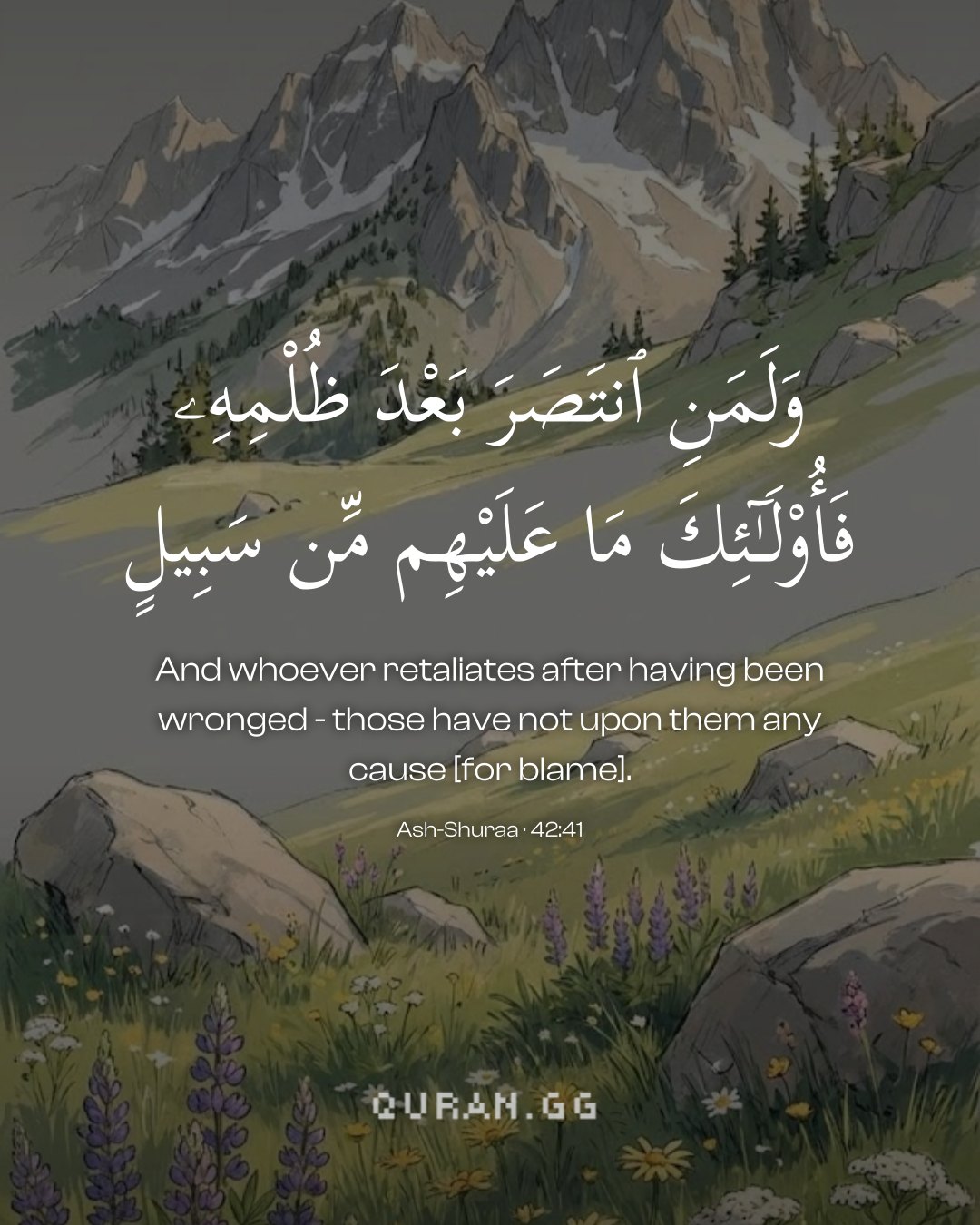
Seventh virtue:۔ وَالَّذِينَ إِذَا أَصَابَهُمُ الْبَغْيُ هُمْ يَنتَصِرُونَ (and those who, when they are subjected to aggression, defend themselves - 39.) The original word used in the text is ` yantasirun' which may be translated as ` defend themselves' and also as ` retaliate'. In the latter case, retaliation must be equal, and should in no case exceed the limit of equality. This quality, in reality, is a further elaboration of the third virtue, i.e forgiving the opponents. It means that though forgiveness is a good quality, yet one may face certain situations where the mischief gets a fillip if one forgives, and hence it is better to take revenge in those situations. This verse has defined the rule that in those situations where taking revenge is the more suitable option, one has to take care that one does not exceed the equalizing limit, otherwise he will become unjust and transgressor. That is why this verse is followed by the verse 40, وَجَزَاءُ سَيِّئَةٍ سَيِّئَةٌ مِّثْلُهَا (and the recompense of evil is evil like it.) which lays down the equitable rule of retaliation that one may cause just as much physical or monetary harm to his opponent as he has received from him; but the condition is that causing that harm is not a sin in itself. For example, if someone has been forced by another to take an alcoholic drink, it would not be permissible for him to force the other person to take an alcoholic drink.
Only that person who reposes faith in God can be desirous of the Hereafter. In reality, whenever a man moves in the direction of the Hereafter, it appears to him that he is in danger of losing worldly benefits. Worldly considerations seem to be slipping from his grasp. This being so, the only thing which keeps a man steady on the path of the Hereafter is his unwavering reliance on the assurances of God. He should firmly believe that whatever he is losing in this world for the sake of God, will be multiplied many times over by God in the Hereafter. The bounty of this world is of a temporary nature, while the good things of the Hereafter are eternal and never ending. A short-lived benefit in comparison with eternal bounty carries no weight whatsoever.
Uthmani text of the Madinah mushaf (King Fahd Complex). Translation: Saheeh International. Tafsir via Quran.com.