Tafsir Ibn Kathir (abridged)
Hypocrites question the Integrity of the Messenger when distributing Alms
Allah said next,
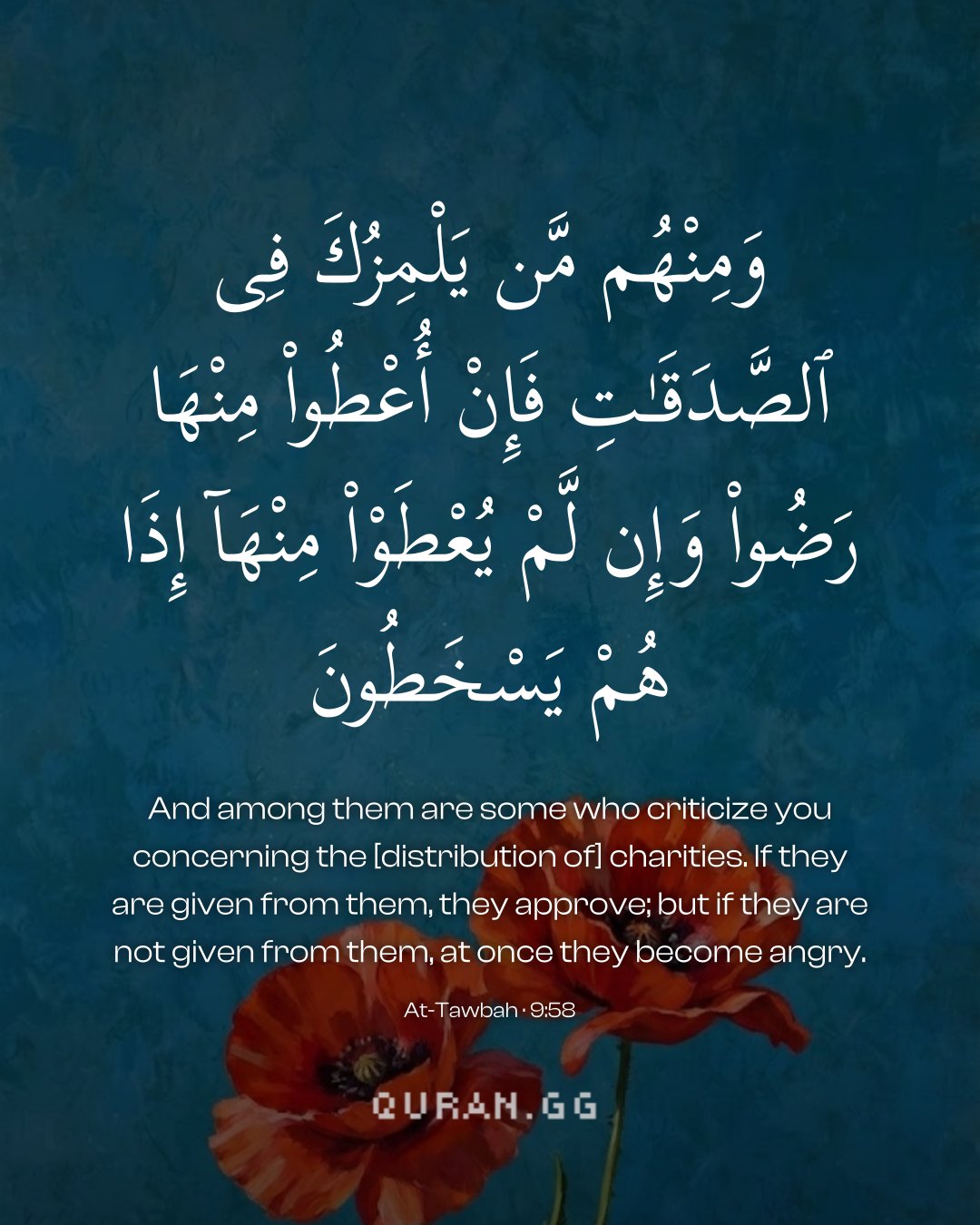
وَمِنْهُمُ
(And of them), among the hypocrites,
مَّن يَلْمِزُكَ
(who accuse you) or question your integrity,
فِى
(concerning), division of,
الصَّدَقَـتِ
(the alms), when you divide them. They question your fairness, even though it is they who deserve that their integrity be questioned. The hypocrites do not do this in defense of the religion, but to gain more for themselves. This is why,
أُعْطُواْ مِنْهَا
(If they are given) meaning, from the Zakah,
رَضُواْ وَإِن لَّمْ يُعْطَوْاْ مِنهَا إِذَا هُمْ يَسْخَطُونَ
(They are pleased, but if they are not given thereof, behold! They are enraged!) 9:58, angry for themselves. Qatadah commented on Allah's statement,
وَمِنْهُمْ مَّن يَلْمِزُكَ فِي الصَّدَقَـتِ
(And of them are some who accuse you concerning the alms. ) "Allah says, `Some of them question your integrity in the matter of distribution of the alms.' We were told that a bedouin man, who had recently embraced Islam, came to the Prophet , when he was dividing some gold and silver, and said to him, `O Muhammad! Even though Allah commanded you to divide in fairness, you have not done so.' The Prophet of Allah said,
«وَيْلَكَ فَمَنْ ذَا الَّذِي يَعْدِلُ عَلَيْكَ بَعْدِي؟»
(Woe to you! Who would be fair to you after me then) The Prophet of Allah said next,
«احْذَرُوا هَذَا وَأَشْبَاهَهُ فَإِنَّ فِي أُمَّتِي أَشْبَاهُ هَذَا يَقْرَءُونَ الْقُرآنَ لَا يُجَاوِزُ تَرَاقِيهِمْ فَإِذَا خَرَجُوا فَاْقْتُلُوهُمْ، ثُمَّ إِذَا خَرَجُوا فَاقْتُلُوهُمْ، ثُمَّ إِذَا خَرَجُوا فَاقْتُلُوهُم»
(Beware of this man and his likes! There are similar persons in my Ummah who recite the Qur'an, but the Qur'an will not go beyond their throat. If they rise (against Muslims rulers) then kill them, if they rise, kill them, then if they rise kill them.) We were also told that the Prophet of Allah used to say,
«وَالَّذِي نَفْسِي بِيَدِهِ مَا أُعْطِيكُمْ شَيْئًا وَلَا أَمْنَعُكُمُوهُ إِنَّمَا أَنَا خَازِن»
(By He in Whose Hand is my life! I do not give or withhold anything; I am only a keeper.)" This statement from Qatadah is similar to the Hadith that the Two Shaykhs narrated from Abu Sa`id about the story of Dhul-Khuwaysirah, whose name was Hurqus. Hurqus protested against the Prophet's division of the war spoils of Hunayn, saying, "Be fair, for you have not been fair!" The Prophet said,
«لَقَدْ خِبْتُ وَخَسِرْتُ إِنْ لَمْ أَكُنْ أَعْدِل»
(I would have become a loser and a failure if I was not fair!) The Messenger ﷺ said after that man left,
«إِنَّهُ يَخْرُجُ مِنْ ضِئْضِىءِ هَذَا قَوْمٌ يَحْقِرُ أَحَدُكُمْ صَلَاتَهُ مَعَ صَلَاتِهِمْ وَصِيَامَهُ مَعَ صِيَامِهِمْ، يَمْرُقُونَ مِنَ الدِّينِ مُرُوقَ السَّهْمِ مِنَ الرَّمِيَّةِ، فَأَيْنَمَا لَقِيتُمُوهُمْ فَاقْتُلُوهُمْ؛ فَإِنَّهْم شَرُّ قَتْلَى تَحْتَ أَدِيمِ السَّمَاء»
(Among the offspring of this man will be some with whose prayer, when one of you sees it, would belittle his prayer, and his fast as compared to their fast. They will be renegades from the religion, just like an arrow goes through the game's body. Wherever you find them, kill them, for verily, they are the worst dead people under the cover of the sky.) Allah said next, while directing such people to what is more beneficial for them than their behavior,
وَلَوْ أَنَّهُمْ رَضُوْاْ مَآ ءَاتَـهُمُ اللَّهُ وَرَسُولُهُ وَقَالُواْ حَسْبُنَا اللَّهُ سَيُؤْتِينَا اللَّهُ مِن فَضْلِهِ وَرَسُولُهُ إِنَّآ إِلَى اللَّهِ رَغِبُونَ
(Would that they were content with what Allah and His Messenger gave them and had said: "Allah is sufficient for us. Allah will give us of His bounty, and so will His Messenger (from alms). We implore Allah (to enrich us).") This honorable Ayah contains a gracious type of conduct and an honorable secret. Allah listed; contentment with what He and His Messenger give, trusting in Allah alone -- by saying;
وَقَالُواْ حَسْبُنَا اللَّهُ
(and they had said: Allah is sufficient for us), and hoping in Allah alone, and He made these the indications of obedience to the Messenger ﷺ, adhering to his commands, avoiding his prohibitions, believing his narrations and following his footsteps.