Hypocrites rejoice because They remained behind from Tabuk!
Allah admonishes the hypocrites who lagged behind from the battle of Tabuk with the Companions of the Messenger of Allah ﷺ, rejoicing that they remained behind after the Messenger ﷺ departed for the battle,
وَكَرِهُواْ أَن يُجَـهِدُواْ
(they hated to strive and fight), along with the Messenger ,
(with their properties and their lives in the cause of Allah, and they said), to each other,
لاَ تَنفِرُواْ فِى الْحَرِّ
("March not forth in the heat.") Tabuk occurred at a time when the heat was intense and the fruits and shades became delightful. This is why they said,
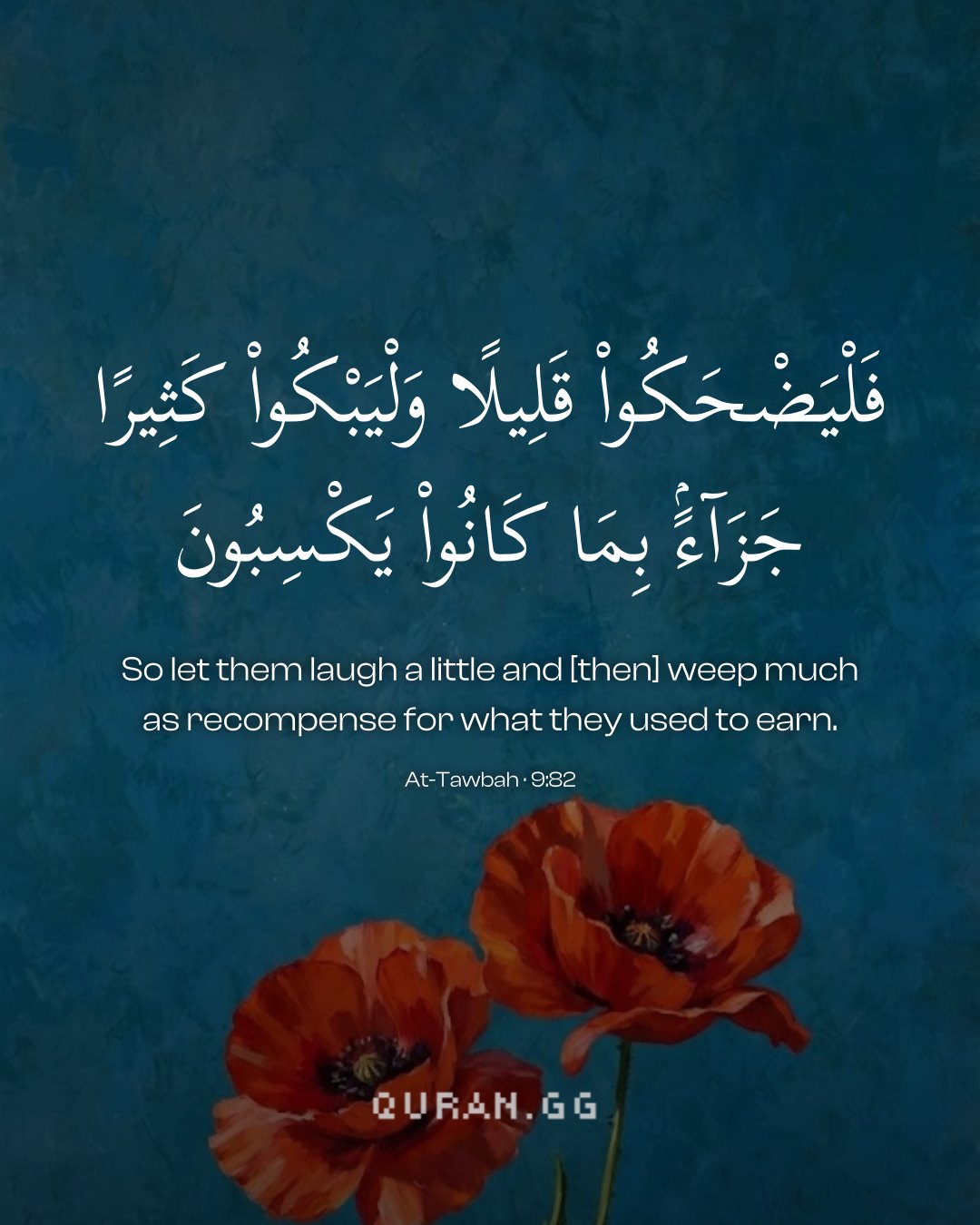
After that it was said: فَلْيَضْحَكُوا قَلِيلًا (So, let them laugh a little, and weep a lot, being a reward of what they used to earn - 82). Though, the word ` falya dhak u' (So, laugh) has been used in the imperative form, but commentators interpret it in the sense of the predicate of a nominal clause. The wisdom behind the use of the imperative form given by them is that this is categorical and certain. In other words, this is going to happen as a matter of certainty. Such people could laugh for the days they have in the mortal world - but, in 'Akhirah, they must weep and weep forever.
Commentator Ibn Abi Hatim reports the explanation of this verse from Sayyidna ` Abdullah ibn ` Abbas ؓ as follows:
The dunya (present world) is short-lived. So, let them laugh therein as they wish but when ` dunya will come to an end and they will start coming to Allah, then, they will start weeping, a weeping which will never come to an end. (Mazhari)
Tazkirul Quran
Maulana Wahiduddin KhanOn ayahs 82–85
The battle of Tabuk occurred in an extremely hot season. From Madinah to the Syrian border three hundred miles had to be travelled. The hypocritical Muslims asked others not to undertake such a long journey in such extremely hot weather. In saying this they forgot that, after hearing the call of God, refusal to set out for fear of some danger amounted to putting oneself in greater danger. It was like running away from the sun and taking refuge in the flames of a fire. Those who are fonder of themselves and their wealth than God are very pleased with themselves if, by their attractive devices, they manage to remain ‘Muslims’ and at the same time there is no danger to their lives and property. They consider themselves wise and treat those people as foolish who struggle so hard for the cause of God that they have no time for themselves. But this is absolute nonsense. They may laugh now, but they will end up crying, because in the life to come after death, their ‘cleverness’ is going to prove to be the worst type of foolishness. At that time they will feel extremely sorry that, though they wanted paradise, they refused to part with the very asset which whould have gained them entry into it.
Uthmani text of the Madinah mushaf (King Fahd Complex). Translation: Saheeh International. Tafsir via Quran.com.