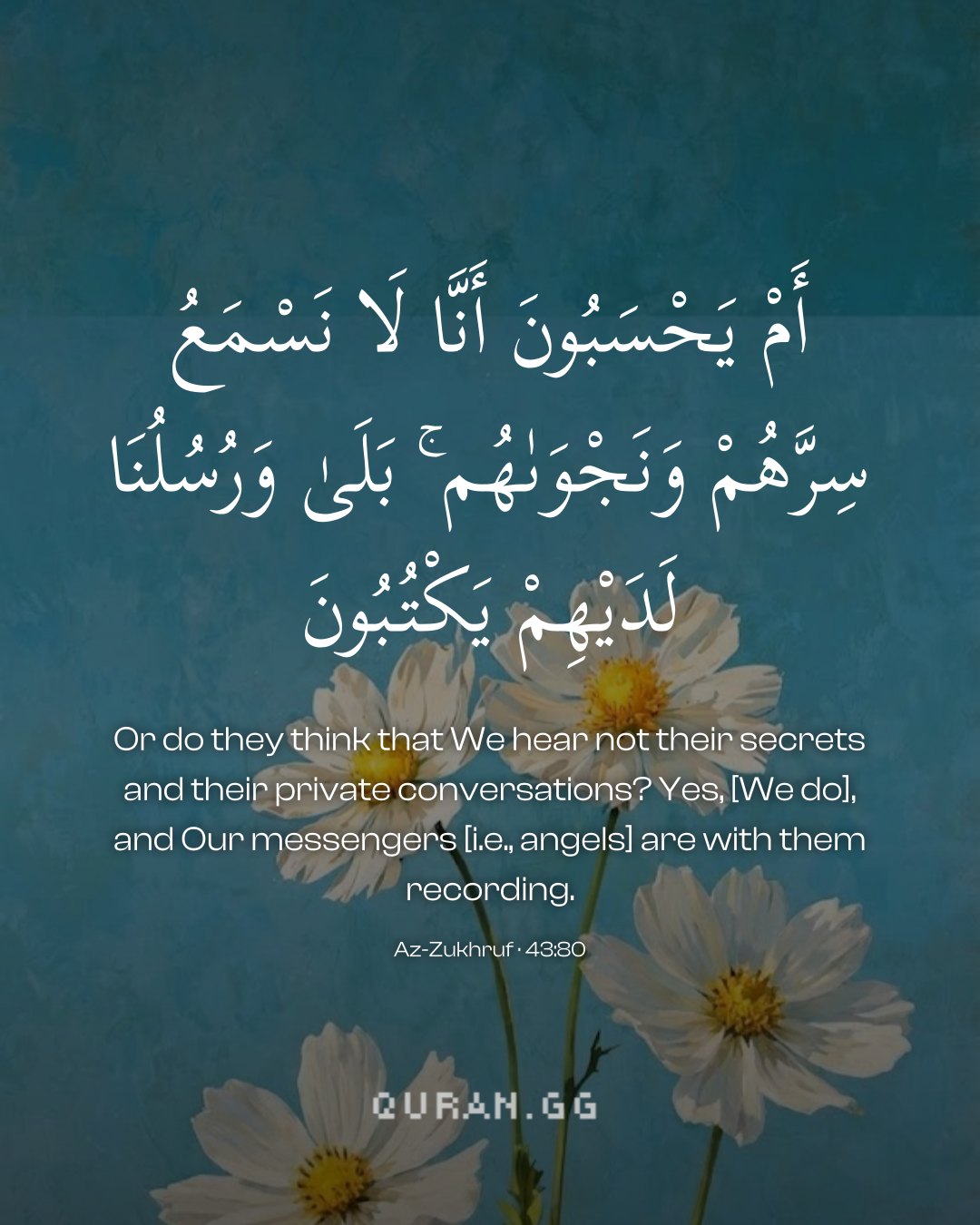
Or do they think that We hear not their secrets and their private conversations? Yes, [We do], and Our messengers [i.e., angels] are with them recording.
(We wronged them not, but they were the wrongdoers.) means, by their committing wrong actions after proof had been established against them and Messengers had been sent to them, but they rejected them and rebelled, so they are to be punished accordingly. And your Lord is not at all unjust to (His) servants.
The only real friendship is that which is in the sake of Allah
الْأَخِلَّاءُ يَوْمَئِذٍ بَعْضُهُمْ لِبَعْضٍ عَدُوٌّ إِلَّا الْمُتَّقِينَ (Friends, on that day, will become enemies to one another, except the God-fearing 43:67). This verse tells us plainly that the friendly relations in which we take so much pride in this world, and for which we don't even care about halal (permitted) and Haram (unlawful), will be of no use on the Day of judgment, rather they will turn into enmity. In this connection, Hafiz Ibn Kathir has reproduced a discourse of Sayyidna ` Ali ؓ narrated by ` Abdur Razzaq in his Musannaf and by Ibn Abi Hatim regarding two Muslim friends and two Non-Muslim friends. One of the Muslim friends died and when he was given the glad tidings of Paradise, he recollected his friend and supplicated in his favour: "0 Allah! That friend of mine used to advise me to obey You and to obey the Holy Prophet ﷺ ، he used to direct me towards virtues and to prevent me from vices, and kept on reminding me that one day I would have to meet You. So 0 Allah! Do not misguide him after me, so that he may also see the scenes of Paradise as You have shown to me, and be pleased with him, as you have been with me." In reply, it will be said to him, "Do not worry, if you know what reward I have stored for your friend, you will weep less and laugh more." Later, when the friend will also have died, both the souls will get together and Allah Ta` ala will direct them that each one of them should praise the other. Thereupon, each one of them will say about the other that he is the best brother, best companion and the best friend.
Hope always alleviates feelings of distress. Man’s afflictions are many, but if, as he undergoes them, he entertains the hope that his troubles will some day come to an end, that very thought infuses him with the courage to bear with things. But the scourge of Hell will be so grievous that there will be no hope of relief from it. The appeal made by the people in Hell to the angels will be an expression of their helplessness; otherwise anyone making such an appeal must know that God’s decision was final and that it could not be evaded. The descent of anybody into Hell will be entirely as a consequence of his own shortcomings. God gave man a high degree of understanding and opened up for him the paths of Truth. But man knowingly and deliberately ignored the Truth. His arrogance so increased that he became bent upon the elimination of the preacher of Truth. In view of this, how could he escape being subjected to eternal punishment?
Uthmani text of the Madinah mushaf (King Fahd Complex). Translation: Saheeh International. Tafsir via Quran.com.